

Table of Contents
- Understanding Raw Gold Flakes and Their Display Potential
- Best Containers for Gold Flakes
- How to Clean Raw Gold Flakes Before Display
- Gold Flake Display Ideas for Maximum Visual Impact
- Tools and Materials You'll Need
- Step-by-Step Display Setup Process
- Long-Term Preservation and Care
- Common Mistakes to Avoid
Last Updated: August 12, 2026
Understanding Raw Gold Flakes and Their Display Potential
Raw gold flakes are visually striking precious metal fragments recovered through panning, sluicing, or mining. They capture light with distinctive metallic luster, but their appeal depends entirely on presentation. Display them correctly and they become conversation pieces; get it wrong and they disappear into a container, losing their visual impact.
This guide covers every decision: container selection, flake preparation, lighting strategies, and long-term preservation. At Parker's Gold, we've learned that displaying raw gold flakes is as much about optics as the gold itself. Our Dominion Creek gold comes with an official Certificate of Authenticity and deserves a display setup reflecting that provenance.

Best Containers for Gold Flakes
The container you choose determines how your raw gold flakes will be seen and preserved.
Vial Storage with Mineral Oil
Clear glass vials remain the gold standard for displaying raw gold flakes, particularly when filled with mineral oil. Mineral oil suspends the flakes to maximize light reflection, protects gold from oxidation, and creates visual movement that draws the eye.
Lighter mineral oils allow gold flakes to drift and settle, creating dynamic visual interest. Heavier oils keep flakes suspended uniformly. Standard pharmaceutical-grade mineral oil strikes the right balance, it's transparent, doesn't yellow over time, and won't damage the gold's surface.
Vials come in multiple sizes. For small collections, 1-2 ml vials work well; larger collections benefit from 5-10 ml vials. Glass vials with screw caps or cork stoppers are preferable to plastic alternatives, which degrade and cloud over time.
When filling a vial with mineral oil, leave minimal air space at the top. Excess air promotes oxidation and allows oil to evaporate slowly. A properly filled vial requires no maintenance for years.
Display Cases and Mounting Options
For larger collections or premium specimens, handcrafted display cases offer sophisticated presentation. A tri-fold display case provides multiple viewing angles and accommodates several vials or mounted specimens simultaneously.
Display cases protect gold from dust, accidental damage, and environmental fluctuations. Prioritize glass or acrylic fronts that don't distort the view. Interior backing should be neutral, black, dark blue, or deep burgundy backgrounds make gold flakes stand out dramatically. Avoid reflective interiors, which create glare.
For mounting individual flakes, adhesive-backed clear acrylic discs hold small flakes securely without obscuring them. Micro-display stands elevate individual specimens. Some collectors use clear silicone for custom mounting points that allow repositioning without damage.
The handcrafted tri-fold cases included with Parker's Gold's Dominion Creek Collector Package come pre-configured with space for vials and mounting options, eliminating guesswork.
How to Clean Raw Gold Flakes Before Display
Raw gold flakes fresh from the field often carry sediment, mica, and pyrite. Cleaning them reveals the true metallic luster that makes gold visually striking.
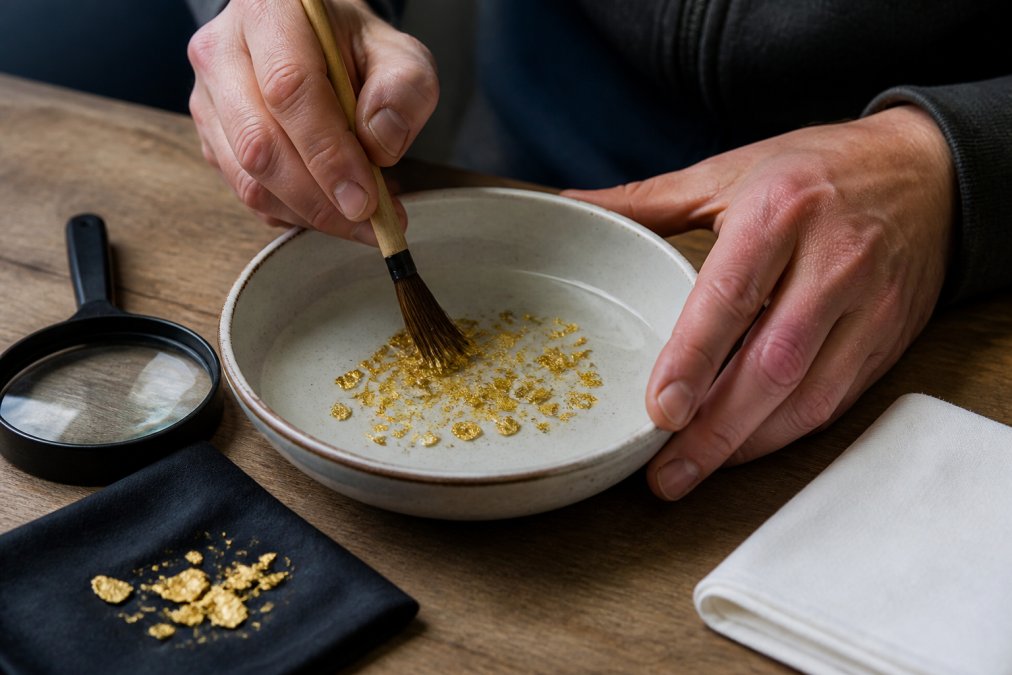
Start with distilled water rather than tap water, which contains minerals that leave residue. Place flakes in a small, shallow ceramic or glass dish, never metal, which can react with gold. Add enough distilled water to submerge the flakes completely.
Use a soft brush with natural bristles to gently agitate the flakes and dislodge sediment. Work slowly; gold is soft and can be damaged by aggressive scrubbing. After brushing, rinse thoroughly in fresh distilled water, changing it 2-3 times until it runs clear.
Pat the flakes dry using a lint-free cloth. Microfiber cloths work exceptionally well because they won't shed fibers. Allow the flakes to air-dry completely for 10-15 minutes before handling further.
If your flakes came from Parker's Gold, they've already been professionally cleaned and are ready for display.
Gold Flake Display Ideas for Maximum Visual Impact
The difference between a mediocre display and a stunning one comes down to three factors: lighting, background, and container positioning.
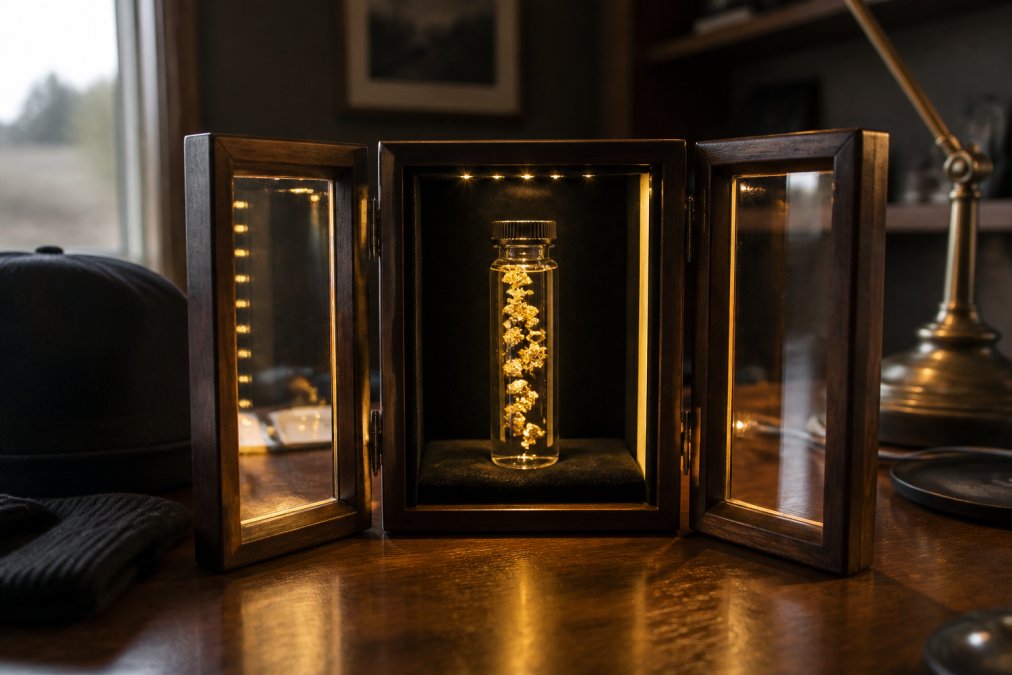
Lighting and Optics for Sparkle
Ambient room light alone is insufficient; it produces flat, dull reflections. Directional lighting, particularly from above or behind, reveals metallic luster and creates the sparkle that makes display worthwhile.
LED strip lights positioned above or behind your display case produce warm, consistent light without heat. Warm white LEDs (2700-3000K color temperature) complement gold's natural warmth. Position the light source at a 45-degree angle for maximum sparkle without harsh shadows.
Backlighting is particularly effective for vial displays. When light passes through mineral oil and hits gold flakes from behind, it creates a luminous effect that draws the eye.
Avoid direct sunlight for extended periods. While gold won't fade, intense UV exposure can eventually affect mineral oil, causing it to yellow slightly. A few hours of indirect natural light is fine; all-day direct sunlight is best avoided.
Warmer tones (2700-3000K) enhance the natural golden hue and create more appealing visual presentation than cooler white lights.
Mounting and Stabilization Techniques
How you mount and stabilize raw gold flakes affects both aesthetics and preservation. Loose flakes in a vial create movement and visual interest, but larger specimens benefit from secure mounting.
For vial displays, ensure the vial is sealed properly and positioned upright. Slight tilting can be intentional, a 15-20 degree angle sometimes shows flakes more dramatically than perfect vertical alignment. Use museum-quality adhesive putty to secure the vial to the display case base, preventing accidental tipping.
For mounted specimens within a display case, clear acrylic discs or micro-display stands work well. These keep individual flakes visible from multiple angles while preventing movement.
If building a DIY display case, consider creating a false floor with dark velvet or felt backing. This elevates your vials and creates visual separation between the gold and the case interior. Ensure the backing material is secured firmly so it doesn't shift when the case is moved.
Stability matters for long-term preservation. A display that tips over or allows containers to slide can result in spilled mineral oil and lost gold.
Tools and Materials You'll Need
Cleaning supplies:
- Distilled water (at least 1 quart)
- Soft-bristled natural brush
- Shallow ceramic or glass dish
- Lint-free microfiber cloths
- Magnifying glass (10x magnification ideal)
Display materials:
- Clear glass vials with secure caps (1-10 ml)
- Pharmaceutical-grade mineral oil
- Display case or tri-fold case
- LED strip lights (warm white, 2700-3000K)
- Museum-quality adhesive putty
- Dark backing material (velvet or felt, optional)
- Clear acrylic discs or micro-display stands (optional)
Optional but recommended:
- Macro photography setup for documenting your collection
- Small scale for weighing flakes in grams
- Jeweler's loupe for detailed inspection
- Certificate of Authenticity holder or frame
The Parker's Gold Dominion Creek Collector Package includes the vial, mineral oil, tri-fold display case, and Certificate of Authenticity holder, eliminating the need to source these components separately.
Step-by-Step Display Setup Process
Follow this process to create a professional-quality display. The entire setup typically takes 30-45 minutes for a single vial display or 1-2 hours for a multi-piece collection.
Step 1: Prepare Your Gold Flakes
Inspect your raw gold flakes under magnification using a 10x hand lens to identify any visible sediment, mica, or pyrite. If your gold came from Parker's Gold, it arrives pre-cleaned, but visual inspection confirms its condition.
If cleaning is necessary, follow the process outlined above: distilled water rinse, gentle brushing, thorough rinsing, and air-drying. Once dry, weigh your flakes if desired. Recording the weight in grams helps document your collection and establishes a baseline for future reference.
Step 2: Select Your Container and Background
Choose your vial or display case based on the quantity and type of gold flakes you're displaying. Fill the vial approximately 80% with mineral oil, leaving 20% air space at the top. This prevents overflow when sealed and allows for slight expansion from temperature changes.
Select your background carefully. Dark backgrounds (black, dark blue, burgundy) make gold flakes stand out dramatically. If building a DIY display, adhere dark velvet or felt to the case interior using acid-free adhesive.
Step 3: Arrange and Secure Your Gold
Carefully place your cleaned gold flakes into the vial using a small funnel or tweezers. The flakes will settle naturally in the mineral oil, creating layers and depth that enhance visual appeal.
Seal the vial securely. A tight seal prevents evaporation and contamination. Position the sealed vial in your display case, securing it with museum-quality adhesive putty to prevent tipping.
If mounting individual flakes, use clear acrylic discs or micro-stands positioned at varying heights to create visual interest.
Step 4: Position Lighting and Final Adjustments
Install your LED strip lighting above or behind the display. Test the light angle and intensity until the gold flakes sparkle without creating harsh glare. Warm white LEDs (2700-3000K) produce the most flattering effect.
Step back and view your display from multiple angles. The gold should be clearly visible, well-lit, and positioned to draw the eye. If displaying the Certificate of Authenticity, position it prominently within the case.
Allow the display to settle for 24 hours before moving it. After 24 hours, your raw gold flakes display is complete.
Long-Term Preservation and Care
Properly maintained, a raw gold flakes display will remain visually stunning for decades. Gold itself doesn't corrode or degrade, but the mineral oil and container require attention.
Over time, typically 5-10 years, mineral oil may yellow slightly, particularly if exposed to direct sunlight. This is cosmetic and doesn't affect the gold's integrity. If appearance becomes a concern, the oil can be carefully replaced by draining the old oil, rinsing the flakes with distilled water, allowing them to air-dry completely, and filling the vial with fresh pharmaceutical-grade mineral oil.
Check your display monthly for any signs of leakage or seal degradation. If the vial cap becomes loose, tighten it gently. If you notice mineral oil seeping, transfer the flakes to a fresh vial immediately.
Keep your display away from extreme temperature fluctuations. A stable room temperature (65-75°F) is ideal.
Store the Certificate of Authenticity in a separate, climate-controlled location if possible. This documentation is crucial for verifying authenticity and maintaining the collectible value of pieces like Parker's Gold's Dominion Creek specimens.
Common Mistakes to Avoid
Using tap water for cleaning. Tap water contains dissolved minerals that leave residue. Always use distilled water.
Aggressive cleaning or polishing. Gold is soft. Harsh brushes, chemicals, or polishing compounds damage the surface and remove the natural patina that authenticates placer gold.
Selecting poor containers. Plastic vials cloud over time, metal containers can react with gold, and opaque containers hide your display. Clear glass is the only acceptable choice.
Inadequate lighting. A display without directional lighting looks underwhelming. Warm-white LED strips positioned at 45 degrees are ideal.
Overfilling vials with mineral oil. This causes overflow when sealed. Fill to approximately 80% capacity.
Storing displays in direct sunlight. Extended UV exposure yellows mineral oil over time. Position displays in well-lit but indirect light.
Neglecting the Certificate of Authenticity. For authenticated pieces like Parker's Gold's offerings, the certificate is as important as the gold itself. Store it safely and display it prominently.
Moving displays frequently. Constant repositioning stresses seals and increases accident risk. Choose a permanent display location.
Ignoring seal degradation. A loose vial cap or cracked seal compromises preservation. Check your display regularly and address issues immediately.
Displaying raw gold flakes transforms them from curiosities into focal points worthy of admiration. The process requires attention to detail, from selecting the right container and mineral oil to positioning lighting that reveals the gold's natural sparkle. When executed properly, your display becomes a conversation piece that honors both the gold's natural beauty and its historical significance.
Parker's Gold's Dominion Creek Collector Package eliminates much of the guesswork. Each package includes authenticated placer gold, a handcrafted tri-fold display case, pharmaceutical-grade mineral oil, and an official Certificate of Authenticity. Discover how to get started with Parker's Gold and claim your piece of authentic Yukon history. Your display setup is simplified, your gold's authenticity is verified, and your collection is ready to showcase.
Frequently Asked Questions
What is the best container for storing raw gold flakes long-term?
Glass vials filled with mineral oil offer the best protection for raw gold flakes. The mineral oil prevents oxidation and allows you to see the gold's metallic luster and sparkle. For display purposes, choose clear containers that showcase the gold while protecting it from dust and handling. Airtight seals are essential to maintain the viscosity of the oil and prevent contamination over time.
How do you clean raw gold flakes before displaying them?
Rinse raw gold flakes gently in distilled water to remove sediment and impurities. Use a soft brush to dislodge any mica or other particles without scratching the gold. Pat dry with a lint-free cloth. Avoid harsh chemicals or abrasive materials that can damage the delicate flakes. Once clean, handle with tweezers to prevent oils from your skin transferring to the gold's surface.
Can I display gold flakes without a display case?
Yes, but a display case offers significant protection. You can mount gold flakes on canvas or specialized backing, frame them behind glass, or place them in shadow boxes. Each method requires stabilization techniques to prevent movement. Glass or acrylic covers protect from dust and handling damage. For valuable pieces like Parker Schnabel's Dominion Creek gold, a handcrafted display case provides both security and authenticity presentation.
How can I make raw gold flakes sparkle more when displayed?
Proper lighting is crucial, use LED spotlights or backlighting to highlight the metallic luster and create glimmer effects. Position lights at 45-degree angles to catch the gold's reflective surfaces. Clear mineral oil in vials enhances visibility and sparkle. Dark backgrounds make gold flakes stand out dramatically. Macro photography or magnifying glass inspection under good lighting reveals the fine detail and beauty of raw placer gold.
This article was written using GrandRanker