

Table of Contents
- Non-Destructive Ways to Verify Gold Authenticity at Home
- Gold Hallmark Identification: Reading Karat Stamps and Spotting Fakes
- Using an Acid Test Kit for Gold: Destructive Testing Explained
- Professional Gold Appraisal Services and XRF Testing
Last Updated: August 7, 2026
Non-Destructive Ways to Verify Gold Authenticity at Home
Knowing how to verify gold authenticity matters more than most casual buyers realize. Start with tests that won't harm your piece.
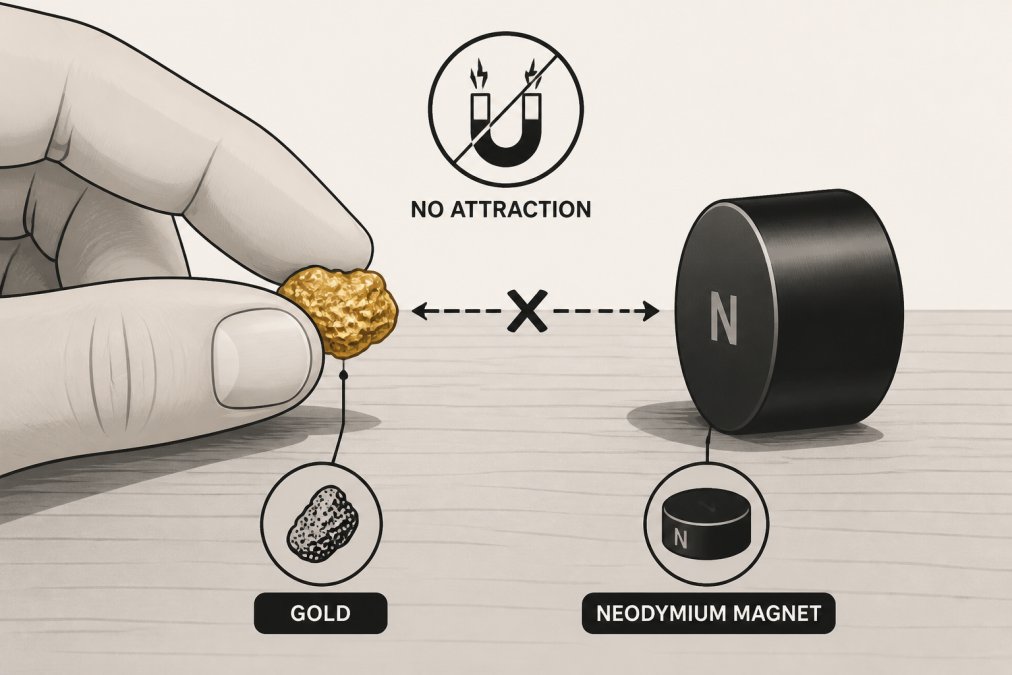
The Magnet Test
Gold is non-magnetic. Hold a strong neodymium magnet close to your piece. If the metal pulls toward the magnet, it contains ferrous base metal and is not pure gold.
The Visual Inspection
Examine the surface under good light for discoloration at edges, clasps, or wear points. On gold-plated or gold-filled pieces, the base metal often shows through where plating has worn thin. Genuine gold maintains consistent color throughout. Tarnish on a piece marketed as solid gold is a serious red flag, since gold itself does not oxidize.
The Float/Water Test
Gold is a dense precious metal. Drop your piece into a glass of water. Real gold sinks quickly. Lighter alloys or hollow fakes may float or sink slowly.
The Skin Discoloration Test
Rub the piece against clean skin for 30 seconds. Gold-plated items sometimes leave a greenish or black mark. Genuine high-karat gold leaves no mark.
| Test | What It Detects | Destructive? | Reliability |
|---|---|---|---|
| Magnet test | Ferrous base metals | No | Moderate |
| Visual inspection | Plating wear, tarnish | No | Moderate |
| Float/water test | Density differences | No | Low-Moderate |
| Skin discoloration | Base metal reactions | No | Low-Moderate |
Used together, these tests build a picture. If a piece passes all four, move on to hallmark identification.
Gold Hallmark Identification: Reading Karat Stamps and Spotting Fakes
Most genuine gold jewelry and bullion carry a karat stamp, one of the fastest ways to verify authenticity without equipment.
Reading Karat Stamps
Karat stamps indicate gold content. Common U.S. markings include 10K (41.7%), 14K (58.3%), 18K (75%), and 24K (99.9% pure). European pieces use a three-digit system: 585 equals 14K, 750 equals 18K, and 999 equals 24K.
Where to Look
On jewelry, hallmarks appear on clasps, inner bands, or pendant backs. On bars and coins, stamps are typically on the face or edge. Raw placer gold won't carry a karat stamp; its purity is verified through assay or XRF testing.
Counterfeit Hallmarks
Hallmarks can be faked. Two details help distinguish genuine from counterfeit stamps: authentic stamps are pressed cleanly into the metal with depth and clarity, while fake stamps often look shallow, blurred, or misaligned. If the piece shows plating wear but carries a solid gold stamp, the stamp is almost certainly fraudulent.
The Jewelers of America consumer education resources offer guidance on what legitimate hallmarks look like on U.S.-sold jewelry.
Using an Acid Test Kit for Gold: Destructive Testing Explained
The acid test kit for gold remains the most accessible destructive method available outside a professional lab. It's reliable, inexpensive, and gives a definitive answer.
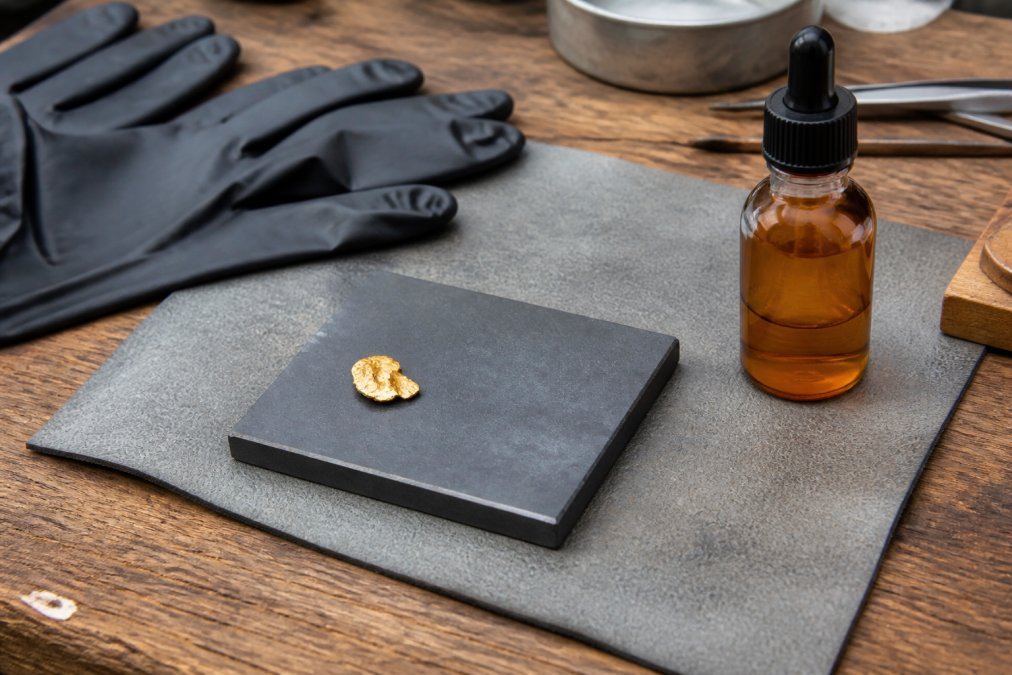
How the Acid Test Works
You rub the piece against a black ceramic streak plate, leaving a small metal deposit. Apply a drop of nitric acid solution calibrated to a specific karat level. The color reaction indicates karatage: no reaction means the sample meets or exceeds the tested karat; green or fizzing indicates base metal present; immediate dissolution means little to no gold. According to the U.S. Geological Survey's gold properties reference, gold's resistance to nitric acid is one of its defining chemical characteristics.
Safety and Chemical Handling
Nitric acid is corrosive. Wear nitrile gloves and safety glasses, work in a well-ventilated area or outdoors, and keep a baking soda solution nearby to neutralize spills. Never mix acid solutions or pour them down a sink without neutralizing first. Store acid bottles upright in a cool, dry location away from children. The OSHA guidelines on handling corrosive chemicals provide additional handling protocols.
Destructive vs. Non-Destructive: Which Should You Use?
The acid test scratches your piece. For collectibles, heirlooms, or authenticated items, that scratch reduces condition grade. For raw gold or pieces with no display value, it's the fastest definitive answer. Use non-destructive methods first; move to acid testing only when results conflict or stakes are high.
Professional Gold Appraisal Services and XRF Testing
Some situations demand more than home testing.
What Professional Appraisal Involves
A certified appraiser evaluates gold using visual inspection, density measurement, and often XRF analysis. They produce a written report stating karatage, weight in troy ounces, and estimated value. For insurance, estate, or resale purposes, this documentation carries legal weight. The American Society of Jewelry Appraisers and American Gem Society maintain directories of credentialed appraisers.
XRF Testing: The Gold Standard
X-ray fluorescence (XRF) testing is the most accurate non-destructive method available. An XRF analyzer directs X-rays at the metal surface and measures energy emitted by each element, producing a precise elemental breakdown. XRF testing is non-destructive, accurate to within fractions of a percent, and fast. Many local coin shops, pawn shops, and precious metals dealers offer XRF testing as a paid service.
The Density Calculation Method
Gold has a specific gravity of approximately 19.3 g/cm³. Weigh your piece dry on a precise digital scale, then weigh it while fully submerged in water. Divide the dry weight by the difference between dry and submerged weight. A result close to 19.3 indicates high-purity gold; results significantly below 15 suggest gold-plated or gold-filled pieces.
Documentation as Authentication
For gold tied to a specific origin, documentation matters as much as physical testing. A Certificate of Authenticity from a verifiable source provides provenance that no acid test can replicate. As documented in the Federal Trade Commission's guides for the jewelry industry, sellers making claims about gold origin and purity are required to substantiate those claims accurately.
For collectors who want gold they can verify at a glance, Parker's Gold sources raw placer gold directly from Parker Schnabel's Dominion Creek operation in the Yukon, includes an official Certificate of Authenticity with every package, and ships fully insured with signature-required delivery. Each piece comes presented in a handcrafted tri-fold display case. Claim Yours at the Parker's Gold Dominion Creek Collector Package page.

Frequently Asked Questions
How do I check if my gold is real at home?
Several home tests can indicate whether gold is genuine. The magnet test is the safest starting point: real gold is non-magnetic, so a strong magnet should not attract it. You can also inspect the piece for a karat stamp or hallmark, look for green discoloration or tarnish on skin contact, and check density by comparing its weight to its size. For raw placer gold specifically, a Certificate of Authenticity from a documented source is the most reliable confirmation.
What is the magnet test for gold?
The magnet test uses a strong neodymium magnet held close to the gold piece. Genuine gold is not magnetic and will show no attraction. If the piece pulls toward the magnet, it likely contains iron, nickel, or another base metal underneath a gold-plated or gold-filled surface. The test is quick and non-destructive, but it is not conclusive on its own because some counterfeit alloys are also non-magnetic. Always combine it with hallmark identification or professional appraisal.
Are there professional ways to verify gold authenticity?
Yes. X-ray fluorescence (XRF) testing is the gold standard for professional gold appraisal services. An XRF device scans the surface and identifies the exact elemental composition without damaging the piece, confirming karatage and detecting gold-plated or gold-filled items that pass visual tests. Certified appraisers at jewelry stores, coin dealers, and precious metal brokers across the US offer this service, typically for a small fee. For collector pieces, a documented Certificate of Authenticity from the original source adds a second layer of verification.
How can I tell if gold is real using a ceramic plate?
Rub the gold piece firmly against an unglazed ceramic streak plate. Genuine gold leaves a yellow or gold-colored streak. A black streak indicates the piece is likely a base metal or heavily plated alloy rather than solid gold. This is a simple destructive test that leaves a small mark on the surface, so use it on an inconspicuous area. Pair the ceramic streak test with hallmark inspection and, for valuable pieces, follow up with XRF testing or a professional appraisal.
This article was written using GrandRanker