

Table of Contents
- Raw Gold vs. Refined Gold: What You're Actually Buying
- Gold Bullion vs Raw Gold: Key Differences for Investors
- Risks of Buying Gold Nuggets and Unrefined Placer Gold
- How to Verify Gold Purity Before You Buy
- Is Raw Gold a Good Investment? Pros, Cons, and Tax Implications
- Storage, Security, and Portfolio Allocation Considerations
- When Raw Gold Makes Sense: Collectibles, Provenance, and Verified Origin
- Conclusion
Last Updated: August 6, 2026
Raw Gold vs. Refined Gold: What You're Actually Buying
Raw gold is unprocessed metal recovered directly from the earth, containing variable amounts of silver, copper, and other minerals. Refined gold has been processed through a refinery to achieve standardized purity, typically .999 or .9999 fine, and is sold as bullion bars, coins, or certified ingots. This distinction matters enormously because these products operate in fundamentally different markets with different pricing, liquidity, and verification requirements.
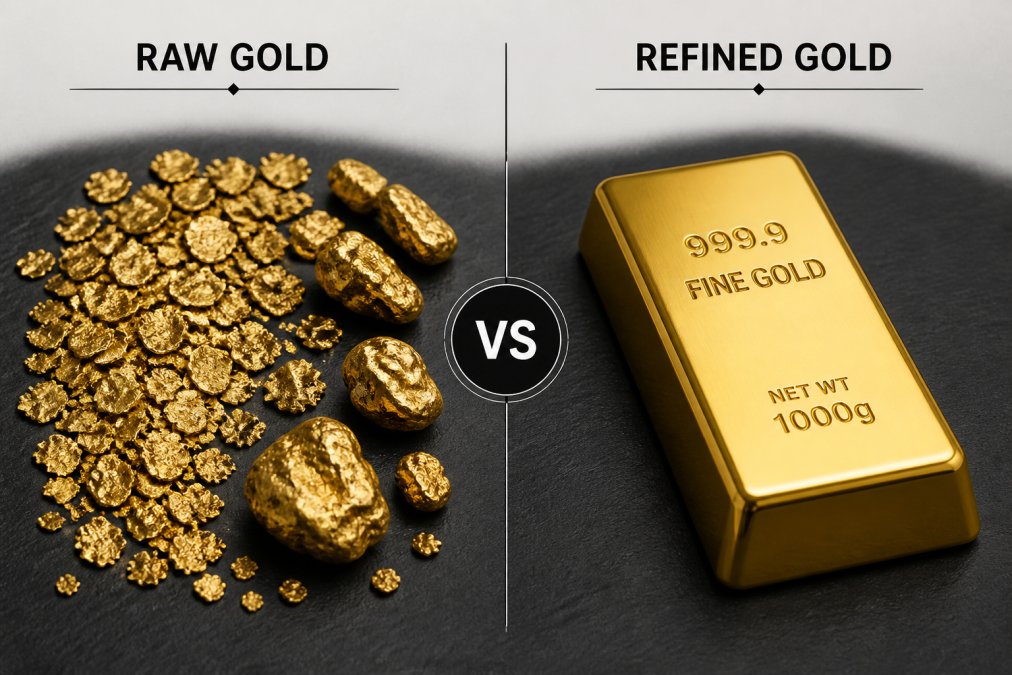
Raw gold comes in several forms: placer gold flakes from riverbeds and creek beds, nuggets from alluvial deposits, and doré bars from mine sites before final refining. None carry a guaranteed purity stamp. Refined bullion carries a hallmark from an accredited refinery and trades at known, verifiable purity.
At Parker's Gold, we work with genuine raw placer gold flakes sourced directly from Parker Schnabel's Dominion Creek operation in the Yukon, as seen on Discovery Channel's Gold Rush. Every package includes a Certificate of Authenticity documenting the origin. That provenance separates authenticated raw gold from anonymous material in the secondary market.
The practical consequence: refined gold is a commodity. Raw gold is not. That gap defines everything that follows.
Gold Bullion vs Raw Gold: Key Differences for Investors
Refined bullion is fungible. A one-troy-ounce American Gold Eagle coin is worth the same whether bought in New York or Phoenix, and any reputable dealer will buy it back at a price tied directly to the spot price.
Raw gold is not fungible. Its value depends on purity, weight, form, and increasingly, on origin and documentation.
Feature |
Refined Gold Bullion |
Raw / Placer Gold |
|---|---|---|
Purity |
Certified (.999 or .9999 fine) |
Variable, requires assay |
Liquidity |
High, trades near spot price |
Lower, niche buyer pool |
Verification |
Hallmark from accredited refinery |
Assay certificate needed |
Price reference |
Spot price + known spread |
Melt value minus refining costs |
Collectible premium |
Minimal (numismatic coins aside) |
Possible with provenance |
Resale ease |
Straightforward |
Requires specialist buyer |
Liquidity and Resale Realities
Refined bullion can be sold to virtually any precious metals dealer, pawn shop, or online exchange within days. Raw gold narrows your buyer pool immediately. Many bullion dealers will not purchase raw gold at all, or will only buy it at a steep discount to melt value because they must account for refining costs and purity uncertainty. Specialist buyers for placer gold exist but are fewer in number and often regional. Nuggets with exceptional size or character carry a collectible premium above melt value among dedicated collectors, but that premium is illiquid and only materializes when you find the right buyer.
Spot Price, Spread, and Market Premium
Refined bullion trades at a predictable spread above the spot price, the live commodity market price per troy ounce. Raw gold trades at a discount to spot when sold for its metal content. The buyer must account for assay fees, refining charges, and purity uncertainty. According to the U.S. Geological Survey's gold commodity data, placer gold composition varies significantly by geographic source, directly affecting refinery processing costs and the price offered.
The spread on raw gold is wider and less predictable than on refined bullion. Expect to pay above melt value when purchasing and receive below melt value when selling for metal content.
Risks of Buying Gold Nuggets and Unrefined Placer Gold
The core problem is verification. Without an assay, you do not know what you are buying. Gold-colored minerals like pyrite and chalcopyrite have fooled buyers for generations. Tungsten cores plated with gold have affected even some refined bar markets. For raw gold, the verification challenge is compounded by irregular shapes that make density testing less straightforward.
There is also market premium volatility. Raw gold's price is tied not just to commodity movements but also to collector sentiment, regional supply, and source reputation.
Counterfeit Detection and the Assay Process
Counterfeit detection for raw gold requires more than a magnet test. The most reliable method is a formal assay: a laboratory analysis determining exact elemental composition. The assay process involves either fire assay, the traditional and most accurate method for gold content, or X-ray fluorescence (XRF) analysis, which is faster and non-destructive but slightly less precise. Professional assayers charge fees that vary by method and turnaround time. Those costs come directly off the material's value and should be factored into any purchase decision.
An assay certificate issued by an accredited laboratory is the minimum documentation a serious buyer should require for any raw gold purchase above a nominal amount.
The Refinery Conversion Process and Its Costs
Converting raw placer gold into refined bullion requires sending material to an accredited refinery. The refinery will assay the incoming material, calculate gold content, and either return refined metal or pay out at the current melt value minus processing fees and their spread. Refining charges typically include a base processing fee, a per-troy-ounce treatment charge, and a deduction for impurities. Lower-purity placer gold costs more to refine per net ounce recovered. Raw gold purchased at or near spot price often results in a net loss once refining costs are factored in.
How to Verify Gold Purity Before You Buy
Step 1: Request documentation. Any reputable seller should provide either an assay certificate from an accredited laboratory or a Certificate of Authenticity documenting the source and approximate purity range typical for that deposit.
Step 2: Conduct a density test. Pure gold has a specific gravity of approximately 19.3 g/cm³. A water displacement test can identify obvious fakes, though it is less reliable for irregular nuggets with trapped air pockets.
Step 3: Use XRF analysis. Many coin shops own portable XRF analyzers. A surface scan takes seconds and provides elemental composition data. It is not as precise as fire assay but catches most counterfeits and gives a reliable purity estimate.
Step 4: Commission a fire assay for high-value purchases. For any purchase above a few hundred dollars in metal value, a formal fire assay from an accredited laboratory is worth the cost. The American Society for Testing and Materials standards for precious metals assay provide the technical benchmarks that accredited labs follow.
Step 5: Verify the seller's provenance chain. For raw gold with collectible value, the documentation trail matters as much as the assay. A Certificate of Authenticity naming the specific mining operation, claim location, and operator provides a verifiable provenance chain that supports both authenticity and resale value.
Is Raw Gold a Good Investment? Pros, Cons, and Tax Implications
As a pure commodity play, raw gold is generally inferior to refined bullion. The liquidity discount, verification costs, and refining fees create structural drag that makes it harder to capture the wealth preservation and inflation hedge benefits that make precious metals attractive. Investors seeking portfolio diversification and a straightforward hedge against currency devaluation are better served by certified bullion.
As a collectible with documented provenance, raw gold from a verified, notable source occupies a different category. The investment case is not purely about spot price but about the combination of precious metal content, historical significance, and scarcity of authenticated material from a specific operation.
Pros of raw gold:
- Tangible physical asset with intrinsic melt value
- Potential collectible premium above spot price for verified placer gold
- Direct connection to specific geographic and historical sources
- No counterparty risk when held physically
Cons of raw gold:
- Lower liquidity than refined bullion
- Purity uncertainty without assay
- Refinery conversion costs reduce net realized value
- Wider spread between buy and sell price
- Storage and security costs for physical assets
Capital Gains and Tax Implications
The IRS classifies gold, including raw gold, as a collectible for tax purposes. As documented in IRS Publication 544 on sales and other dispositions of assets, collectibles held for more than one year are subject to a maximum long-term capital gains rate of 28%, compared to lower rates for most other long-term capital assets. Short-term gains on gold sold within one year are taxed as ordinary income at your marginal rate.
The IRS requires reporting of gold sales. Dealers must file Form 1099-B for certain transactions. Buyers should maintain records of purchase price, acquisition date, and any assay or documentation costs, as these can be added to cost basis when calculating capital gains.
Storage, Security, and Portfolio Allocation Considerations
Physical gold requires secure storage. Home storage in a quality safe is the lowest-cost option but carries risk from theft, fire, and flood. Homeowner's insurance policies often have low sub-limits for precious metals without a scheduled rider. Bank safe deposit boxes provide better physical security but are not FDIC-insured for contents. Private vault storage with a precious metals specialist offers insurance coverage and professional security but charges annual storage fees.
For portfolio allocation, many financial planners suggest physical precious metals represent a modest percentage of a diversified portfolio, primarily as a hedge against inflation and currency devaluation. Raw gold with collectible value sits at the intersection of the commodity and collectibles markets, and its allocation logic differs from standard bullion.
When Raw Gold Makes Sense: Collectibles, Provenance, and Verified Origin
Raw gold makes the most sense when the provenance is as valuable as the metal itself.
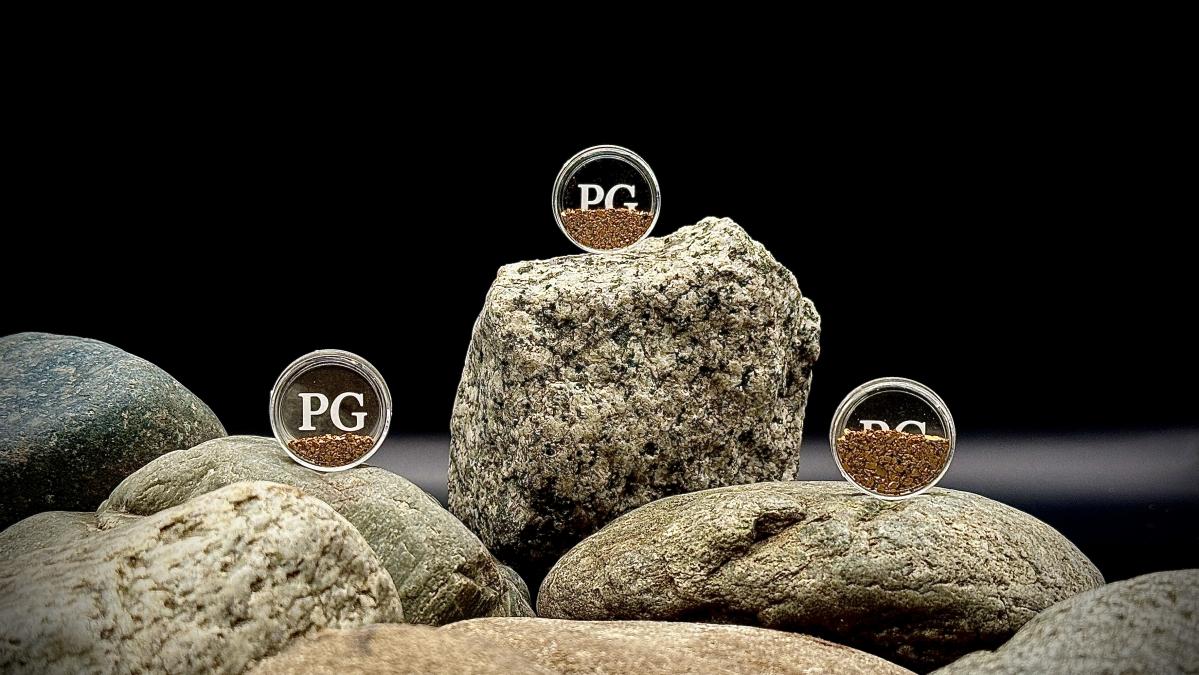
A verified gold nugget from a historically significant claim, or placer gold flakes from a named, documented mining operation, carries a story that refined bullion cannot replicate. That story drives collector demand and supports a premium above melt value. The key word is "verified." Unverified raw gold with no documentation trail is simply unrefined metal with extra uncertainty.
Parker's Gold occupies a distinct position. The placer gold flakes come directly from Parker Schnabel's Dominion Creek operation, featured on Discovery Channel's Gold Rush, with over 319 verified customer reviews. Each package arrives in a handcrafted tri-fold display case with an official Certificate of Authenticity documenting the origin. For casual fans of the show, the purchase is primarily experiential: a tangible piece of the operation they have watched on television. For collectors of precious metals and historical artifacts, the combination of verified origin, physical gold content, and display-ready presentation creates a genuinely distinctive item.
The resale market for authenticated memorabilia gold from named operations is niche but real. Items with strong provenance documentation, recognizable source operations, and original certificates tend to hold collector interest better than anonymous raw gold. The Professional Numismatists Guild guidelines on precious metal collectibles provide useful context for how provenance documentation affects the collectible value of raw precious metals.
Raw gold sits between commodity and collectible, making the investment question context-dependent. For pure commodity exposure to gold's inflation hedge and wealth preservation properties, refined bullion remains the cleaner instrument. For buyers who want a physical asset with a documented story, verified origin, and display value, authenticated raw gold from a named operation is a category of its own. Parker's Gold addresses that market directly, with placer gold sourced from Dominion Creek, fully insured and tracked shipping, and a Certificate of Authenticity that gives both collectors and gift buyers the verification they need.
Frequently Asked Questions
What are the risks of buying raw gold compared to gold bullion?
Raw gold carries several risks that refined bullion does not. Purity is unverified without a professional assay, meaning the gold content per troy ounce is unknown until tested. Resale is harder because most dealers require refinery processing before purchase. Counterfeits exist in the placer gold market. Bullion, by contrast, comes with a stamped purity, standardized weight, and far greater liquidity on the commodity market. Raw gold investment suits collectors more than pure financial investors.
How do you verify the purity of raw gold?
The most reliable method is a professional fire assay conducted by an accredited laboratory or refinery. This process separates base metals from gold and measures the exact purity. Portable XRF analyzers offer a faster, non-destructive option used by dealers and refineries. Acid testing kits provide a basic home check but are far less accurate. For any significant raw gold purchase, always request an assay certificate from an independent lab before finalizing the transaction.
What are the tax implications of owning raw gold in the US?
The IRS classifies physical gold, including raw placer gold, nuggets, and doré bars, as a collectible. When sold at a profit, gains are subject to the collectibles capital gains tax rate of up to 28%, higher than the standard long-term capital gains rate for most assets. Short-term gains, from gold held under one year, are taxed as ordinary income. Sales must be reported on Schedule D. Consult a tax professional for guidance specific to your situation.
Is raw gold liquid enough for a standard investment portfolio?
Generally, no. Raw gold lacks the immediate liquidity of gold ETFs, futures, or even standard bullion coins and bars. To convert raw gold into cash, you typically need to sell to a refinery or a specialized dealer who will discount the spot price to account for processing costs, assay fees, and their own spread. This process can take days or weeks. For portfolio diversification with precious metals, investment-grade bullion provides far better liquidity than unrefined gold.
This article was written using GrandRanker