

Table of Contents
- The Discovery That Started the Yukon Gold Rush
- Klondike Gold Rush History Facts: The Stampeders' Route
- Belinda Mulrooney: The Richest Woman in Dawson City
- Klondike Kate and the Women Who Built the Boomtown
- Jack London and the Writers Who Recorded the Rush
- The Failed Prospectors: What Happened to the Unlucky Majority
- How Old Is Parker Schnabel and Why Modern Mining Still Matters
- Conclusion
- Frequently Asked Questions
Last Updated: September 10, 2026
The Discovery That Started the Yukon Gold Rush
The Yukon gold rush began in August 1896, when three prospectors panning a tributary of the Klondike River pulled coarse gold from the gravel of Rabbit Creek. That single strike triggered one of the largest human migrations in North American history, drawing roughly 100,000 stampeders northward toward the Yukon Territory over the following years. This guide from Parker's Gold traces the ten figures who shaped the rush, from the discoverers themselves to the writers, entrepreneurs, and ordinary prospectors whose stories define the gold rush era.

The discovery is often credited to one man. The reality is messier, and more interesting.
George Carmack and the Rabbit Creek Strike
George Carmack was an American prospector married into the Tagish First Nation, and he is the figure most often named as the rush's official discoverer. On August 16, 1896, Carmack staked the discovery claim on Rabbit Creek, later renamed Bonanza Creek, a site that would become the richest placer mining ground in the territory.
What most guides miss is that Carmack's fame came partly from circumstance. He was the one with the paperwork and the English-language claim registration, which mattered enormously in a mining district administered by outside authorities. His name went on the record. The people panning beside him did not.
Skookum Jim Mason and Tagish Charlie
Skookum Jim Mason and his nephew Tagish Charlie, both Tagish First Nation men, were hunting and traveling with Carmack when the strike happened, and many accounts credit Jim with actually finding the gold. The two men staked claims alongside Carmack, and Skookum Jim's share made him wealthy.
Their story carries an uncomfortable truth about the gold rush era: Indigenous people who guided, fed, and traveled with stampeders were frequently written out of the record. The Tagish and other First Nations communities of the Yukon Territory saw their traditional hunting and fishing grounds overrun within a single season, a displacement that reshaped the region permanently.
Klondike Gold Rush History Facts: The Stampeders' Route
Getting to the goldfields was harder than finding gold once you arrived. Most stampeders sailed from West Coast ports to Skagway or Dyea, then faced a brutal overland route into the Yukon Territory, hauling a year's worth of supplies on their backs. Two trails led over the Coast Mountains, and the choice between them shaped everything that followed.
Chilkoot Pass and the Ton of Goods Rule
The Canadian government required every stampeders entering the Yukon to bring roughly a ton of goods, about 900 kilograms of food, tools, and clothing, enough to survive a year without resupply (nps.gov). The rule was meant to prevent starvation in a region with almost no agriculture. In practice, it bankrupted thousands before they ever reached Dawson City, because the ton had to be moved by human muscle over the mountains.
The Chilkoot Trail climbed roughly 1,000 meters to the summit, and the final pitch, the "Golden Stairs", was a 45-degree chute of ice and snow that could only be climbed in stages. A prospector would cache part of his load, descend for the rest, and repeat. Thirty to forty round trips to move a single ton was normal. At the summit, the North-West Mounted Police maintained a checkpoint and turned back anyone without the full year's supplies.
White Pass: Longer, Lower, and Deadlier for Animals
The White Pass route was longer and lower, and it became the preferred path once a toll road and, later, a railroad were pushed through. But the early White Pass was a graveyard for pack animals. The trail was steep, muddy, and littered with the carcasses of horses and mules that broke down under loads they were never meant to carry. Stampeders who took this route often arrived with less gear and more debt.
The Boats, the Lakes, and the Final Push
Once over either pass, stampeders still faced roughly 800 kilometers of lakes and rivers. At Bennett Lake and Lindeman Lake, they had to build or buy boats from green lumber, then run the Whitehorse Rapids and the Five Finger Rapids, chutes that flipped and drowned inexperienced boatmen every season. The Mounted Police eventually required a licensed pilot for the worst stretches. Many stampeders reached Dawson City months after the claims they had come for were already staked.
National Park Service history of the Chilkoot Trail and the Klondike Gold Rush
Belinda Mulrooney: The Richest Woman in Dawson City
Belinda Mulrooney arrived in Dawson City with almost nothing and left as one of the wealthiest people in the Yukon. She built a business empire on the boomtown's most reliable commodity: shelter, food, and comfort for miners with gold dust burning holes in their pockets.
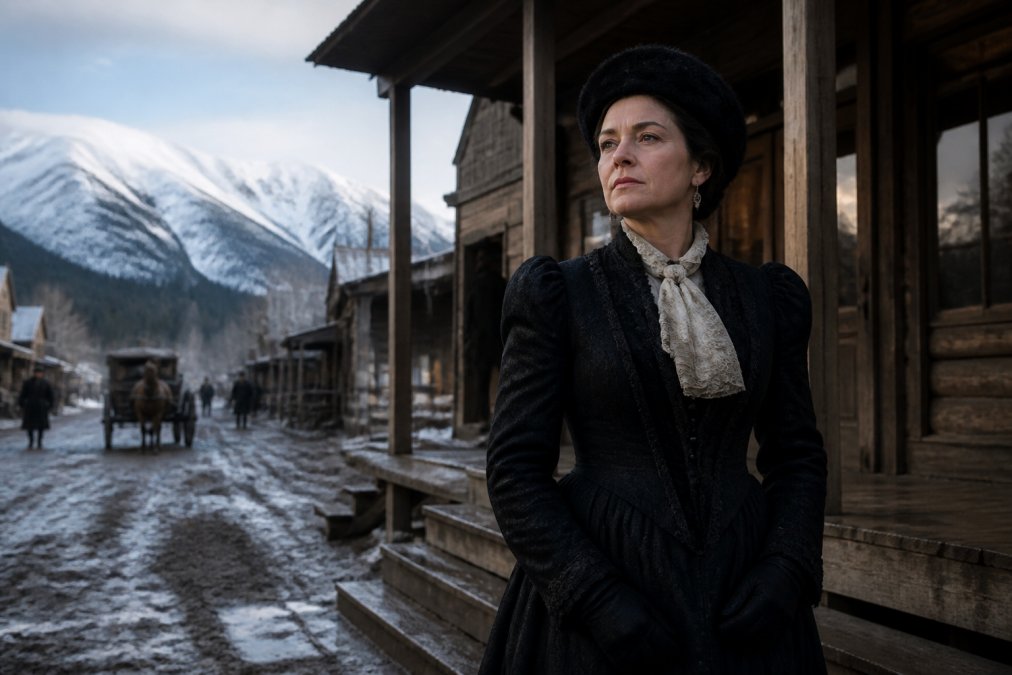
Her hotels and restaurants catered to prospectors who had just cashed in claims, and she invested her profits in mining claims of her own. Mulrooney's story matters because it breaks the standard narrative. The frontier was not exclusively male, and the women who prospered there usually did so by selling services rather than swinging a pick.
Klondike Kate and the Women Who Built the Boomtown
Klondike Kate Rockwell earned her nickname as the "Queen of the Klondike," a dancer and entertainer who became one of Dawson City's most recognizable personalities. She was not alone. Women ran boarding houses, laundries, restaurants, and saloons, and a handful staked their own mining claims.
The women of the gold rush era fell into rough categories:
- Entrepreneurs like Mulrooney, who built businesses around miners' needs
- Entertainers like Klondike Kate, who turned stage fame into income
- Laborers and service workers, who cooked, sewed, and washed for a mostly male population
- Claim holders, a small but real group who prospected in their own right
What most guides miss is how quickly these women organized. Churches, hospitals, and social clubs appeared in Dawson City within months, largely through their efforts.
Jack London and the Writers Who Recorded the Rush
Jack London spent less than a year in the Yukon, and it nearly killed him. He arrived in the fall of 1897, staked claims on Henderson Creek, and returned south the next year with scurvy and no gold. The experience produced The Call of the Wild, White Fang, and a stack of short stories that shaped how the world imagines the frontier. His Yukon fiction is often read as adventure; it is also a fairly accurate record of the hunger, the cold, and the casual cruelty of the stampede.
London was not the only writer the rush produced, and the others are worth naming.
- Robert W. Service worked in a Dawson City bank and wrote Songs of a Sourdough, the collection that gave the world "The Shooting of Dan McGrew" and "The Cremation of Sam McGee." Service was a bank clerk, not a prospector, and his ballads are more performance than reportage, but they fixed the popular image of the Klondike in verse.
- Jack London's contemporary and fellow traveler Pierre Berton, born in the Yukon decades later, wrote the definitive popular history Klondike, which drew on interviews with surviving stampeders.
- Tappan Adney, a journalist for Harper's Weekly, filed dispatches from the trail and Dawson City that remain among the best eyewitness accounts of the stampede's first year.
- William Ogilvie, the government surveyor, kept detailed diaries of the district before and during the rush; his observations on the discovery claims are a primary source historians still cite.
What most guides miss is that these writers were not neutral observers. Service worked for the bank that held miners' gold. Adney was selling magazines. London was broke and trying to sell stories. Their accounts are valuable precisely because they are partial, they show the rush as it was marketed, not only as it was lived.
Library and Archives Canada holdings on Klondike-era writers and diaries
The Failed Prospectors: What Happened to the Unlucky Majority
Most stampeders never found meaningful gold. They spent their savings on passage, supplies, and claim fees, worked a season or two, and went home broke, if they went home at all.
The 'failed' prospector experience is the part of the story that gets compressed into a footnote, and it deserves better. A claim that looked promising could yield nothing. Claim jumping was common, and disputes over staking rights could drag on for months. Placer mining required water, and water rights could make or break a season. Many who stayed took wage work in the mines or on the riverboats rather than prospecting on their own account.
The environmental legacy of all this digging is still visible. Hydraulic mining and sluicing tore up creek beds across the mining district, and the disturbed ground along Bonanza Creek and its tributaries remains part of the historical site record today.
How Old Is Parker Schnabel and Why Modern Mining Still Matters
Parker Schnabel was born in 1994, which makes him 32 years old in 2026. He grew up in Haines, Alaska, and took over mining operations on his grandfather John Schnabel's claims as a teenager, later expanding to the Dominion Creek operation in the Yukon that features on Discovery Channel's Gold Rush.
Schnabel's career connects the modern gold mining era directly to the original rush. The techniques have changed, with heavy equipment replacing picks and shovels, but the fundamentals of placer mining, reading ground, managing water, and working a claim through a short northern season, are recognizably the same.
For collectors, that continuity is the appeal. Parker's Gold offers raw placer gold flakes recovered from the Dominion Creek operation, presented in a handcrafted tri-fold display case with an official Certificate of Authenticity. It is a tangible link to the same goldfields the stampeders worked, verified and ready to display or gift.
Conclusion
Tracing the ten figures above makes one thing clear: the Yukon gold rush was never really about gold alone. It was about people willing to gamble everything on a wilderness claim, and the entrepreneurs, writers, and Indigenous communities whose stories outlasted the dust.
If you want to hold a piece of that history rather than just read about it, Parker's Gold sources genuine placer gold from Parker Schnabel's Dominion Creek operation, complete with a Certificate of Authenticity and secure, insured shipping. Claim yours and own a verified piece of the North.
Frequently Asked Questions
Who were the most successful prospectors during the Klondike Gold Rush?
George Carmack, Skookum Jim Mason, and Tagish Charlie filed the original Rabbit Creek claims in 1896 that triggered the rush. Belinda Mulrooney built a business empire in Dawson City worth over $1 million. Most stampeders never struck gold, but merchants, saloon owners, and supply sellers often profited more reliably than miners themselves.
What role did George Carmack play in the discovery of gold?
George Carmack filed the discovery claim on Rabbit Creek (later renamed Bonanza Creek) on August 17, 1896. His wife Kate, a Tagish First Nation woman, and her relatives Skookum Jim and Tagish Charlie were with him. Carmack received credit and the claim, but Skookum Jim reportedly made the actual find while resting near the creek.
Are there any famous women from the Klondike Gold Rush?
Yes. Belinda Mulrooney arrived with almost nothing and built hotels, restaurants, and supply businesses worth over $1 million in Dawson City. Kate Rockwell, known as Klondike Kate, earned a fortune as a dancer and entertainer. Both women proved that the Yukon gold rush offered opportunities beyond mining itself.
How old is Parker Schnabel and how does modern mining compare to the 1890s?
Parker Schnabel was born in 1994, making him 32 in 2026. He took over his grandfather John's claim at age 16 and now runs Dominion Creek. Modern operations use excavators, wash plants, and GPS surveying instead of picks and sluice boxes. The gold itself comes from the same placer deposits stampeders worked by hand over a century ago.