

Table of Contents
- What Defines Authentic Gold Rush Memorabilia
- Yukon Gold Mining History Facts and Provenance
- How to Verify Gold Rush Artifacts and Certifications
- Types of Authentic Gold Rush Memorabilia Worth Collecting
- Investment vs. Hobbyist Value in Gold Rush Collecting
- Preservation and Storage Best Practices
- Where to Find Verified Authentic Gold Rush Memorabilia
- Conclusion
Last Updated: August 19, 2026
What Defines Authentic Gold Rush Memorabilia
Authentic gold rush memorabilia encompasses tangible artifacts directly sourced from verified mining operations, with official certification and transparent provenance documentation. The distinction between authentic and counterfeit hinges on three core elements: direct sourcing from verified operations, official certification of authenticity, and documented chain of custody.
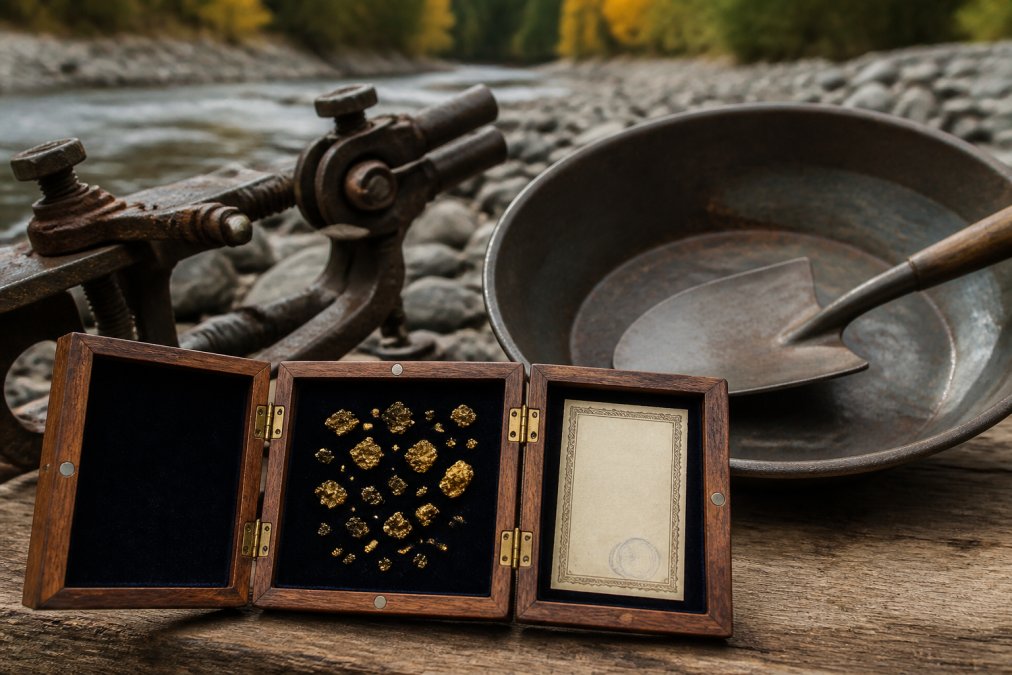
Parker's Gold specializes in this category, offering limited-edition collector packages featuring genuine raw placer gold sourced directly from Parker Schnabel's Dominion Creek operation in the Yukon. Each package arrives in a handcrafted tri-fold display case with an official Certificate of Authenticity, making it immediately distinguishable from generic gold products sold without provenance.

What separates authentic gold rush memorabilia from casual novelty items is the collector's ability to verify the story behind the piece. A signed mining tool with documented history commands significantly more value than an unmarked implement. Raw gold with clear sourcing information becomes investment-grade, while loose gold flakes without provenance remain commodity material.
Yukon Gold Mining History Facts and Provenance
The Yukon gold rush, beginning in the late 1890s, transformed remote northern territories into bustling mining regions and created a legacy that continues to define the area's identity. Dominion Creek, where Parker Schnabel operates his mining claim featured on Discovery Channel's Gold Rush, sits in the heart of historic Yukon mining country. Miners have extracted gold continuously from this location for over a century, with the creek documented in mining records dating back to the early 1900s.
Provenance, the documented history of an item's origin and ownership, is the foundation of authentic gold rush memorabilia value. A piece stating "recovered from Dominion Creek, Yukon, 2026" carries substantially more collector appeal than identical-looking gold without documentation. Yukon government historical archives maintain records of registered mining claims and historical operations, providing collectors with a means to verify sourcing claims.
The modern gold rush, popularized through television programming, has renewed interest in authentic artifacts sourced from active, documented operations. This contemporary context means collectors can now acquire memorabilia with transparent, verifiable sourcing, a significant advantage over collectors seeking items from closed historical mines.
How to Verify Gold Rush Artifacts and Certifications
A Certificate of Authenticity should include specific details: exact sourcing location, date of recovery, weight or measurement, and the signature or official seal of the certifying entity. Generic certificates lacking these specifics offer minimal protection.
The most reliable verification involves three steps. First, examine the certificate for professional presentation, specific sourcing information, and contact details for the issuing organization. Second, cross-reference the issuer's credentials, legitimate certifying bodies maintain public records and can be contacted independently. Third, assess the item's physical characteristics against documented standards for that category.
For raw placer gold, authentic pieces display natural characteristics: irregular shapes, visible color consistency, and weight proportional to volume. Counterfeit gold sometimes appears suspiciously uniform or exhibits color inconsistencies indicating dilution or coating.
When evaluating signed equipment or memorabilia, authentication becomes more complex. Look for authentication services specializing in sports memorabilia or historical artifacts; these organizations maintain databases of authenticated items and can cross-reference signatures against known examples. Independent verification carries substantially more weight than a seller's guarantee and directly impacts resale value.
Parker's Gold includes an official Certificate of Authenticity with every purchase, documenting sourcing from Dominion Creek and providing collectors with verifiable documentation that establishes provenance.
Types of Authentic Gold Rush Memorabilia Worth Collecting
Raw Placer Gold and Flakes
Raw placer gold represents the most direct connection to gold rush history and modern mining operations. Placer gold, found in riverbeds and surface deposits rather than hard rock mining, characterized much of the original gold rush activity and remains the primary recovery method in many Yukon operations today.
Authentic placer gold flakes and small nuggets offer immediate visual appeal and require no specialized knowledge to appreciate. Placer gold sourced from documented locations becomes increasingly valuable as mining operations close or shift focus, making current-era sourcing particularly collectible.
The Parker Schnabel Yukon Gold Flakes - Dominion Creek Collector Package at $199.00 exemplifies this category. The package includes genuine raw placer gold recovered from Dominion Creek, presented in a handcrafted tri-fold display case with an official Certificate of Authenticity. This presentation transforms raw material into a finished collectible suitable for display or gifting.
Placer gold requires minimal specialized storage equipment. Unlike some memorabilia categories requiring climate control or UV protection, placer gold remains stable in standard indoor conditions. The tri-fold display case provides both protection and aesthetic presentation.
Signed Sports Jerseys and Mining Equipment
Signed memorabilia from gold rush personalities and mining operations represents a distinct category with its own authentication challenges and collector appeal. A jersey signed by a television personality associated with gold rush programming carries value rooted in entertainment appeal combined with mining heritage.
The authentication process for signed items requires verification of the signature itself through examination of pen pressure, letter formation, spacing, and consistency against known examples. Reputable sports memorabilia authentication services maintain databases of authenticated signatures and provide certificates specifying their methodology.
Mining equipment bearing documentation of use in specific historical operations becomes increasingly valuable as original equipment ages and becomes scarce. Equipment associated with famous mining claims commands premium prices in the collector market.
What distinguishes investment-grade signed memorabilia from casual collectibles is the combination of signature authenticity plus historical significance.
Historical Artifacts and Mining Relics
Historical artifacts encompassing mining relics, period equipment, and ephemera from the gold rush era represent the most specialized category of authentic gold rush memorabilia. These items include original mining tools, historical photographs, period documents, and equipment from closed operations.
Authentic historical artifacts require rigorous verification. Age authentication often involves materials analysis, examining wear patterns, manufacturing techniques, and material composition to confirm historical period. Professional appraisers specializing in historical artifacts conduct this analysis and provide detailed authentication reports.
The scarcity of genuine historical artifacts from the original gold rush creates significant collector appeal. As original equipment deteriorates or enters museum collections, remaining pieces become increasingly rare. Documentation of provenance becomes critical, an artifact with clear documentation tracing its ownership through decades carries far more value than an identical-looking item without such documentation.
Investment vs. Hobbyist Value in Gold Rush Collecting
The distinction between collecting as a hobby and collecting as investment strategy fundamentally shapes purchasing decisions and long-term satisfaction. Hobbyist collectors prioritize personal enjoyment, display appeal, and connection to the gold rush narrative. Investment collectors prioritize appreciation potential, market demand, and documented provenance supporting future resale value.
For hobbyist collectors, authentic gold rush memorabilia offers immediate gratification. Displaying a handcrafted case containing placer gold sourced from Dominion Creek provides daily enjoyment and serves as a conversation piece. The item's value derives from its role as a tangible connection to the gold rush legacy.
Investment collectors approach the same items through a different lens, evaluating market demand, scarcity trends, and historical price appreciation for comparable items. Investment-grade memorabilia requires documented authenticity, clear provenance, and demonstrated collector demand.
The gold content itself represents a commodity floor for placer gold memorabilia. However, authentic memorabilia with clear provenance typically commands premiums substantially above commodity gold prices, derived from collector demand for authentic, documented pieces.
These categories aren't mutually exclusive. A hobbyist collector can acquire items with investment potential, and an investment collector can derive personal enjoyment from their acquisitions. The key distinction lies in how acquisition decisions are made and how success is measured.
Preservation and Storage Best Practices
Proper preservation and storage directly impact both the physical condition and collector value of authentic gold rush memorabilia. Placer gold itself requires minimal preservation effort, as gold is chemically inert and resistant to corrosion. However, the presentation and associated documentation require active protection.
Climate control represents the primary preservation concern. Ideal storage conditions maintain temperature between 65-75 degrees Fahrenheit with humidity between 40-50 percent. These conditions protect both the gold presentation case and any associated certificates or documentation.
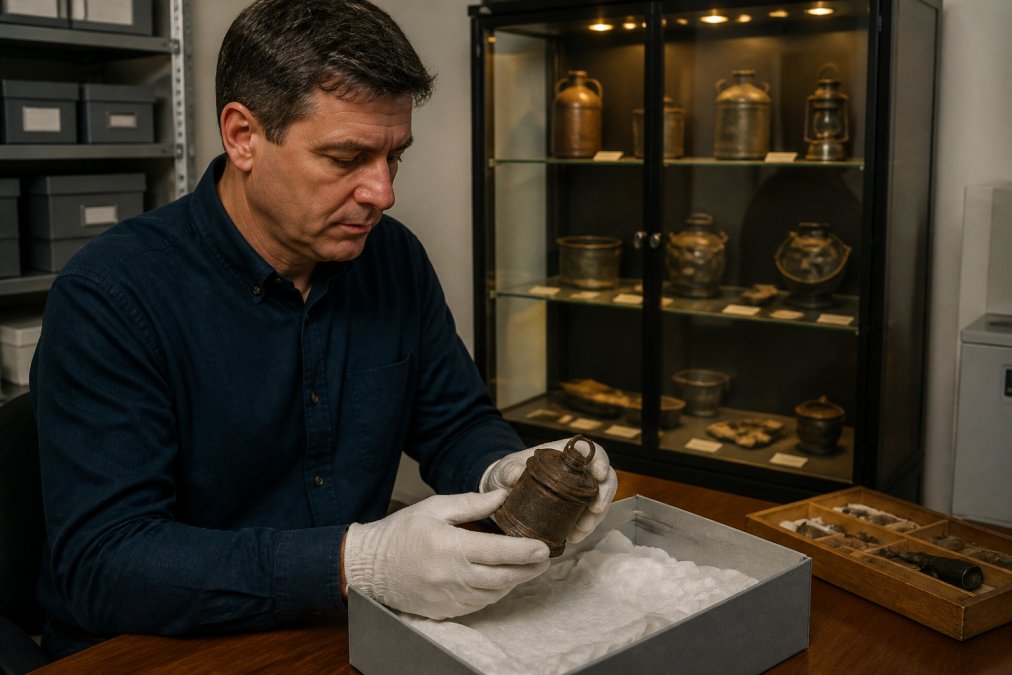
Handling procedures protect both the item and the collector's investment. Wear cotton gloves when handling gold or display cases to prevent skin oils from transferring to surfaces. Store certificates of authenticity in protective sleeves separate from the display case, preventing moisture transfer and damage to documentation.
Lighting impacts long-term preservation of display cases and associated materials. Direct sunlight causes fading and deterioration of wood finishes. Position display cases in locations with indirect, controlled lighting, avoiding windows, heat sources, or areas subject to temperature fluctuations.
Documentation preservation equals physical preservation in importance. Store certificates of authenticity, purchase receipts, and provenance documentation in archival-quality folders. Consider maintaining digital scans of all documentation as backup against physical loss or damage.
Where to Find Verified Authentic Gold Rush Memorabilia
Locating verified authentic gold rush memorabilia requires understanding the difference between commodity dealers, casual sellers, and specialized collectors' markets. Each channel presents different quality assurance levels and authentication standards.
Established e-commerce retailers specializing in gold rush memorabilia provide the highest quality assurance. These dealers maintain reputations dependent on authentication accuracy and customer satisfaction. They source items through documented channels and provide detailed certificates of authenticity. Better Business Bureau ratings for memorabilia retailers provide transparency into seller reliability and customer complaint history.
Parker's Gold represents this category, offering authentic placer gold sourced directly from Parker Schnabel's Dominion Creek operation. Direct sourcing from an active, documented mining operation eliminates intermediaries and provides the strongest possible provenance documentation.
Auction houses specializing in collectibles and memorabilia offer another channel, particularly for rare historical artifacts and signed memorabilia. Reputable auction houses conduct pre-sale authentication and provide detailed condition reports. However, auction house sales typically involve higher fees.
Direct acquisition from mining operations represents an increasingly viable channel as television programming popularizes modern mining. This direct-from-source approach provides the strongest possible provenance documentation.
Estate sales and antique dealers present higher risk channels for historical artifacts. While genuine items do appear through these channels, authentication becomes the collector's responsibility. If pursuing this channel, engage professional appraisers before purchase to verify authenticity claims.
Online marketplaces offer accessibility but require heightened scrutiny. Federal Trade Commission guidance on online seller verification emphasizes checking seller credentials, authentication documentation, and return policies. Prioritize sellers with extensive positive feedback specifically related to memorabilia sales.
The distinction between verified retailers and casual sellers hinges on documentation and accountability. Verified sellers maintain reputations, provide detailed authentication, and stand behind their claims.
Conclusion
Authentic gold rush memorabilia bridges the gap between commodity precious metals and historical artifacts, offering collectors a tangible connection to the gold rush legacy. Whether you're a Discovery Channel Gold Rush enthusiast seeking a meaningful gift or a serious collector building an investment portfolio, the market now offers verified, authenticated options directly sourced from documented operations.
The Parker Schnabel Yukon Gold Flakes - Dominion Creek Collector Package at $199.00 exemplifies the category: genuine placer gold sourced from an active, television-featured operation, presented in a handcrafted tri-fold display case with official Certificate of Authenticity and fully insured, tracked, signature-required shipping.
Claim yours and own a verified piece of authentic Yukon history with the confidence that comes from direct sourcing, professional authentication, and Parker's Gold's commitment to collector standards.
Frequently Asked Questions
What makes authentic gold rush memorabilia different from mass-produced replicas?
Authentic gold rush memorabilia comes with verified provenance, documented sourcing, and official certification. Mass-produced items lack chain-of-custody documentation and authentic historical connection. Real pieces often include certificates of authenticity, direct sourcing records, and historical documentation that proves their origin from actual mining operations like those in the Yukon. Replicas may look similar but lack the verified authenticity and investment value collectors seek.
How can I verify gold rush artifacts are genuine before purchasing?
Check for an official Certificate of Authenticity from a reputable source, verify the seller's credentials and customer reviews, and confirm the item's provenance documentation. Legitimate dealers provide detailed sourcing information, often including photographs or video documentation of extraction. For raw placer gold, authentic pieces come with certified weight and purity information. Request documentation of the mining operation and location where the artifact originated, and cross-reference seller claims with industry standards.
Is buying authentic gold rush memorabilia a good investment compared to raw gold bullion?
Authentic gold rush memorabilia can appreciate beyond gold's spot value due to historical significance, rarity, and collector demand. Raw bullion from dealers like JM Bullion tracks gold prices directly, offering pure metal value. Memorabilia appeals to collectors seeking historical artifacts and unique pieces tied to specific operations or eras. Investment potential depends on your goal: bullion for metal value, memorabilia for collectible appreciation and historical connection. Authentic pieces with strong provenance typically hold value better than generic gold products.
What should I know about Yukon gold mining history when collecting artifacts from that region?
The Yukon's gold rush, particularly operations on Dominion Creek, represents some of North America's most significant placer gold mining. Understanding the region's history, including notable operations and mining techniques, helps identify authentic pieces. Collectors value artifacts directly connected to documented historical mining sites and operations. Knowledge of Yukon mining history helps you assess authenticity and rarity. Pieces sourced from verified, active mining operations with documented histories command higher collector value and investment potential.
This article was written using GrandRanker