

Table of Contents
- Why Raw Gold Makes a Distinctive Gift
- Raw Gold vs Bullion for Gifting: What's the Difference
- How to Verify Gold Authenticity Before You Buy
- Understanding Spot Price, Premiums, and Gift Value
- Gift Tax Limits for Precious Metals You Should Know
- Presentation, Packaging, and Secure Delivery
- Occasions and Recipients That Suit Raw Gold Gifts
- Conclusion
Last Updated: August 22, 2026
Why Raw Gold Makes a Distinctive Gift
Raw gold combines authenticity, tangibility, and storytelling in a single package. Unlike polished jewelry or mass-produced coins, raw placer gold carries the narrative of its origin, each flake represents a specific mining operation, a particular season, and the hands that recovered it from the earth.
When buying raw gold as a gift, you're offering something that bridges investment-grade bullion and emotional keepsake. The recipient doesn't need to be a seasoned collector to appreciate it. Casual fans of mining history, outdoor adventure enthusiasts, and people drawn to the Gold Rush era all find raw gold compelling because it's tangible wealth they can hold, display, and understand.
Raw gold sourced responsibly comes with verifiable provenance. Parker's Gold sources its raw placer gold directly from Parker Schnabel's Dominion Creek operation in the Yukon, featured on Discovery Channel's Gold Rush. Each package arrives with an official Certificate of Authenticity, transforming a natural specimen into a documented piece of history.

What makes this gift category unique is that raw gold doesn't need to be locked away in a vault. Presented in a handcrafted tri-fold display case, it becomes an heirloom-quality gift that sits on a shelf or desk rather than disappearing into a safe deposit box.
Raw Gold vs Bullion for Gifting: What's the Difference
The distinction between raw gold and traditional bullion matters when buying raw gold as a gift because it affects presentation, perceived value, and how the recipient will interact with what you're giving them.
Bullion refers to precious metals cast or minted into standardized bars or coins. These pieces are graded by weight, purity, and uniformity. A bullion bar is predictable: 1 troy ounce of .999 fine gold looks essentially the same regardless of dealer. Bullion prioritizes fungibility, the ability to sell or trade it easily.
Raw gold is placer gold recovered directly from mining operations. Each flake, nugget, or specimen is unique in shape, size, and character. This irregularity is precisely what makes it compelling as a gift.
Raw Placer Gold Flakes
Placer gold flakes represent the most accessible entry point for buying raw gold as a gift. These small particles, typically ranging from fine dust to pea-sized pieces, are recovered through placer mining, where water and gravity separate gold from lighter sediments.
Placer gold flakes appeal to gift-givers because they're visually striking in small quantities and catch light beautifully in a display case. The recipient sees actual gold, not a certificate or bar, but the real thing they can examine closely. Because they're small, they work well in handcrafted display cases without requiring heavy-duty security and are easier to photograph and share.
Parker's Gold packages its Dominion Creek placer gold flakes in a tri-fold display case designed specifically for this purpose, making the gift immediately ready to display or gift-wrap. One consideration: placer gold flakes require careful handling during shipping, which is why insured, tracked, and signature-required shipping becomes important.
Minted Bars and Coins
Minted bars and sovereign coins are standardized pieces cast or stamped to exact specifications. A minted bar is uniform, predictable, and easy to verify for weight and purity through standard hallmarks and assay cards.
Minted pieces work well for gift-givers focused on investment value. However, minted bars lack the storytelling element that makes raw gold distinctive as a gift. Raw gold, particularly when sourced from a named operation like Dominion Creek, carries geographic and operational specificity that transforms it from a commodity into a keepsake.
How to Verify Gold Authenticity Before You Buy
Buying raw gold as a gift introduces a real concern: how do you know what you're actually getting? Before committing to a purchase, verification becomes non-negotiable.
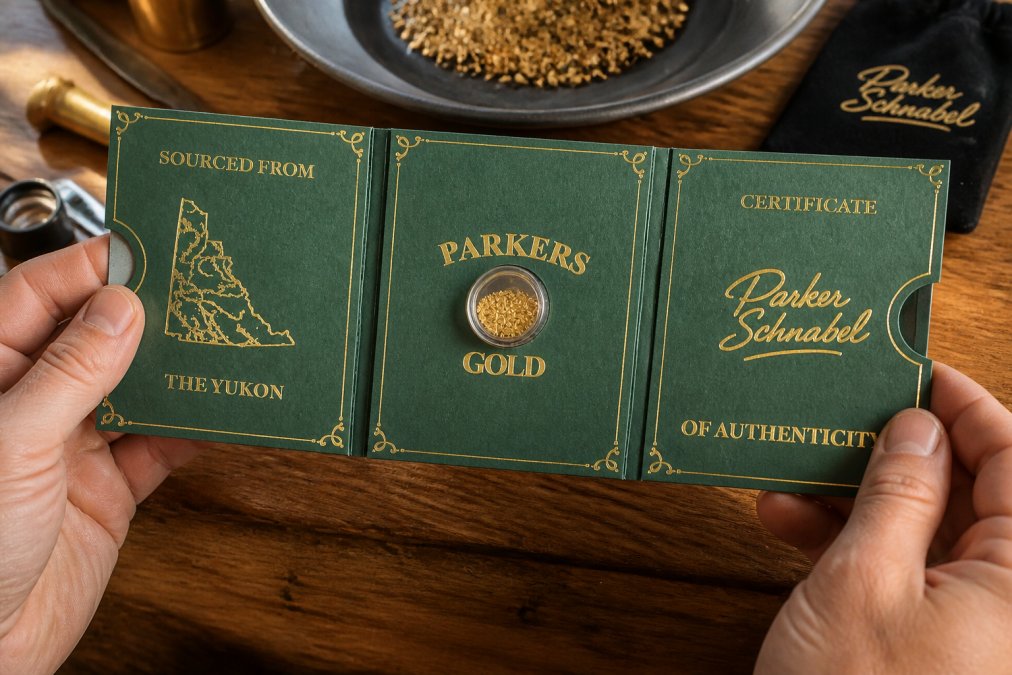
The verification process works in two layers: documentation and physical inspection. Any reputable seller of raw gold should provide an assay card or Certificate of Authenticity stating the weight, purity, and origin. For Parker's Gold, each package includes an official Certificate of Authenticity verifying the gold's origin from Dominion Creek and its weight and purity.
Certificate of Authenticity and Assay Cards
An assay card is a laboratory report confirming the weight and purity of precious metal. A Certificate of Authenticity documents the source and origin story. Together, they form the foundation of verification.
When evaluating these documents, look for specific details: the exact weight in troy ounces, the purity expressed as a percentage or fineness (e.g., .999 fine gold), the testing date, and the issuing authority's credentials. Legitimate assay cards come from recognized precious metals testing laboratories and include a unique identifier or serial number that ties it to the specific gold specimen.
For raw placer gold, the Certificate of Authenticity should reference the mining operation and recovery location. This specificity is harder to fabricate. One practical check: contact the issuing laboratory to verify the certificate is genuine. If a seller resists verification, that's a red flag.
Hallmarks and Purity Standards
Hallmarks are stamps indicating purity. On minted bars and coins, they're official stamps applied during manufacturing. For raw gold, purity verification relies on assay testing and documentation.
Gold purity is expressed in fineness as a decimal: .999 means 99.9% pure gold, .995 means 99.5% pure. Raw placer gold typically ranges from .85 to .99+ fineness depending on recovery method and source location (usgs.gov). When buying raw gold as a gift, the purity matters less than authenticity and presentation, but it's still worth understanding.
For items like Parker's Gold's Dominion Creek packages, the Certificate of Authenticity specifies the exact purity and weight, transforming the gift from an unknown quantity into a documented, verifiable asset.
Understanding Spot Price, Premiums, and Gift Value
The spot price of gold is the current market rate for one troy ounce of pure gold, updated continuously during trading hours. When buying raw gold as a gift, understanding spot price helps you evaluate whether you're paying a fair price and what the gift's intrinsic value represents.
Raw gold typically sells above spot price. This premium reflects labor and equipment needed to recover and process the gold, packaging and presentation, documentation and certification, and the dealer's margin. A fair premium for raw placer gold usually ranges from 10-30% above spot, depending on form, presentation quality, and source specificity.
Parker's Gold's Dominion Creek Collector Package, priced at $199.00, includes premium components beyond raw gold itself: the handcrafted tri-fold display case, the official Certificate of Authenticity, the sourcing narrative, and fully insured, tracked, and signature-required shipping. These elements justify the premium over spot price.
Buying raw gold as a gift isn't purely an investment transaction. You're paying for authenticity, presentation, story, and the peace of mind that comes with documented provenance. If a seller's raw gold price is only 2-3% above spot, question what's being cut. If the premium exceeds 50%, you're likely paying for branding or collector appeal beyond the gold itself.
Gift Tax Limits for Precious Metals You Should Know
The IRS allows individuals to give up to $18,000 per recipient per year (as of 2026) without filing a gift tax return or reducing their lifetime gift tax exemption. This threshold applies to all gifts, including precious metals. Precious metals themselves are not subject to special gift tax treatment.
For most gift-givers, buying raw gold as a gift falls well within the annual exclusion. A single gift of raw gold, even a high-value one, typically won't trigger gift tax consequences. The recipient pays no tax on receiving the gift.
If you're gifting gold to a spouse, the unlimited marital deduction applies, meaning no gift tax applies regardless of value. If you're gifting to a non-spouse, the $18,000 annual exclusion per person applies.
The recipient's tax obligations depend on what they do with the gold later. If they sell it, they'll owe capital gains tax on the appreciation since the gift date. If they hold it as a display piece, there are no ongoing tax consequences.
For detailed guidance specific to your situation, consult the IRS guidance on gift tax or speak with a tax professional.
Presentation, Packaging, and Secure Delivery
The unboxing experience matters significantly. Raw gold arrives as a precious item that deserves thoughtful presentation. How the gold is packaged, presented, and delivered shapes the recipient's first impression and their confidence in what they've received.
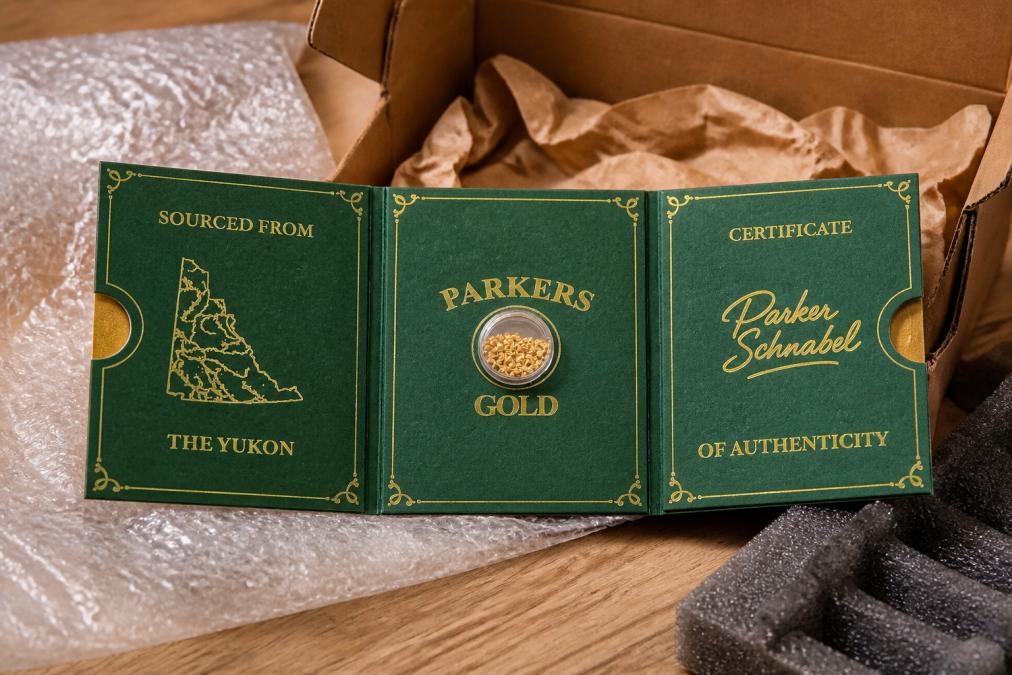
The best presentation for raw gold combines protection with display appeal. A handcrafted display case serves both purposes: it protects the gold from handling and environmental exposure while making the gold immediately viewable and displayable. Parker's Gold's tri-fold display case holds the raw placer gold securely while keeping it visible and includes a dedicated space for the Certificate of Authenticity.
Secure delivery is non-negotiable when shipping precious metals. The package should be fully insured for the gold's declared value, tracked throughout transit, and require a signature upon delivery. This protects both sender and recipient. Parker's Gold handles this with fully insured, tracked, and signature-required shipping, ensuring the gold reaches the intended recipient safely.
Occasions and Recipients That Suit Raw Gold Gifts
Raw gold works as a gift for specific occasions and recipient types. Collectors and precious metals enthusiasts are the most obvious audience. Gold Rush and mining history fans will appreciate the connection to a real mining operation like Dominion Creek. Milestone celebrations such as weddings, anniversaries, retirements, and major life achievements benefit from a gift that's both beautiful and meaningful. Outdoor adventure enthusiasts often appreciate raw gold because it connects to the spirit of exploration and discovery.
Raw gold is less suitable as a gift for people who prefer low-maintenance, immediately usable items. It requires some level of interest in precious metals, history, or collectibles to be truly appreciated.
Buying raw gold as a gift bridges the gap between investment and sentiment in ways few other presents can. You're offering tangible wealth, verified authenticity, and a story, all wrapped in careful presentation and secure delivery. When sourced from a reputable dealer like Parker's Gold, which provides authentic Dominion Creek placer gold with official Certificates of Authenticity and handcrafted display cases, the gift becomes more than metal. It becomes a documented piece of history, ready to display and cherish. Learn more about precious metals gifting best practices and explore how raw gold can fit into your gift-giving strategy. Claim yours and give a gift that truly stands apart.
Frequently Asked Questions
How can I verify the authenticity of raw gold before buying it as a gift?
Authentic raw gold comes with a Certificate of Authenticity that documents its origin, weight, and purity. Reputable sellers like Parker's Gold source directly from verified mining operations and include detailed documentation. Always buy from established dealers with transparent sourcing and customer reviews.
What's the difference between raw gold and bullion when buying as a gift?
Raw placer gold flakes are natural gold specimens recovered from mining operations, prized for their authenticity and collectible appeal. Bullion refers to refined bars or coins with standardized weight and purity, primarily valued as investment-grade precious metals. Raw gold gifts emphasize the tangible connection to mining heritage and history, while bullion focuses on spot price and liquidity. For gift-giving, raw gold offers emotional and symbolic value, while bullion suits those prioritizing the metal's financial worth.
Do I have to pay gift taxes when giving gold to a family member?
The IRS annual gift tax exclusion allows you to give up to $18,000 per recipient (2024) without filing a gift tax return or owing taxes. Gifts between spouses have no limit. Gold gifts are treated like any other property gift under IRS reporting rules. Amounts exceeding the annual exclusion require Form 709 filing but don't necessarily trigger taxes if you haven't exceeded your lifetime exemption. Consult a tax professional for specific situations, especially for high-value precious metal gifts.
Is it legal to own raw gold in the United States?
Yes, owning raw gold is completely legal in the United States. There are no restrictions on purchasing, owning, or gifting raw placer gold or any form of precious metals. Unlike certain historical periods, modern US law permits private ownership of bullion, coins, and raw specimens without licensing or reporting requirements for personal collections. However, large cash transactions over $10,000 trigger Currency Transaction Reports (CTR) for reporting purposes. Raw gold from verified sources like mining operations is fully legal to own and gift.
This article was written using GrandRanker