

Table of Contents
- 1. Handcrafted Display Cases for Raw Gold Specimens
- 2. Acrylic Mounts and Shadow Box Presentations
- 3. Protecting Raw Gold from Environmental Damage
- 4. Lighting Techniques to Highlight Gold Specimens
- 5. Organizing and Curating Your Gold Collection
- 6. Aesthetic Display Mounting for Premium Pieces
- 7. Security and Storage for Valuable Gold Specimens
- Conclusion
Last Updated: August 17, 2026
1. Handcrafted Display Cases for Raw Gold Specimens
The most compelling way to showcase raw gold is through a purpose-built display case that protects the specimen while highlighting its natural beauty. A handcrafted tri-fold case combines practical preservation with visual appeal, making gold the centerpiece of any collection.
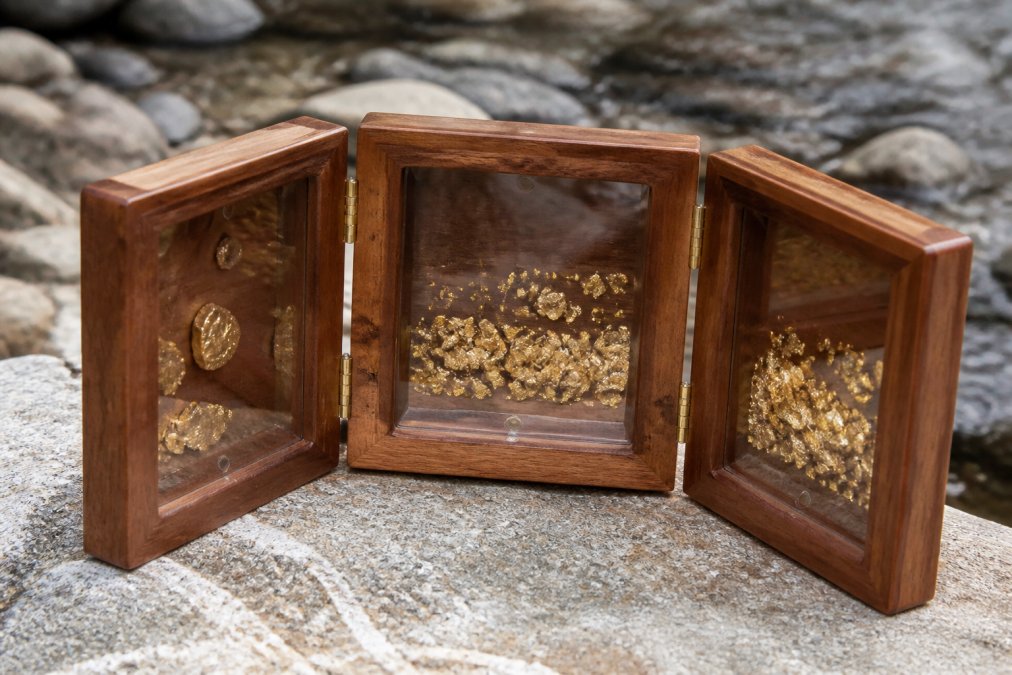
Handcrafted cases differ fundamentally from mass-produced alternatives. They're built with solid wood frames, protective acrylic or glass panels, and felt or velvet linings that cradle specimens without shifting. The tri-fold design creates a self-standing display that works on shelves, desks, or display tables without requiring wall mounting or additional hardware.
These cases control environmental exposure effectively. Sealed acrylic compartments minimize contact with dust and humidity, which can eventually tarnish exposed gold surfaces. The handcrafted approach also allows for custom sizing, ensuring your display case fits your specific specimen perfectly.
Parker's Gold includes authentic Dominion Creek placer gold in a handcrafted tri-fold display case as part of the standard Collector Package, ensuring your raw gold arrives protected and ready for immediate display. Consider placement carefully: direct sunlight can fade wood finishes, so position displays away from windows or use UV-protective glass.

2. Acrylic Mounts and Shadow Box Presentations
For collectors who want to feature raw gold as wall art, acrylic mounts and shadow boxes transform specimens into gallery-quality displays that command attention without requiring floor or shelf space.
An acrylic mount suspends the gold specimen within a clear block or frame, creating a three-dimensional floating effect. Shadow boxes, shallow wooden frames with glass or acrylic fronts, offer similar protection with more design flexibility. Both approaches allow 360-degree viewing while protecting gold from handling.
The key advantage is visibility from all angles. Wall-mounted displays make your gold collection a focal point of the room, particularly suited for collectors who view their raw gold as both investment and aesthetic statement. Shadow boxes offer additional storytelling potential: pair your specimen with its Certificate of Authenticity, a map of the Dominion Creek mining area, or photographs documenting the operation.
When selecting acrylic mounts, ensure the acrylic is archival-grade and UV-resistant. Standard acrylic yellows and becomes brittle over decades. Use secure wall anchors rated for the display's weight, and position it away from high-traffic areas where accidental contact could dislodge it.
3. Protecting Raw Gold from Environmental Damage
Raw gold's appearance depends on minimizing exposure to environmental factors that cause oxidation, tarnishing, or surface degradation. While gold doesn't rust like copper, placer gold can experience microscopic oxidation layers when exposed to moisture and oxygen over extended periods, dulling its bright luster.
The primary environmental threat is humidity. Moisture accelerates oxidation on exposed gold surfaces. Sealed display cases with airtight compartments prevent this entirely. For open displays, add silica gel packets inside the case to absorb ambient moisture, replacing them every 6-12 months depending on local humidity levels.
Temperature fluctuations affect the materials surrounding gold more than the gold itself. Wood frames expand and contract with temperature changes, potentially stressing acrylic panels. Maintain consistent room temperature between 65-75 degrees Fahrenheit, and avoid placing displays near heating vents, air conditioning units, or windows where temperature swings are extreme.
Light exposure matters primarily for display materials. Prolonged direct sunlight fades wood finishes and yellows acrylic mounts. Position displays in interior locations away from windows, or use UV-filtering glass if wall placement near windows is unavoidable. LED lighting provides controlled illumination without heat or UV radiation.
Dust accumulation on exposed gold surfaces requires occasional gentle cleaning. A soft brush or compressed air removes dust without scratching the specimen. Never use water or chemical cleaners on raw gold.
4. Lighting Techniques to Highlight Gold Specimens
Proper lighting transforms raw gold into a captivating display piece, revealing natural luster, color gradations, and three-dimensional texture.
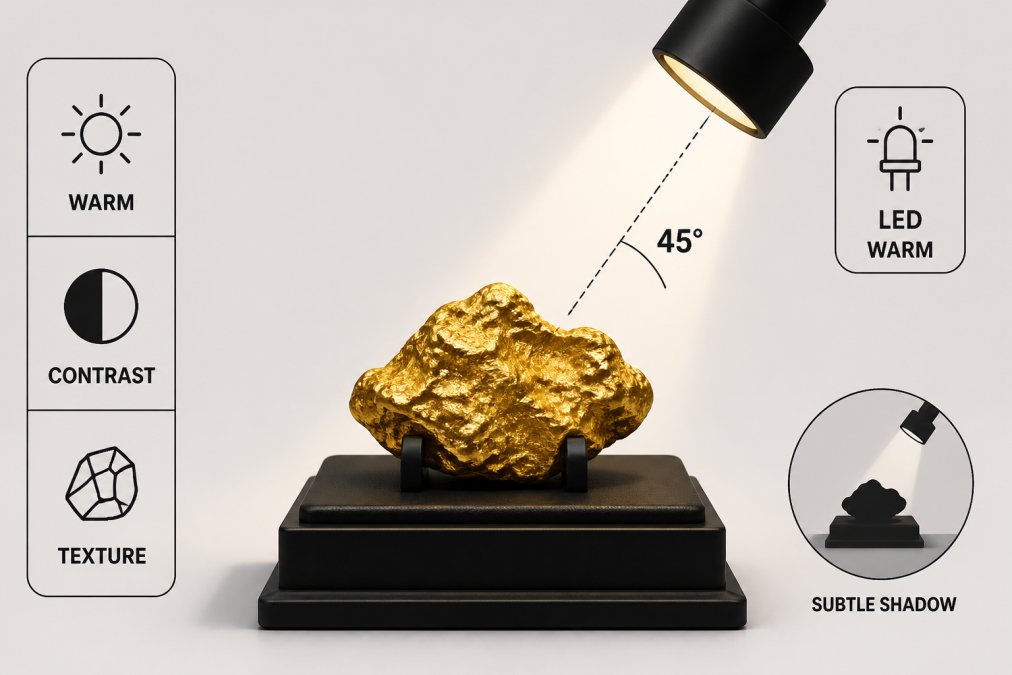
LED spotlighting is the gold standard for specimen display. Unlike incandescent or halogen bulbs, LEDs generate minimal heat and produce no ultraviolet radiation, eliminating light-based aging that affects wood finishes and acrylic clarity.
The angle of light matters as much as the light source itself. A single light positioned at a 45-degree angle creates subtle shadows that accentuate texture and dimensionality. Avoid directly overhead lighting, which flattens appearance and washes out detail.
Color temperature affects how gold appears. Warm white LEDs (2700-3000K) complement gold's natural yellow tones, making specimens appear richer and more inviting. Cool white LEDs (5000K or higher) can make gold appear gray or washed out. If your display space uses cool-temperature overhead lighting, add a dedicated warm-temperature LED spotlight focused on the specimen.
For shadow boxes and wall-mounted displays, use track lighting or adjustable LED picture lights that mount above the frame. Layered lighting, combining ambient room light with focused specimen lighting, creates visual hierarchy that naturally draws the eye. Avoid fluorescent lighting entirely; it flickers imperceptibly and casts harsh, unflattering color that makes gold appear dull.
5. Organizing and Curating Your Gold Collection
How you arrange multiple specimens transforms a collection from scattered items into a cohesive display that tells a story about gold mining, geology, or your personal collecting journey.
Curation begins with intentional grouping. Organize specimens by size, creating visual progression from small flakes to larger nuggets, or group by origin to emphasize diversity of raw gold sources. For collections including multiple Parker's Gold specimens, arrange chronologically or by source location to create narrative about a specific mine.
Scale matters in collection curation. A single large specimen commands more visual impact than several small pieces scattered across a display surface. Use tiered display platforms or shelving to ensure smaller specimens remain visible. Documentation elevates a collection from simple display to curated exhibition. Include small labels identifying each specimen's origin, approximate weight, and notable characteristics. Displaying Certificates of Authenticity alongside specimens adds credibility and context.
Rotation is a practical strategy for large collections. Display your finest pieces permanently, but rotate secondary specimens every few months. This keeps the collection feeling fresh and distributes light exposure evenly across all specimens.
6. Aesthetic Display Mounting for Premium Pieces
Premium raw gold specimens deserve mounting techniques that showcase their individual character while emphasizing their value and rarity.
Museum-quality mounting uses minimal contact points to suspend specimens within their display environment, keeping gold from touching surfaces that might scratch it. Specialized mounting systems use clear acrylic or silicone supports that are virtually invisible.
For exceptionally valuable specimens, custom acrylic mounts offer the highest level of presentation. A specialist can create a custom acrylic block sized precisely to your gold piece, with the specimen suspended at the optimal viewing angle. Pedestal mounting works particularly well for substantial nuggets, raising the specimen to eye level and creating a commanding visual presence.
The mounting surface itself contributes to overall aesthetic. Velvet or felt linings in complementary colors enhance gold's appearance. Deep jeweler's black creates dramatic contrast that makes gold appear brighter. For collections emphasizing the Dominion Creek origin story, mounting that incorporates geographic or historical context adds another layer of meaning. A pedestal base engraved with "Dominion Creek, Yukon" or a shadow box pairing the specimen with mining location photographs transforms the display into a narrative object.
Lighting integration into the mount itself, such as subtle LED strips within acrylic bases, creates professional presentation without requiring separate fixture installation.
7. Security and Storage for Valuable Gold Specimens
Raw gold specimens, particularly documented pieces like Parker's Gold Dominion Creek specimens, represent genuine value. Secure storage and display practices protect your investment while allowing you to enjoy your collection.
For displayed pieces, security depends on location and visibility. Specimens in locked glass cases with reinforced frames provide visual access without physical vulnerability. Wall-mounted shadow boxes can include security locks. Collections displayed in private spaces offer adequate protection with standard display cases; more public areas benefit from locking mechanisms.
Insurance documentation is essential for valuable specimens. Maintain records including photographs, weight estimates, origin documentation, and approximate value. Store these records separately from specimens, ideally in a fireproof safe or cloud storage. Verify your homeowner's or renter's insurance covers precious metals displays and any special requirements for items above a certain value.
Storage of non-displayed specimens requires different considerations. A home safe provides security and environmental control. Specimens stored in sealed acrylic cases or archival-quality plastic sleeves remain protected from oxidation and dust. Silica gel packets inside storage containers prevent humidity-related degradation. For substantial holdings, a safe deposit box at a bank offers security and environmental stability, though it limits your ability to view and enjoy your collection.
Parker's Gold specimens arrive with fully insured, tracked, and signature-required shipping, ensuring secure delivery. Once received, maintain similar security standards. Photograph each piece upon receipt, noting surface characteristics, color variations, and notable features. These baseline photographs provide crucial evidence for insurance claims or authenticity verification.
Displaying raw gold effectively combines practical preservation with aesthetic presentation. The methods covered here, from handcrafted cases to strategic lighting to thoughtful curation, transform raw gold from a simple specimen into a meaningful display that captures the adventurous spirit of gold mining while protecting your investment for decades.
If you're seeking authentic raw gold to display, Parker's Gold offers specimens directly sourced from Parker Schnabel's legendary Dominion Creek operation in the Yukon. Each piece arrives in a handcrafted tri-fold display case with an official Certificate of Authenticity, ready for immediate display or gifting. The combination of verified authenticity, premium presentation, and secure delivery makes Parker's Gold an ideal choice for collectors seeking genuine connection to Gold Rush history. Claim Yours and begin building your collection today.
Frequently Asked Questions
What is the best way to store raw gold specimens?
Store raw gold in a handcrafted display case with protective acrylic housing, away from direct sunlight and moisture. Keep specimens in a cool, dry environment to prevent oxidation and tarnish. For high-value pieces like those from Parker Schnabel's Dominion Creek operation, use acid-free materials inside the case and maintain stable temperature and humidity levels. A secure display case protects your investment while allowing you to enjoy viewing your collection.
How do you protect raw gold from dust and oxidation?
Use sealed display cases with tight-fitting lids or acrylic covers to shield specimens from dust and air exposure. Avoid storing raw gold in open glass jars or exposed shelving. Include silica gel packets inside closed cases to control humidity and prevent oxidation. For premium specimens with authenticity certificates, choose cases with UV-protective acrylic to prevent fading and environmental damage. Regular inspection ensures your gold remains in pristine condition.
Can you use floating frames for raw gold nuggets?
Yes, floating frames work well for displaying raw gold nuggets, especially smaller specimens. Use shadow box frames with acid-free backing and UV-protective acrylic windows. Mount nuggets on acrylic stands or custom mineral display stands within the frame to prevent shifting. This method is ideal for showcasing high-grade nuggets from verified sources like Parker's Gold while keeping them protected from dust and handling. Ensure the frame includes your Certificate of Authenticity alongside the specimen.
How much gold is included in Parker's Gold Dominion Creek packages?
The Parker Schnabel Yukon Gold Flakes Dominion Creek Collector Package ($199.00) contains authentic raw placer gold recovered from the legendary Dominion Creek operation featured on Discovery Channel's Gold Rush. The package includes genuine gold flakes presented in a handcrafted tri-fold display case with an official Certificate of Authenticity verifying origin and authenticity. Contact Parker's Gold directly for specific weight and purity details on individual packages.
This article was written using GrandRanker