

Table of Contents
- What You'll Need Before You Start
- Step 1: Sort and Inspect Your Raw Placer Gold
- Step 2: Wash and Wet Screen Your Placer Gold
- Step 3: Removing Iron Staining from Gold
- The Best Tools for Cleaning Gold Nuggets
- Safe Chemical Cleaning for Gold Specimens
- Step 4: Rinse, Dry, and Store Your Clean Gold
- Common Mistakes to Avoid When Cleaning Placer Gold
- Frequently Asked Questions
Last Updated: September 26, 2026
What You'll Need Before You Start
Learning how to clean raw placer gold safely starts with the right setup, not harsh acids. Raw placer gold from creeks and gravel bars carries black sands, iron staining, and clay, all removable with water, patience, and a few cheap tools.
Why Raw Placer Concentrate Needs Respect
Placer gold comes packed with black sands, magnetite, ilmenite, and hematite, plus other heavy minerals. Those concentrates can carry naturally occurring arsenic, lead, and mercury, especially in historic mining districts where old tailings still shed amalgam beads downstream. This is not a toxic waste site, but it deserves more caution than garden gravel.
The two real exposure routes are dust and skin contact. Dry concentrate kicks up fine particulate when you pour or brush it, that dust is the part you do not want to breathe. Wet processing keeps dust down, which is why every step below happens in water.
Personal Protective Equipment for Handling Raw Concentrate
This gear list is cheap and reusable:
- Nitrile gloves (4 mil or thicker). Not latex, not vinyl. Nitrile resists punctures from sharp quartz fragments and keeps heavy-metal residue off your skin. Swap them if they tear.
- Safety glasses with side shields. Fine grit flicks off a brush and off classifier screens. Standard sunglasses will not stop it.
- N95 respirator. Wear it any time the material is dry, pouring concentrate, brushing dust off a nugget, or emptying a drying cloth. A basic hardware-store N95 is enough for occasional hobby use.
- Long sleeves and closed shoes. Skip sandals. Concentrate that lands on bare skin stays there.
- A dedicated work surface. A shallow plastic tub or a rubber mat you only use for gold. It catches spills and keeps concentrate out of food areas.
Cleaning Supplies
Gather these before you touch your gold:
- Two plastic pans, one for washing and one for rinsing
- A spray bottle filled with clean water
- A soft toothbrush and a fine-tip paintbrush
- A small sieve or classifier screen
- A magnifying loupe or jeweler's lens
- A glass jar with a tight lid for storage
- White vinegar and mild dish soap for the cleaning steps
Set Up Before You Start
Lay a rubber mat or shallow tub on a stable table and fill one pan with clean water. Put on gloves and glasses before opening the concentrate bag; if the material is dry, put the N95 on first. The cleaning itself is quick, preparation is what keeps it safe.
Step 1: Sort and Inspect Your Raw Placer Gold
Sorting comes first because different pieces need different treatment. Pick through your material with a loupe and separate it into three piles:
- Clean nuggets with visible shine and little staining
- Stained pieces with a dull brown or orange coating
- Heavy concentrate mixed with black sands and other heavy minerals
This takes five minutes and saves an hour later, cleaning everything the same way wastes time and risks scratching good pieces.
A common mistake is scrubbing stained gold with a stiff brush right away. That pushes iron oxide deeper into tiny cracks. Sort first, then match the method to the piece.
Step 2: Wash and Wet Screen Your Placer Gold
Wet screening removes loose dirt, clay, and fine sand before deeper cleaning. Fill one pan with clean water, set your classifier screen inside a second pan, and place a small scoop of raw material into the screen.
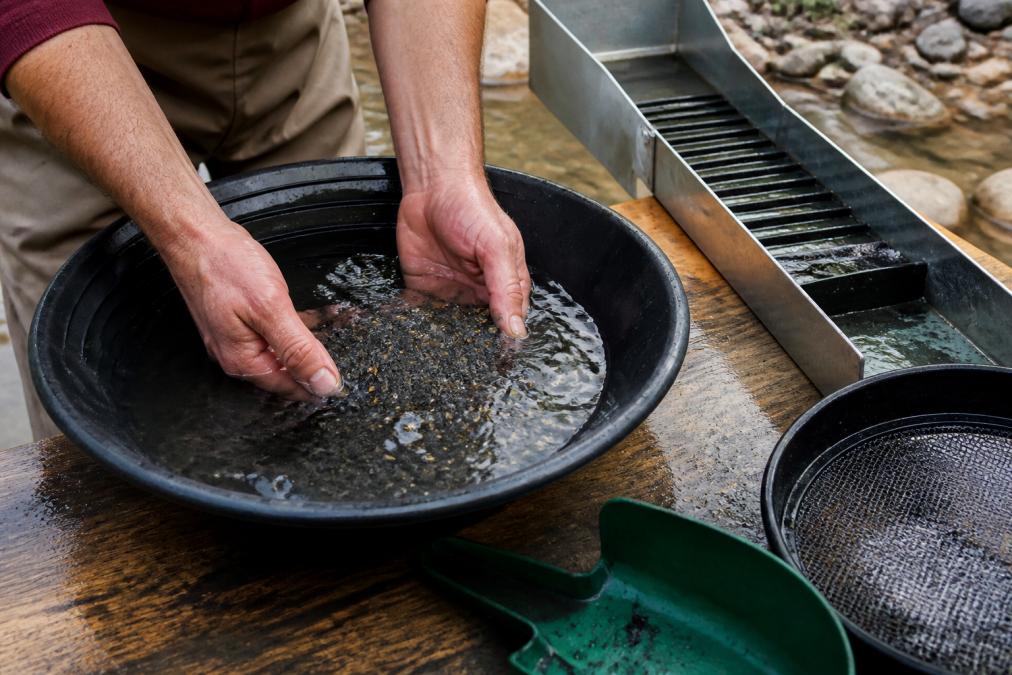
Work the material with your fingers under water. Clay breaks apart and washes through while gold and heavy minerals stay behind. Lift the screen and dunk it until the water runs clear.
Then pan the concentrate as you would on a creek: tilt the pan, swirl gently, and let lighter material wash off. Gold is heavy, so it settles while sand floats away.
Clay dispersion matters here: sticky clay traps fine gold and hides it from view. Soaking stubborn material in warm water for 20 minutes loosens it without chemicals.
Step 3: Removing Iron Staining from Gold
Removing iron staining from gold is the step most people rush. Iron oxide leaves a brown film that hides the metal's true color. Warm water with a few drops of mild dish soap removes light surface dirt; for heavier staining, soak overnight in white vinegar to loosen the oxide layer.
After soaking, brush the piece gently with a soft toothbrush. Rinse in clean water. Repeat if needed.
The Best Tools for Cleaning Gold Nuggets
The best tools for cleaning gold nuggets are simple, cheap, and gentle. Fancy equipment does not clean better, it just cleans faster, and speed is how people damage specimens.
| Tool | Best For | Why It Works |
|---|---|---|
| Soft toothbrush | Loose dirt and light stain | Gentle bristles will not scratch |
| Fine paintbrush | Delicate flakes and crevices | Reaches tight spots safely |
| Ultrasonic cleaner | Heavy black sand buildup | Vibrates debris loose with water alone |
| Vinegar soak | Iron oxide film | Mild acid, safe for home use |
| Glass jar | Storage after drying | Keeps moisture and dust out |
Safe Chemical Cleaning for Gold Specimens
Safe chemical cleaning for gold specimens means knowing what you are handling and why. Most home collectors never need acids, water, soap, and vinegar handle the vast majority of placer gold, and the non-toxic methods below are what this guide recommends.
What You Are Trying to Remove
Iron staining is iron oxide, the same rust chemistry that coats a wet nail, sitting on the surface as a brown film that hides the metal. Black sands are dense iron-bearing minerals that cling to gold in the pan. Neither requires strong acid; both respond to mild acid, heat, and agitation given time.
The Non-Toxic Cleaning Ladder
Work down this list and stop as soon as the gold looks clean. Do not jump to a stronger method than the piece needs.
What Not to Use at Home
Some methods belong in a licensed facility, not a garage.
A Note on Hard Rock Material
Hard rock deposits sometimes hold gold locked in quartz or sulfide ore. That material needs crushing and grinding before cleaning, which is a different job entirely. Placer gold from a creek bed rarely needs that, and the mild methods above are all it takes.
Step 4: Rinse, Dry, and Store Your Clean Gold
Rinsing removes every trace of soap, vinegar, or loosened grit. Hold each piece under a slow stream of clean water, or dip it in a bowl of fresh water and swish gently. Do this twice. Leftover residue dulls the surface over time.
Common Mistakes to Avoid When Cleaning Placer Gold
The biggest mistake is treating all gold the same. Nuggets, flakes, and concentrate each need their own approach. Beyond that, watch for these:
- Cleaning over an open drain. Always work over a catch tub.
- Using stiff wire brushes. They scratch and flatten delicate pieces.
- Skipping the rinse. Soap residue dulls gold within weeks.
- Rushing the dry. Heat warps thin flakes.
- Mixing chemicals. Vinegar and bleach together release toxic gas.
Frequently Asked Questions
How do you clean raw gold without damaging it?
Start with the gentlest method: soak your raw placer gold in warm water with a drop of mild dish soap, then scrub lightly with a soft-bristle toothbrush. For stubborn iron staining, use a 10% oxalic acid solution for 15-30 minutes, but test on one small piece first. Avoid harsh acids, ultrasonic cleaners, or abrasive tools that can scratch or pit the surface. Rinse thoroughly and dry with a soft cloth. This approach preserves the natural character of your gold while removing dirt and black sands.
What tools are needed to clean placer gold at home?
For cleaning placer gold at home, general tools include a plastic gold pan, classifier screens, a soft-bristle toothbrush, a spray bottle with water, and a magnifying loupe. For iron staining, some methods involve oxalic acid powder, a glass or plastic container, and nitrile gloves. A small plastic dropper can help apply chemicals precisely. A hair dryer on a cool setting can speed drying. It's generally recommended to keep all tools dedicated to gold cleaning and store them away from food preparation areas.
Is it legal to keep gold nuggets you find on public land?
On most federal public lands, recreational gold panning is allowed under the General Mining Act of 1872, and you may keep what you find if it is for personal use and you follow local rules. However, some areas are closed to collecting, such as national parks and designated wilderness. Always check with the Bureau of Land Management or U.S. Forest Service office for your specific location before you start. State and private lands have their own rules, so verify before you dig.
Can you use acid to clean raw gold safely?
Yes, but only with proper precautions. Some methods for removing iron staining from placer gold involve mild acids like oxalic acid; if used, it's generally recommended to mix solutions in a plastic or glass container outdoors or in a well-ventilated area, wearing nitrile gloves and safety glasses. Stronger acids like hydrochloric, nitric, or sulfuric acid are typically not recommended for raw gold, as they can dissolve fine gold or create toxic fumes. After cleaning, it's important to neutralize any acid and dispose of it according to local hazardous waste rules, never pouring acid down a drain.