

Table of Contents
- What Is a Certificate of Authenticity for Gold?
- Assay Certificate vs Certificate of Authenticity: Key Differences
- Why Certificates Matter for Gold Bars and Coins
- How to Verify Gold Authenticity Without a Certificate
- Detecting Counterfeit Certificates: Red Flags to Watch
- The Role of Refineries and Mints in Gold Documentation
- Secondary Market Reality: Selling Gold With and Without Certificates
- Conclusion
Last Updated: August 27, 2026
What Is a Certificate of Authenticity for Gold?
A certificate of authenticity for gold is an official document that verifies the origin, purity, weight, and legitimacy of a gold item. It serves as proof that the gold has been tested and authenticated by a recognized authority, typically a refinery, mint, or independent assay laboratory. This documentation is essential when buying, selling, or collecting precious metals, as it provides verified evidence of the gold's characteristics and provenance.
The certificate includes specific details: exact weight in troy ounces, fineness (purity percentage), item description, unique serial number, and authentication date. Parker's Gold, for instance, includes an official Certificate of Authenticity with each Dominion Creek Collector Package, providing verified documentation of gold's origin from Parker Schnabel's legendary Yukon operation. Without proper documentation, even genuine gold becomes harder to sell in secondary markets, as buyers cannot independently verify authenticity or weight.

Assay Certificate vs Certificate of Authenticity: Key Differences
An assay certificate and a certificate of authenticity serve related but distinct purposes when authenticating gold.
An assay certificate is a technical document produced by an independent laboratory that has physically tested the gold. It reports precise measurements of purity and weight along with the testing methodology used. It's essentially a lab report: "We tested this gold and found it to be 99.9% pure, weighing 1.5 troy ounces."
A certificate of authenticity is a broader attestation document confirming the gold is genuine and typically includes information about its origin and provenance. For collectible gold from specific mining operations, it emphasizes legitimacy and background rather than just technical specifications.
The key difference: assay certificates focus on what the gold is (purity, weight, composition), while certificates of authenticity focus on where it came from and that it's real. Many high-value purchases include both documents.
Why Certificates Matter for Gold Bars and Coins
Certificates matter because they solve a fundamental problem: trust. Without documentation, how does a buyer know the gold is genuine? How much pure gold is actually inside? Where did it come from?
For investment-grade gold, certificates establish intrinsic value. A one-ounce gold bar without documentation might sell for less than the current spot price because the buyer assumes risk. That same bar with proper certification commands the full market price or a premium if it has additional collectible value. Certificates unlock liquidity, buyers trust documented gold more readily, meaning faster sales at better prices.
For collectors, certificates add historical and cultural value. A piece of genuine placer gold from a specific, well-known mining operation has value beyond its metal content. Fans of Discovery Channel's Gold Rush, for example, value gold recovered from Parker Schnabel's Dominion Creek operation precisely because it connects them to the show and Yukon mining history. The certificate validates that connection.
Certificates also protect against counterfeiting. The precious metals market does see counterfeit bars and coins. A certificate from a reputable refinery or assay laboratory provides non-destructive verification without requiring you to melt down your gold to test it.
How to Verify Gold Authenticity Without a Certificate
Several non-destructive methods can help verify gold authenticity when documentation is unavailable.
Weight and dimension testing is the simplest starting point. Gold has a specific density: 19.3 grams per cubic centimeter (nist.gov). If you know the dimensions of a gold bar or coin, you can calculate what it should weigh. A precision scale accurate to at least 0.1 grams is essential.
Magnet testing works because genuine gold is non-magnetic. If a gold bar or coin is attracted to a strong magnet, it's either counterfeit or alloyed with ferrous metals in unusual proportions. This test is quick but not foolproof.
X-ray fluorescence (XRF) testing is a professional-grade non-destructive method that identifies elemental composition without damaging the gold. Many coin and bullion dealers use XRF scanners. Paying for a professional XRF scan at a local coin shop or assay laboratory is worthwhile for significant purchases.
Acid testing is a destructive method that should only be performed by professionals. A small sample is exposed to specific acids that react differently depending on the metal's purity, but it damages the sample tested.
The reality is that professional assay and certification remains the gold standard. Non-destructive tests can suggest authenticity but cannot definitively prove it.
Detecting Counterfeit Certificates: Red Flags to Watch
As authenticating gold with certificates has become standard practice, sophisticated counterfeiters have begun producing fake certificates to accompany fake gold.
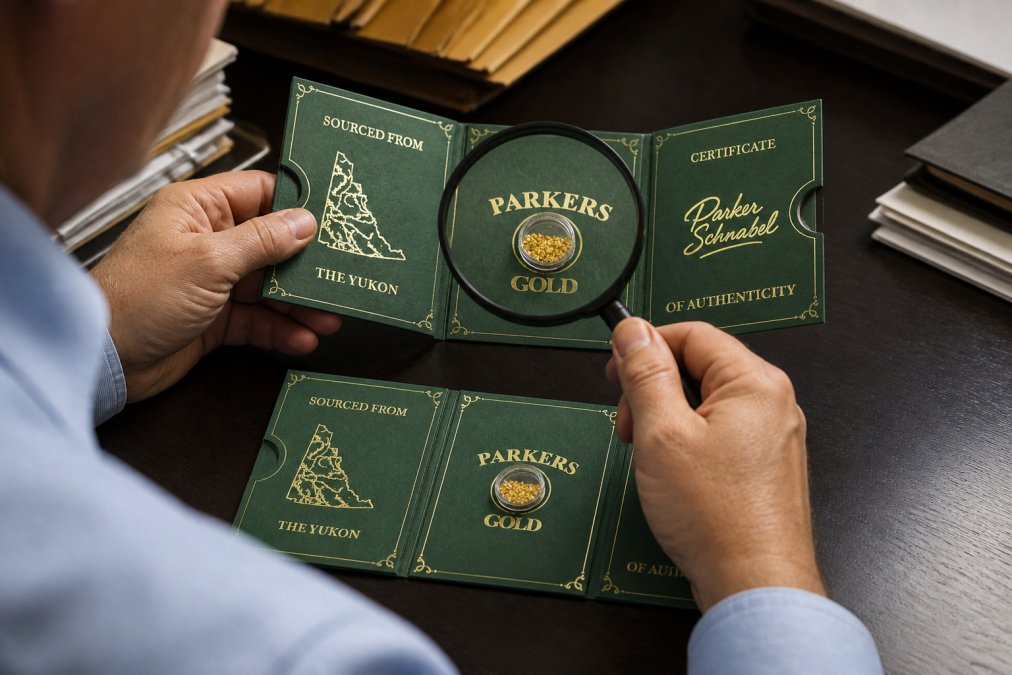
Poor print quality and inconsistent formatting are common indicators of a fake certificate. Legitimate certificates use consistent fonts, precise spacing, and professional printing. Examine the paper itself, genuine certificates often use specific paper stock with security features like watermarks or embedded holograms.
Missing or vague refinery information is a major red flag. A legitimate certificate identifies the issuing laboratory or refinery by name, location, and contact information. If the certificate simply says "certified by an independent laboratory" without naming it, you cannot verify its authenticity.
Inconsistent serial numbers suggest a problem. Each gold item should have a unique serial number matching between the physical item and the certificate. If you're buying from a dealer, ask them to verify the serial number by contacting the issuing refinery directly.
Unusual or missing hallmarks on the gold itself should trigger skepticism. Hallmarks are small stamps refineries and mints impress into gold to indicate purity, weight, and origin (loc.gov). Cross-reference the hallmarks shown on the certificate with published databases of legitimate marks.
Certificates without specific testing details are suspicious. A real assay certificate includes the methodology used and specific test results (exact purity percentage, weight in troy ounces, density measurements).
Unable to contact the issuing authority is perhaps the most definitive test. Call or email the refinery or laboratory listed on the certificate and ask them to confirm they issued it and verify the serial number. If the issuing authority has no record, it's counterfeit.
The Role of Refineries and Mints in Gold Documentation
Refineries and mints are the authoritative sources for gold documentation and the backbone of the authenticating gold with certificates system.
A refinery processes raw gold into refined bullion of known purity. They test incoming gold, remove impurities, and produce standardized bars or coins of verified fineness. In the process, they issue assay certificates documenting exact composition and weight. When Parker's Gold sources placer gold from Parker Schnabel's Dominion Creek operation, the gold passes through refining and assay processes that produce the official Certificate of Authenticity included with each collector package.
A mint is a government or privately operated facility authorized to produce official coinage or bullion. Mints have stricter standards than private refineries because they're often backed by government authority. Coins minted by the U.S. Mint or Royal Canadian Mint come with inherent credibility.
Both maintain detailed records of every item they process, creating an audit trail. You can contact the facility to verify the certificate's authenticity. They can confirm the serial number, processing date, weight and purity tested, and whether the certificate matches their records.
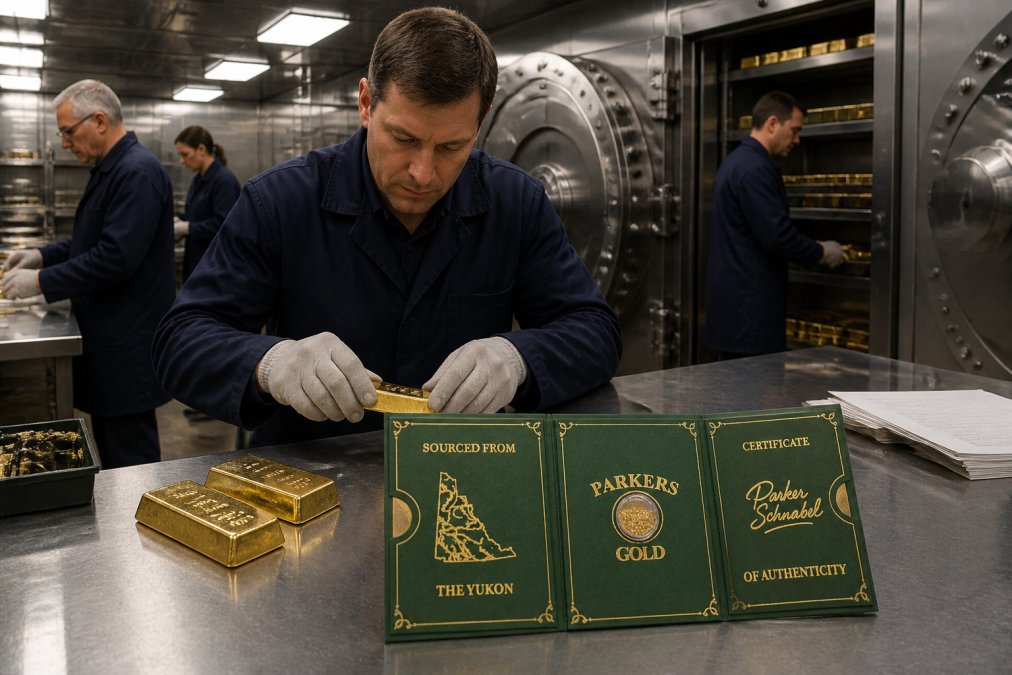
For secondary market sales, the issuing refinery's reputation directly affects the gold's liquidity and price. Gold certified by a major refinery sells faster and at better prices than gold certified by an obscure laboratory.
Secondary Market Reality: Selling Gold With and Without Certificates
When you want to sell gold you own, you face a fundamental challenge: the buyer doesn't know you and cannot easily verify authenticity. This uncertainty creates friction. Buyers demand discounts to compensate for the risk of purchasing undocumented or potentially counterfeit gold. A one-ounce gold bar without a certificate might sell for 5-15% below the current spot price (usgs.gov). That same bar with a certificate from a reputable refinery sells at or near spot price, sometimes at a premium if it has collectible value.
The difference is dramatic. If gold is trading at $2,000 per troy ounce, that 5-15% discount costs you $100-$300 on a single ounce. This is why obtaining proper certification before selling is almost always worthwhile, the cost is quickly recovered through higher resale prices.
Certificates also expand your potential buyer pool. Serious collectors and investors will only purchase documented gold. With certificates, you can sell to professional bullion dealers, auction houses, and collectors worldwide, typically resulting in faster sales and better prices.
Gold with historical significance or a compelling story commands premiums in secondary markets specifically because of verified provenance. A certificate of authenticity connecting the gold to a specific source is essential to justify and maintain that premium.
Conclusion
Authenticating gold with certificates has become the standard practice for serious collectors, investors, and anyone handling precious metals of significant value. Certificates provide independent verification of a gold item's authenticity, purity, weight, and origin. Whether you're buying, selling, or collecting, documentation transforms gold from an uncertain commodity into a verified, tradable asset.
The secondary market strongly rewards documented gold. Undocumented pieces face steep discounts and limited buyer interest. Counterfeit certificates exist but can be detected through careful examination and independent verification with the issuing refinery.
For collectors seeking authentic pieces with a story, Parker's Gold offers a compelling option. Each Parker Schnabel Yukon Gold Flakes - Dominion Creek Collector Package comes with an official Certificate of Authenticity, verifying that the gold was recovered from Parker Schnabel's legendary Dominion Creek operation as featured on Discovery Channel's Gold Rush. The gold arrives in a handcrafted tri-fold display case, fully insured and signature-required for secure delivery. You're not just purchasing gold, you're acquiring a verified piece of Yukon mining history with documentation that collectors and investors recognize and trust. Claim Yours and own an authenticated connection to the adventurous spirit of the North.
Frequently Asked Questions
What is the difference between an assay certificate and a certificate of authenticity?
An assay certificate is a technical document from a laboratory that confirms the purity, weight, and fineness of gold through testing. A certificate of authenticity verifies the origin and legitimacy of the gold item itself. Assay certificates provide chemical analysis; certificates of authenticity provide provenance. For precious metals like gold bars and coins, assay certificates carry more weight in investment markets because they document exact purity levels, while certificates of authenticity are valuable for collectible or historically significant pieces where origin matters more than lab-tested purity.
How can I verify the legitimacy of a gold certificate?
Check the issuing refinery or mint's name and contact information on the certificate, then verify them directly through official channels, never use contact details from the certificate itself. Look for serial numbers that match the physical gold item. Examine the certificate for professional printing quality, security features like holograms or watermarks, and proper formatting. Be skeptical of certificates from unknown or unverifiable refineries. For collectible gold like pieces from Parker Schnabel's Dominion Creek operation, verify the source directly with the original seller.
Does a certificate of authenticity guarantee the purity of gold?
No. A certificate of authenticity verifies origin and legitimacy, not purity. To confirm purity and exact weight, you need an assay certificate from an independent laboratory. A certificate of authenticity for collectible gold ensures the piece came from a legitimate source, like Parker Schnabel's mining operation, but doesn't measure fineness or karat content. If you need both origin verification and purity confirmation, request both documents. Many collectors prioritize authenticity over precise purity measurements, especially for historical or limited-edition pieces where provenance is the primary value driver.
Can I sell gold with a certificate of authenticity in the secondary market?
Yes, but marketability depends on the certificate's credibility and the gold's appeal. Collectible gold with verified authenticity, such as pieces from documented mining operations, often sells well to other collectors and enthusiasts willing to pay premiums for provenance. Bullion dealers and investment buyers, however, prioritize assay certificates and purity over origin certificates. Secondary market liquidity is stronger for investment-grade bullion with assay documentation. For collectible or limited-edition gold, a strong certificate of authenticity can actually increase value and buyer confidence, making resale easier among the right audience.
What should I look for in a professional gold certificate?
A legitimate certificate should include the refinery or mint's official name and contact information, a unique serial number matching the gold item, the weight in troy ounces, the fineness or karat rating, the date of issuance, and the issuer's signature or seal. Security features like watermarks, holograms, or tamper-evident elements add credibility. The certificate should be printed on quality paper with clear, professional formatting. For collectible gold, look for specific origin details and historical context. Verify that the issuing organization is recognized and accredited. Avoid certificates with vague language, missing serial numbers, or contact information that cannot be independently verified.
What are common hallmarks and markings that indicate authentic gold?
Authentic gold typically bears hallmarks indicating purity: 999 for pure gold, 916 for 22-karat, 750 for 18-karat, and 585 for 14-karat. Refinery or mint stamps show the manufacturer. Serial numbers on bullion bars and coins help verify authenticity and track provenance. Weight markings in troy ounces are standard on investment-grade gold. Collectible pieces may include maker's marks or historical insignias. Counterfeit gold often has poorly struck or misaligned markings, incorrect karat ratings, or missing serial numbers. Examine markings under magnification for clarity and precision. Combine hallmark verification with weight and dimension checks to confirm authenticity before purchase.
Are certificates mandatory for reselling gold?
Certificates are not legally mandatory to sell gold, but they significantly improve marketability and buyer confidence. Investment-grade bullion dealers often require assay certificates to verify purity and weight before purchase. Collectible gold without proper documentation may be harder to sell or command lower prices due to authenticity concerns. For high-value pieces, certificates provide legal protection and reduce dispute risk. Secondary market buyers, whether collectors or dealers, are more likely to purchase gold with verified documentation. While you can legally sell undocumented gold, having certificates increases liquidity and perceived value, especially for limited-edition or historically significant items.
This article was written using GrandRanker