

Table of Contents
- What Is a Certificate of Authenticity?
- Why a Certificate of Authenticity Matters for Collectors
- Essential Information to Include on Your Certificate
- How to Verify Gold Authenticity and Validate Documentation
- How to Spot a Fake Certificate of Authenticity
- Creating a Certificate of Authenticity Template for Your Items
- Legal Implications and Provenance Documentation
- Conclusion
What Is a Certificate of Authenticity?
A certificate of authenticity is an official document that verifies the genuineness, origin, and provenance of an item, particularly valuable goods like artwork, collectibles, precious metals, or limited editions. It serves as a legal declaration issued by the creator, seller, or recognized authority, confirming that the item is genuine and not counterfeit.
The certificate includes specific details such as title, artist or creator, date of creation, materials, dimensions, serial number, and edition information, along with the issuer's signature or seal. For collectors and buyers, it provides documented proof of legitimacy and helps establish market value. Without proper authentication documentation, even genuine items lose credibility and value.
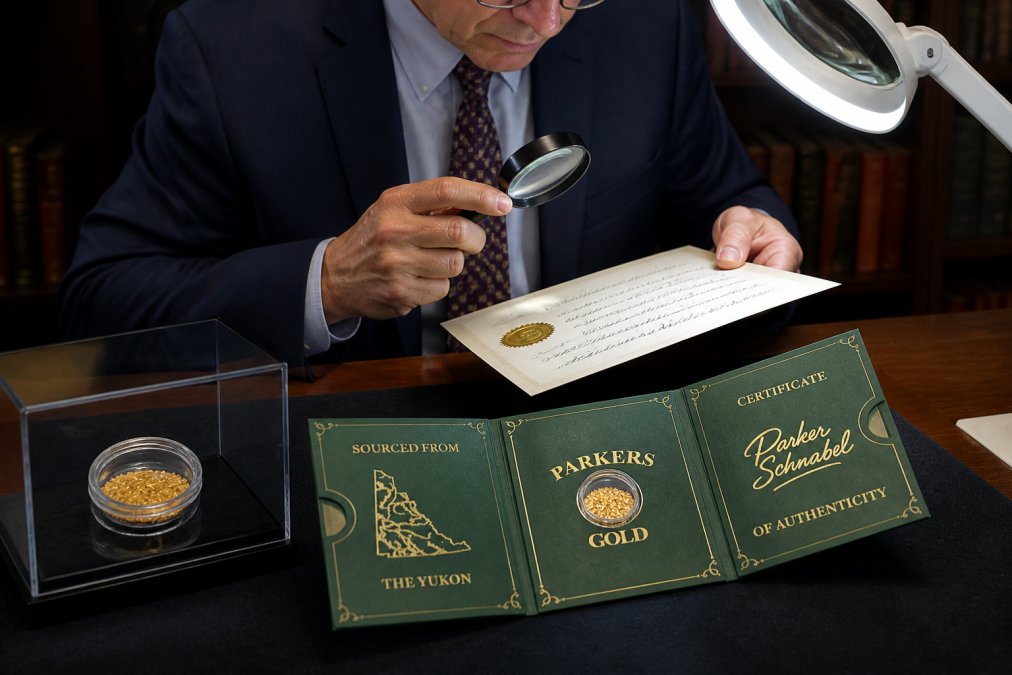
At Parker's Gold, we understand that authenticity matters deeply to collectors. Each Discovery Channel Gold Rush fan who receives one of our Dominion Creek gold packages gets an official certificate of authenticity that verifies the gold's origin directly from Parker Schnabel's legendary operation in the Yukon. This documentation transforms a beautiful piece into a verifiable collectible with documented provenance.

Why a Certificate of Authenticity Matters for Collectors
Collectors and investors rely on certificates of authenticity to protect purchases and establish documented ownership. A genuine certificate proves the item is what the seller claims, establishes the chain of ownership, and protects against fraud in both primary and secondary markets.
Without a certificate, even genuinely valuable items become difficult to sell or appraise. Buyers demand proof of authenticity before committing significant money. A missing or questionable certificate can reduce an item's market value or make it virtually unsellable.
For limited-edition items, art, and precious metals, a certificate establishes edition number and production details. A signed, numbered limited edition print is worth far more than an unsigned reproduction. The certificate documents which edition number you own, whether 1 of 500 or 1 of 5,000, and this directly affects collector value.
Parker's Gold's certificate for our Dominion Creek collector packages documents the specific gold flakes you own, their origin from Parker Schnabel's verified mining operation, and the handcrafted tri-fold display case. For Gold Rush fans, this documentation transforms a gift into a verified, displayable artifact with genuine provenance.
Essential Information to Include on Your Certificate
A professional certificate of authenticity must include: the item's title, artist or creator's name, date of creation, medium and materials, dimensions and weight, unique serial or edition number, and the issuer's signature and date.
Beyond these basics, include a statement of authenticity formally declaring the item as genuine. For limited production runs, specify the edition number and total produced. For precious metals, include weight, purity, and grade if applicable. Many certificates include a photograph of the item and descriptions of distinguishing marks or signatures.
Professional certificates use archival-quality paper, official letterhead, embossed seals or holograms, and watermarks to prevent counterfeiting. The issuer's credentials should be clearly stated, whether artist, gallery, certified appraiser, or manufacturer. Include contact information so buyers can verify the certificate's authenticity.
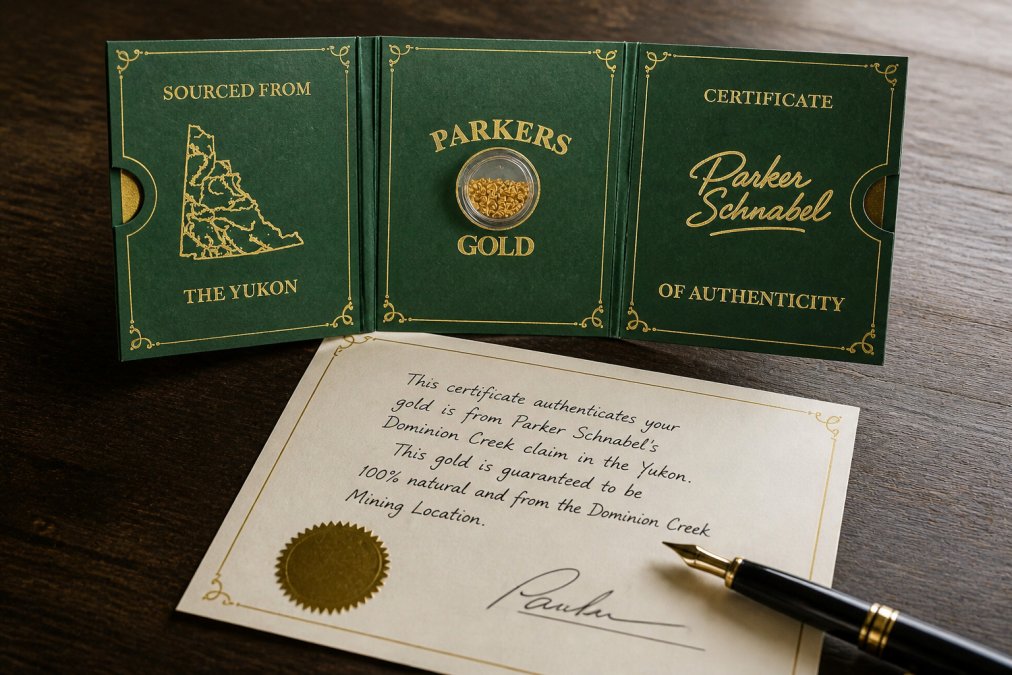
When creating a certificate, include these elements in order: item title, creator/artist name, date of creation, detailed description of materials, dimensions and weight, edition information, authenticity statement, issuer signature with date, and contact details for verification. This structure ensures your certificate carries legal weight and collector credibility.
How to Verify Gold Authenticity and Validate Documentation
Verifying gold authenticity requires both physical inspection and documentation validation. For raw placer gold, visual inspection is the first step. Genuine placer gold flakes are bright yellow without tarnishing, malleable, and show natural surface variations from mining rather than uniform appearance.
The weight and density test provides objective verification. Gold has a specific gravity of 19.3, making it significantly heavier than most metals of similar volume. A scale and water displacement method can confirm whether your gold matches expected density.
Documentation validation is equally important. Examine the certificate for security features: embossed seals, holographic elements, watermarks, or serial numbers difficult to reproduce. Verify the issuer's contact information is legitimate and you can reach them to confirm validity. For items from known operations like Parker Schnabel's Dominion Creek, cross-reference certificate details with publicly available information about that source.
Many collectors seek third-party verification from certified precious metals dealers or appraisers. Organizations like the American Numismatic Association maintain directories of certified appraisers specializing in precious metals authentication.
The strongest validation combines multiple methods: visual inspection, weight/density testing, certificate validation, and professional appraisal when appropriate. Parker's Gold's Dominion Creek packages include official certificates documenting the gold's origin from a verified, televised mining operation, eliminating authentication uncertainty.
How to Spot a Fake Certificate of Authenticity
Counterfeit certificates have become sophisticated, but several red flags distinguish genuine documents from fakes. Poor printing quality is the most obvious sign. Genuine certificates use professional printing with crisp, consistent ink, proper alignment, and quality paper. Fakes show smudged text, misalignment, or cheap, thin paper.
Examine security features closely. Real certificates include elements difficult to reproduce: embossed seals creating raised patterns you can feel, holographic foils that change color when tilted, watermarks visible only when held to light, or microprinting requiring magnification. Fakes typically lack these features or use cheap reproductions.
Check the signature and issuer information. Legitimate certificates bear the signature of a real person with a date. The signature should match verifiable samples. Issuer contact information should be complete and verifiable. Fake certificates often have illegible signatures, missing dates, or unverifiable contact details.
Serial numbers and edition information reveal fakes quickly. Contact the issuer to verify the certificate number exists in their records and matches the item description. Legitimate issuers maintain databases of issued certificates. A fake will have a non-existent number or one belonging to a different item.
Professional language and formatting indicate authenticity. Spelling errors, grammatical mistakes, or awkward phrasing suggest counterfeits. Genuine certificates are carefully proofread. Verify the certificate's information matches the item itself, dimensions, weight, materials, and identifying marks should align perfectly. Discrepancies suggest forgery.
Finally, trust your instinct about the source. If buying from an unknown seller online or at suspiciously low prices, request independent verification before purchase.
Creating a Certificate of Authenticity Template for Your Items
If you're a creator, seller, or collector issuing certificates, a professional template ensures consistency and credibility. Start with a template including all essential elements in logical order, then customize with your specific details and branding.
Here's a practical framework:
Header Section: Include your business or personal name, logo if applicable, and clear title: "Certificate of Authenticity." Use professional fonts and spacing.
Item Description: Provide the item's title, artist or creator name, date of creation, and detailed description including materials, dimensions, and weight. For limited editions, specify the edition number and total quantity produced.
Authenticity Statement: Write a formal declaration: "This certifies that the item described above is genuine and authentic, created/produced by [Creator Name] on [Date], and has not been altered or reproduced without authorization."
Issuer Information: Include your signature, printed name, title, business name, date of issuance, and contact information. Add business registration number or certification credentials if applicable.
Security Features: Add security elements like a numbered serial code, unique reference number, or QR code linking to verification information on your website.
Verification Method: Include a statement explaining how buyers can verify authenticity, such as contacting you directly, checking a database on your website, or providing a reference number to cross-check.
Here's an adaptable template:
CERTIFICATE OF AUTHENTICITY
This certifies that the item described below is genuine and authentic.
Item: [Title/Description]
Creator/Artist: [Name]
Date of Creation: [Date]
Materials/Medium: [Description]
Dimensions: [Height x Width x Depth]
Weight: [Weight]
Edition: [Number] of [Total]
Serial Number: [Unique Code]
I hereby certify that this item was created/produced by me and is authentic in all respects. This certificate serves as official documentation of authenticity and provenance.
Issued by: [Your Name/Business]
Title: [Your Title]
Date: [Date of Issuance]
Signature: ___________________________
Contact for Verification: [Email/Phone]
Business Registration: [If applicable]
To verify this certificate's authenticity, contact the issuer using the information above and reference Serial Number: [Code]
For added credibility, print certificates on archival-quality paper with subtle watermarks or embossed seals. Professional printing services can add holograms or security features that make counterfeiting nearly impossible.
Parker's Gold's official certificates for Dominion Creek gold packages follow this professional standard, providing collectors with documented proof of origin that protects their investment and enhances collectible value.
Legal Implications and Provenance Documentation
A certificate of authenticity carries legal weight beyond marketing. When issued by a recognized authority or creator, it constitutes a warranty of authenticity. If a certificate proves fraudulent or the item is later determined counterfeit, the issuer can face legal liability for misrepresentation, fraud, or breach of warranty.
The legal standing of a certificate depends on the issuer's credibility and expertise, specificity of claims, care taken in authentication, and whether the issuer had reasonable grounds to verify authenticity. A certificate from an unknown online seller carries less legal weight than one from a recognized gallery, certified appraiser, or artist.
Provenance, the documented history of an item's ownership and origin, is intimately connected to the certificate of authenticity. Strong provenance increases value and credibility. The certificate serves as the first link in the provenance chain. When you sell the item later, the certificate becomes part of its documented history, transferring to the new owner as proof of authenticity and origin.
For precious metals and collectibles, the Federal Trade Commission provides guidance on authenticity claims and disclosure requirements. Sellers must not make false claims about authenticity, origin, or value. Issuing a fraudulent certificate exposes you to FTC enforcement action, civil lawsuits, and potentially criminal fraud charges.
When you purchase an item with a certificate of authenticity, you have legal recourse if the certificate proves false. You can seek refunds, damages, or rescission of the sale. However, your legal position depends on proving the issuer knew the certificate was fraudulent or issued it with negligent disregard for accuracy.
For collectors, this underscores why buying from reputable sources matters. Parker's Gold's certificates carry the weight of the company's reputation and verifiable connection to Parker Schnabel's Dominion Creek operation, featured on Discovery Channel's Gold Rush television series. This documented source reduces authentication risk and provides legal standing if disputes arise.
Proper documentation also matters for insurance and estate planning. Insurance companies require certificates of authenticity to establish value for coverage. When passing items to heirs, documented provenance and authenticity certificates ensure the collection's value is preserved and legally transferable.
A certificate of authenticity transforms a valuable item from an unverified purchase into a documented, legally defensible asset. Whether creating certificates for items you sell, collecting authenticated pieces, or gifting something special, understanding what makes a certificate credible protects both your investment and reputation.
For collectors seeking authentic gold with unquestionable provenance, Parker's Gold's Dominion Creek Collector Package provides exactly this foundation. Each package includes genuine raw placer gold from Parker Schnabel's verified mining operation, presented in a handcrafted tri-fold display case, and accompanied by an official certificate of authenticity. The combination of verified source, professional presentation, and documented authentication gives you a collectible piece of Yukon history ready to gift, display, or preserve for future generations. Claim Yours today and own an authenticated piece of the Gold Rush legacy.
Frequently Asked Questions
Q: What information must be included on a certificate of authenticity?
A: A certificate of authenticity should include the item's description (material, weight, dimensions), artist or source name, date of creation or acquisition, serial number or edition number, provenance history, physical characteristics (color, condition, markings), and the issuer's signature with date. For gold items like those from Parker's Gold, include the exact origin location (Dominion Creek) and any relevant documentation numbers. A unique certificate number helps prevent counterfeiting and enables secondary market verification.
Q: How do I verify gold authenticity using a certificate of authenticity?
A: Start by checking the certificate's physical security features: holograms, watermarks, embossed seals, and serial numbers. Contact the issuing authority directly using contact information on the certificate, never use details provided in the document itself. Verify the issuer's reputation through independent research. For collectible gold like Parker's Gold, confirm the source location and recovery operation match publicly available information. Request batch documentation or registration numbers. A genuine certificate includes specific details about the specimen's weight, dimensions, and unique characteristics that match the physical item.
Q: Can I create my own certificate of authenticity?
A: Yes, you can create your own certificate using templates, but its credibility depends on your reputation and transparency. If you're selling items you've created or sourced, a professional certificate adds value and protects both you and buyers. Use clear, specific language; include unique identifiers like serial numbers; and add security features like watermarks or holograms. However, a certificate from an unknown issuer carries less weight than one from an established authority. For high-value items like gold specimens, third-party authentication or professional grading services carry more market credibility than self-issued certificates.
Q: Does a certificate of authenticity guarantee the value of an item?
A: No. A certificate of authenticity verifies origin and authorship but does not guarantee monetary value. Value depends on market demand, condition, rarity, and provenance. A certificate protects against forgery and fraud, which preserves value in the secondary market, but it doesn't set or promise a specific price. For collectible gold, the certificate confirms the item is genuine and sourced from a claimed location, which maintains collector confidence. The actual value fluctuates based on gold spot prices, collector interest, and historical significance. A well-documented certificate simply ensures buyers know what they're purchasing.
This article was written using GrandRanker