

Table of Contents
- Why Collectors Look Beyond JMBullion
- Gold Bullion vs Raw Placer Gold: What's the Real Difference
- How to Verify Gold Authenticity When Buying Online
- Is Buying Raw Gold a Good Investment for Collectors
- Sourced Gold vs Generic Bullion: Authentication and Provenance
- What to Look for in a JMBullion Alternative
- Conclusion
- Frequently Asked Questions
Last Updated: September 1, 2026
Why Collectors Look Beyond JMBullion
Finding the right source for precious metals matters far more than most collectors realize. When you're investing in gold, whether for portfolio diversification, historical significance, or the thrill of ownership, the dealer you choose shapes everything: authenticity, provenance, pricing, and peace of mind.
JMBullion has built a reputation as a reliable bullion dealer, but it's far from the only option worth considering. Collectors increasingly seek alternatives that offer something different: verified sourcing, direct provenance, limited-edition appeal, or a connection to a specific story. A JMBullion alternative for gold collectors often means finding a dealer that prioritizes authentication, transparency, and the narrative behind the gold itself.
At Parker's Gold, we understand this distinction deeply. Our gold comes directly from Parker Schnabel's legendary Dominion Creek operation in the Yukon, featured on Discovery Channel's Gold Rush. Each piece carries an official Certificate of Authenticity and arrives in a handcrafted tri-fold display case, not as generic bullion, but as a verified piece of mining history. For collectors who want to know exactly where their gold came from and hold something tangible from an iconic operation, this represents a fundamentally different value proposition than standard bullion dealers offer.

The question isn't whether alternatives exist. They do. The real question is what you're actually buying and whether it aligns with your goals as a collector.
Gold Bullion vs Raw Placer Gold: What's the Real Difference
Gold bullion refers to standardized bars or coins produced by mints and refineries, while raw placer gold consists of natural gold flakes and small nuggets recovered directly from mining operations. The distinction matters because it affects authenticity verification, collector appeal, investment liquidity, and overall value perception.
Bullion is refined, weighed to precise specifications, and stamped with purity marks (nist.gov). It trades on spot price plus dealer premiums. Raw placer gold, by contrast, arrives exactly as it emerges from the earth, unrefined, variable in size and shape, and authenticated through provenance documentation rather than mint certification.
For investment purposes, bullion offers simplicity. You know the exact weight, purity, and melt value. Dealers maintain consistent inventory. Buyback processes are straightforward because the product is standardized. A one-ounce gold bar is a one-ounce gold bar, regardless of which mint produced it.
Raw placer gold operates differently. Its value combines the underlying precious metals content with the story and source. A flake of gold from a specific, documented mining operation carries appeal beyond spot price. Collectors pay premiums for verified provenance, the knowledge that this particular gold came from a particular place, recovered through particular methods, and authenticated with certificates and documentation.
The real-world implication: if you're buying for pure investment and plan to resell quickly, bullion makes sense. If you're collecting for the narrative, the historical connection, or the tangible link to a specific operation, raw placer gold with strong provenance justifies the premium. Parker's Gold occupies this second category entirely. Each package represents authentic Yukon history, not interchangeable commodity gold.
How to Verify Gold Authenticity When Buying Online
Authentication becomes critical when you can't physically inspect gold before purchase. Online dealers operate at a disadvantage here, they must prove authenticity through documentation, certificates, and transparent processes since you're evaluating the product remotely.
A legitimate Certificate of Authenticity should include specific details: the source of the gold, the weight or quantity, the date of recovery, and verification methods used (the FTC). Generic certificates that simply state "gold verified" without source information lack credibility. The certificate should trace back to the operation itself, not just a middleman dealer.
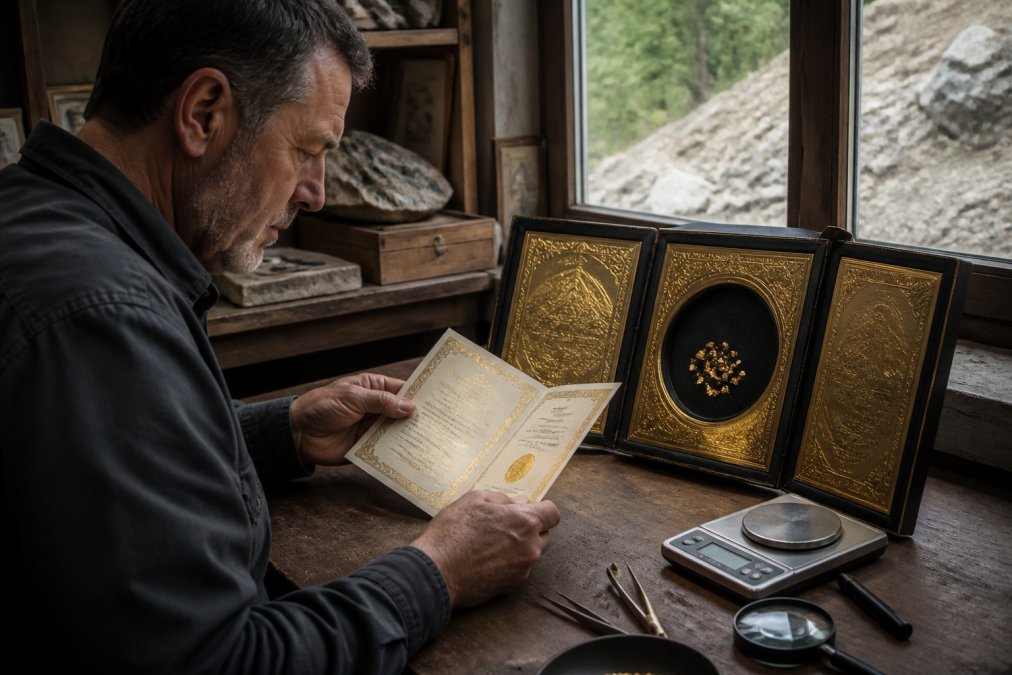
Reputable dealers provide multiple verification layers. Insured shipping with signature-required delivery proves the item reached you intact. Clear product photography showing the gold, the case, and the certificate together builds confidence. Some dealers offer third-party authentication options, though this adds cost.
Parker's Gold handles this through direct sourcing. Because our gold comes directly from Parker Schnabel's Dominion Creek operation, a documented, televised mining location, verification isn't theoretical. The operation itself is verifiable through public records and the Discovery Channel series. Your Certificate of Authenticity traces directly to that source, not to a vague "recovered from mining operations" claim.
When evaluating any JMBullion alternative, ask these specific questions: Can you trace the gold to a named source? Does the certificate include recovery date and location? What shipping insurance is provided? Can you contact the dealer directly if questions arise? The answers reveal whether you're buying authenticated gold or taking a risk on unverified material.
Is Buying Raw Gold a Good Investment for Collectors
The investment case for raw gold depends entirely on your definition of investment. If you mean "will this appreciate faster than the spot price," the answer is uncertain. Raw placer gold typically trades at a premium above spot, but that premium reflects the collection value and provenance, not guaranteed appreciation.
However, if you define investment as "does this hold value and provide diversification," the answer shifts. Precious metals serve as portfolio diversification regardless of form (federalreserve.gov). Gold historically maintains value during market volatility. Collectors who purchase raw gold with strong provenance often find that the combination of precious metals content plus collectible premium creates resilience.
The practical reality: raw gold with documented provenance tends to hold its value better than generic bullion because it appeals to multiple buyer categories. An investor might buy it for gold content. A collector might buy it for the historical connection. A gift-giver might purchase it for the unique story. This broader appeal creates a wider potential resale market.
Raw placer gold works best as an investment if you're willing to hold it medium-term (3-5 years or longer) and you prioritize the narrative alongside the metals content. Short-term trading favors standardized bullion where liquidity is highest. Long-term collecting favors sourced, authenticated gold where the story adds value.
For someone buying Parker's Gold, the investment thesis combines precious metals holding value with the appeal of owning verified gold from a specific, famous operation. You're not betting on gold price appreciation alone. You're acquiring something that resonates with Gold Rush enthusiasts, collectors of mining history, and precious metals investors simultaneously.
Sourced Gold vs Generic Bullion: Authentication and Provenance
Sourced gold carries documented origin information; generic bullion carries only purity and weight certification. This distinction creates measurable differences in authentication rigor, resale appeal, and collector premium.
Generic bullion, the standard offering from most dealers, prioritizes standardization. A one-ounce gold bar meets weight and purity specifications. The mint or refinery stamps its mark. That's the authentication: the mint's reputation backs the product. For bullion, this system works efficiently. You know what you're getting because mints maintain consistent quality control.
Sourced gold requires a different authentication framework. Instead of relying on mint certification, sourced gold depends on provenance documentation. Where did it come from? Who recovered it? What methods were used? When was it recovered? These questions matter because they establish authenticity at the source level, not just at the refinery level.
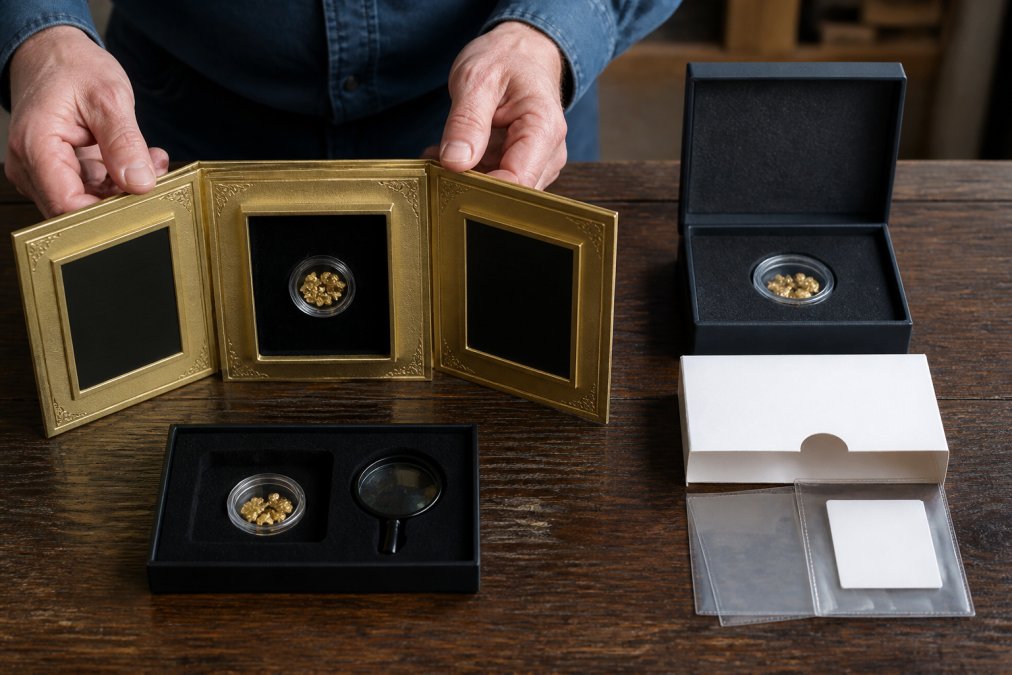
The authentication challenge with sourced gold is verification. You can't simply call a mint and confirm a bar number. You need to verify the source operation itself, the recovery methods, and the chain of custody from recovery to delivery. This is why reputable sourced gold dealers provide comprehensive documentation, certificates that reference specific sources, and transparent communication about origin.
Parker's Gold handles this through direct sourcing from a named, documented operation. Your gold comes from Dominion Creek, Parker Schnabel's mining claim in the Yukon. The operation is real, televised, and publicly known. Your Certificate of Authenticity references this specific source. This creates an authentication chain that's verifiable in ways generic bullion cannot match.
The practical implication for collectors: sourced gold typically commands premiums above spot price precisely because authentication is more rigorous and provenance is documented. You're not just buying gold by weight. You're buying a story, a source, and verified origin. Dealers who understand this distinction invest heavily in documentation and transparency. Those who don't tend to offer vague sourcing claims and generic certificates.
When comparing a JMBullion alternative, evaluate how thoroughly the dealer documents source information. Vague claims about "recovered from mining operations" without specific location, date, or operation details should raise questions. Detailed certificates that reference named sources, recovery dates, and specific locations indicate a dealer serious about authentication.
What to Look for in a JMBullion Alternative
Choosing the right dealer requires evaluating several concrete factors. Start with sourcing transparency. Can the dealer clearly explain where the gold came from? Does the information trace to a specific operation, region, or recovery date? Vague sourcing is a red flag.
Next, examine authentication documentation. What does the certificate include? Does it reference the source specifically? Is there a process for verifying the certificate's legitimacy? Legitimate dealers welcome verification questions. Those who become evasive about authentication details should be avoided.
Shipping and insurance matter more than many collectors realize. Does the dealer use insured shipping? Is signature required? What happens if the package is lost or damaged? Reputable dealers cover these scenarios explicitly. Parker's Gold, for example, provides fully insured, tracked, and signature-required shipping because we understand that trust requires protection.
Customer service quality separates good dealers from great ones. Can you contact the dealer with questions? Do they respond promptly? Are they knowledgeable about their products? Will they discuss provenance details and answer authentication questions? The best dealers view customer service as part of the authentication process itself.
Pricing transparency is essential. What's included in the price? Are there hidden fees? How does the dealer's pricing compare to spot price? Reasonable premiums above spot are normal for sourced gold, they reflect authentication, documentation, and sourcing costs. Extreme markups without clear justification warrant skepticism.
Finally, consider the dealer's reputation and longevity. How long have they been in business? What do customer reviews say? Are there any complaints about authentication disputes or shipping problems? Established dealers with consistent positive feedback have more to lose through deception, making them inherently more trustworthy.
Parker's Gold meets each of these criteria. Our sourcing is transparent: gold comes directly from Dominion Creek, Parker Schnabel's documented operation. Authentication is comprehensive: every package includes an official Certificate of Authenticity. Shipping is protected: fully insured, tracked, and signature-required. Customer service is direct: you can reach our team with questions about sourcing, authentication, or the product itself. Pricing is clear: our Dominion Creek Collector Package is priced at $199.00, with no hidden fees. And our reputation rests on the authenticity of our sourcing and the quality of our documentation.
When evaluating any JMBullion alternative, use these criteria as your framework. The dealer that excels across all categories, transparency, authentication, shipping protection, customer service, and pricing clarity, is the one worth trusting with your purchase.
Conclusion
The market for precious metals alternatives has expanded dramatically. Collectors no longer settle for generic bullion when sourced, authenticated, and historically significant gold is available. A JMBullion alternative for gold collectors typically means finding a dealer that prioritizes provenance, documentation, and the story behind the gold itself.
Parker's Gold represents this evolution. Rather than offering standardized bullion, we provide a direct connection to Parker Schnabel's legendary Dominion Creek operation in the Yukon. Each package includes authentic raw placer gold, presented in a handcrafted tri-fold display case, accompanied by an official Certificate of Authenticity. Your purchase is fully insured and signature-required, ensuring secure delivery of a piece of verified mining history.
If you're looking for gold that carries a story, gold you can verify, display with confidence, and know came from a specific, documented source, Parker's Gold offers something distinct from traditional bullion dealers. Claim yours today and own a tangible piece of Yukon history.
Frequently Asked Questions
Q: What makes a JMBullion alternative better for collectors seeking authentic gold?
A: A strong JMBullion alternative offers verified provenance, detailed authentication documentation, and unique sourcing stories that standard bullion dealers don't provide. When you buy raw gold from a documented operation like Dominion Creek, you get a Certificate of Authenticity and direct connection to the gold's origin. This matters because collectors value not just the metal's spot price, but the historical and verification context that justifies premium pricing and builds long-term collectibility.
Q: How do I verify gold authenticity from an online dealer if I can't inspect it in person?
A: Request a Certificate of Authenticity that includes specific details: weight, purity, source location, and recovery date. Reputable dealers provide high-resolution photography of the gold itself and the authentication paperwork. Check customer testimonials specifically about authentication accuracy. Legitimate dealers welcome detailed questions about their verification protocols and are transparent about testing methods used to confirm purity and weight.
Q: Is buying raw placer gold a good investment compared to standard bullion?
A: Raw placer gold serves a different purpose than investment-grade bullion. While bullion prioritizes liquidity and spot price tracking, raw gold from documented sources builds collector value through authenticity, provenance, and narrative. Placer gold typically carries higher dealer premiums because you're paying for verification, presentation, and the story behind it. For pure wealth preservation tied to spot price, bullion is more efficient. For collectors seeking tangible pieces with historical significance and verified sourcing, raw placer gold offers unique value that transcends commodity pricing.
Q: What payment methods and shipping insurance should I expect from a reliable gold dealer?
A: Shipping should include full insurance coverage, tracking, and signature-required delivery to protect your purchase. Ask whether the dealer replaces lost or damaged shipments without dispute, and confirm insurance covers the full declared value. Reputable dealers provide tracking updates at each stage and offer discreet packaging. Review their shipping policies in writing before purchase to understand your protection if anything goes wrong in transit.
This article was written using GrandRanker