

Table of Contents
- What You Need to Know About Collecting Raw Gold Flakes
- How to Identify Real Gold Flakes from Pyrite and Mica
- Finding Gold: Where Placer Deposits Form and How to Locate Them
- Best Tools for Recovering Fine Gold
- Processing and Cleaning Your Raw Gold Flakes
- Is Raw Gold a Good Investment?
- Legal Compliance, Safety, and Environmental Responsibility
- Conclusion: Building Your Gold Collection
Last Updated: August 30, 2026
What You Need to Know About Collecting Raw Gold Flakes
Collecting raw gold flakes is far more than a casual hobby for many enthusiasts. It's a gateway into understanding geology, prospecting techniques, and the tangible value of precious metals. Whether inspired by the adventurous spirit of gold mining or seeking authentic pieces of history, understanding how to properly collect, identify, and value raw gold flakes is essential.
At Parker's Gold, we offer an exclusive opportunity for collectors and enthusiasts to own a tangible piece of Yukon history, directly sourced from Parker Schnabel's legendary Dominion Creek operation, as seen on Discovery Channel's Gold Rush. Raw gold flakes represent genuine wealth you can hold in your hand. But collecting them responsibly requires knowledge across multiple domains: geology, safety, legality, and authentication.

This guide covers everything you need to know about collecting raw gold flakes, from identifying genuine specimens to understanding investment potential and legal frameworks that govern collection.
How to Identify Real Gold Flakes from Pyrite and Mica
Real gold flakes have distinct physical properties that separate them from "fool's gold" that catches many beginners.
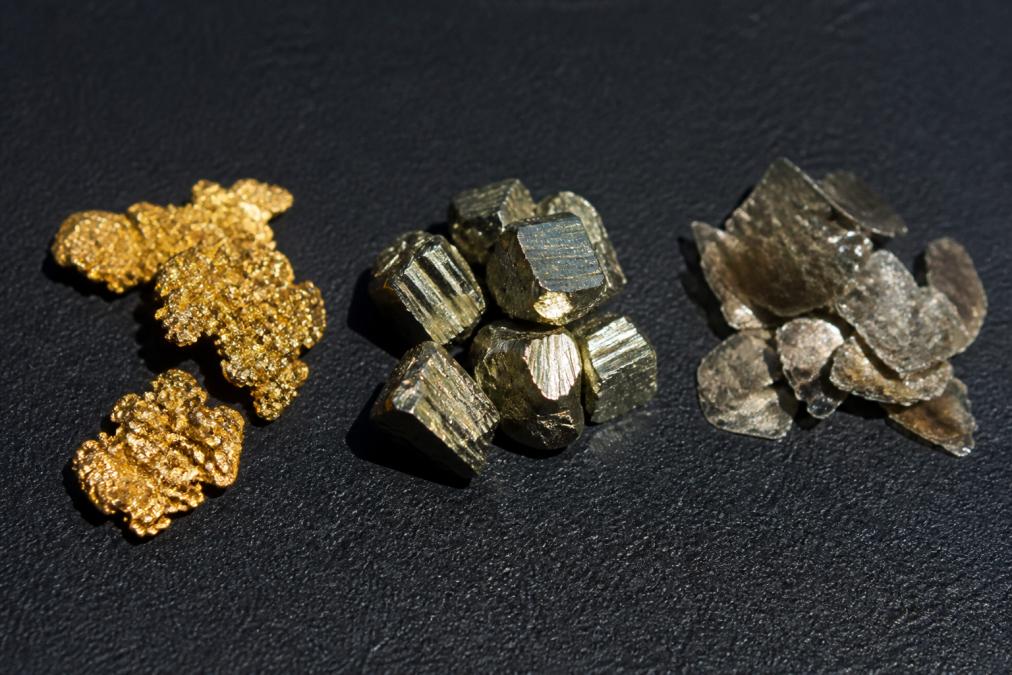
Gold exhibits a warm, buttery yellow color that doesn't tarnish. Pyrite displays a brassy yellow with a greenish tint and often forms cubic crystals. Mica appears silvery and flakes into thin, translucent sheets.
The malleability test is definitive. Real gold is soft enough that you can dent it with a fingernail or scratch it with a knife. Pyrite shatters or leaves a black streak when scratched. Mica crumbles into powder. This ability to deform without breaking is gold's signature characteristic.
Weight and density offer confirmation. Gold is significantly heavier than pyrite or mica at the same volume. A small vial of gold flakes will feel noticeably heavier than equivalent volume of fool's gold. This is why gravity separation works effectively during panning.
Color consistency matters too. Real gold maintains its color in all lighting conditions. Pyrite changes appearance under different light angles, often showing iridescent tints. For serious collectors, a magnet test eliminates magnetite (black iron oxide). Real gold is non-magnetic.
Finding Gold: Where Placer Deposits Form and How to Locate Them
Gold concentrates in specific geological settings where water has separated it from surrounding rock over millions of years. Understanding where placer deposits form is foundational to successful collection.
Placer gold accumulates in alluvial deposits, sediment laid down by moving water. The best deposits form in specific microenvironments: inside stream bends where water slows, behind large boulders that create flow shadows, and in bedrock cracks where gold gets trapped during seasonal flooding.
The most productive areas historically were those with significant mineralization upstream. Mountain ranges with exposed gold-bearing rock feed streams with fine particles. Look for streams flowing through or near old mining districts. Geological surveys and mining records often pinpoint productive watersheds.
Dark concentrations of black sand (magnetite) in stream banks indicate gold nearby. This visual marker has guided prospectors for centuries. Seasonal water flow affects deposit location, high water moves material downstream, while low water concentrates what remains in deeper pools.
Before collecting anywhere, research ownership and regulations. Public lands managed by the Bureau of Land Management often allow small-scale collection with permits. National Forests have specific rules. Private land requires permission. State regulations vary significantly.
Best Tools for Recovering Fine Gold
The right equipment dramatically improves recovery rates and makes collecting more efficient.
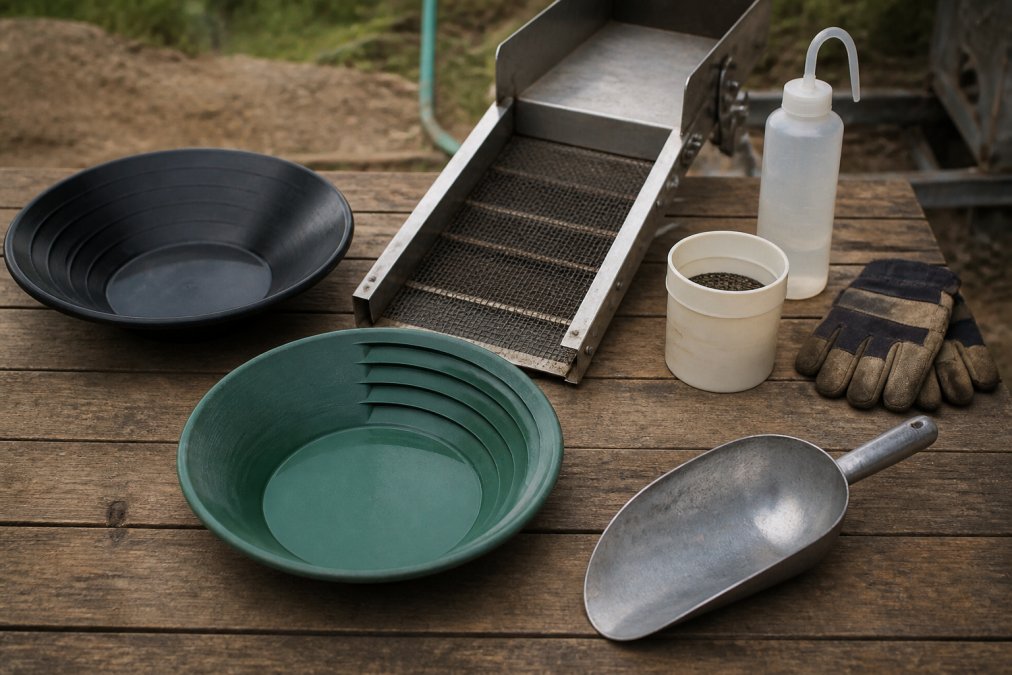
A gold pan remains the most fundamental tool. The 14-inch diameter is standard for most work. The sloped sides and riffles inside the pan use gravity to separate gold from lighter materials. A pan costs under $20 and works anywhere with water access.
A classifier accelerates the process by sorting material by size before panning. It's a mesh screen that vibrates or is manually shaken, allowing fine particles to fall through while larger rocks are removed.
A sluice box is the next step up in efficiency. Water flows through a wooden or plastic channel with internal riffles. Gold and black sand get trapped in the riffles while lighter material washes away. Sluice boxes work best with steady water flow and can process significantly more material than panning alone.
A concentrator or shaker table uses vibration and gravity to separate gold from other minerals. These tools are more expensive but essential for serious collectors processing larger volumes.
Safety equipment is non-negotiable. Waterproof gloves protect your hands during extended panning. A dust mask prevents inhalation of fine particles. Proper footwear prevents slips in wet conditions. For chemical processing, you'll need acid-resistant gloves and eye protection. Never improvise with household containers or skip protective equipment.
Processing and Cleaning Your Raw Gold Flakes
Raw gold flakes collected from streams contain black sand, other minerals, and sometimes clay. Processing removes these contaminants and reveals the pure gold underneath.
Gravity separation is the first step and requires no chemicals. Running water and repeated panning concentrates gold away from lighter materials. After 10-15 cycles, most fine gold separates from surrounding sediment.
For finer particles that resist gravity separation, dilute hydrochloric acid dissolves many minerals but not gold. This requires proper ventilation, acid-resistant containers, and appropriate safety equipment. The acid is diluted to roughly 1 part acid to 3 parts water. Material is soaked for several hours, then rinsed thoroughly with clean water.
Sodium carbonate can be used as a gentler alternative to acid leaching. It removes certain mineral coatings without the hazards of strong acid.
After chemical processing, thorough rinsing with distilled water removes all residual chemicals. Rinse multiple times until the water runs clear and pH testing shows neutral water. Pat the gold dry with paper towels and allow it to air dry completely. Store dried gold in a clean, dry container. Avoid touching cleaned gold with bare hands, as skin oils can initiate oxidation.
Is Raw Gold a Good Investment?
The investment question sits at the intersection of commodity value and collector premium. Raw gold flakes have intrinsic worth based on gold's spot price, but authenticated, sourced specimens often command premiums.
Gold trades by troy ounce (approximately 31.1 grams) (nist.gov). Current spot prices fluctuate daily based on global markets. Fine gold (99.9% pure) trades at the full spot price. Raw placer gold is typically 95-98% pure, so its value is slightly discounted.
Beyond commodity value, sourced authenticity creates collector premium. Gold with documented origin, verified to come from specific, notable locations like the Dominion Creek operation featured on Discovery Channel's Gold Rush, sells for more than anonymous bulk gold. A Certificate of Authenticity transforms raw gold from a commodity into a collectible with provenance.
Market demand for gold remains stable across economic cycles. Unlike stocks or real estate, gold doesn't depend on company performance or local conditions. It's a hedge asset that maintains value during uncertainty.
The practical advantage of raw gold over other precious metals is divisibility. You can own a single gram or multiple ounces and sell small portions if needed. This flexibility makes it accessible to collectors at various budget levels.
Legal Compliance, Safety, and Environmental Responsibility
Collecting raw gold flakes operates within a regulatory framework that varies by jurisdiction. Understanding these requirements prevents legal complications and ensures ethical practice.
Federal law governs collection on public lands. The Bureau of Land Management allows casual collection of small quantities on most public lands without permits, but commercial activity requires authorization (blm.gov). National Parks and National Monuments prohibit collection entirely (nps.gov). National Forests vary by location. Before collecting anywhere on public land, contact the managing agency for specific rules.
State regulations add another layer. Some states require permits even for casual collection. Others prohibit collection in certain watersheds or during certain seasons to protect fish habitat. Research your specific state's Department of Natural Resources requirements.
Private land collection requires explicit permission from the owner. Get written permission when possible.
Safety during collection focuses on water hazards and chemical exposure. Stream conditions change rapidly. Flash flooding can occur without warning. Wear a personal flotation device if working in deep water. Never collect alone in remote areas.
Chemical safety is paramount if you process gold using acids or other reagents. Always work in well-ventilated areas. Wear acid-resistant gloves and eye protection. Never mix chemicals. Store chemicals in clearly labeled, secure containers away from children and pets. Dispose of used chemicals according to local hazardous waste guidelines.
Environmental responsibility means leaving no trace. Restore stream banks after panning. Don't remove vegetation. Avoid collecting in sensitive habitats. Process material away from waterways to prevent chemical runoff contamination.
For serious collectors, documentation creates accountability. Keep records of where you collected, how much you recovered, and how you processed it. This record-keeping demonstrates responsible practice and helps you refine your technique over time.
Building a collection of raw gold flakes connects you to geological history and the adventurous legacy of gold discovery. The combination of authentic specimens and proper documentation transforms raw gold from a commodity into a meaningful addition to any collection. Parker's Gold's Dominion Creek Collector Package delivers exactly this experience, genuine placer gold recovered from Parker Schnabel's legendary operation, presented in a handcrafted display case with an official Certificate of Authenticity. Explore the Dominion Creek collection to own a verified piece of Yukon gold rush history, complete with secure, fully insured delivery. Whether you're a casual enthusiast or serious collector, authentic sourced gold with proper authentication represents the gold standard for responsible collection.
| Collection Stage | Best Approach | Key Consideration |
|---|---|---|
| Beginning | Start with purchased, authenticated specimens | Learn identification before collecting in field |
| Intermediate | Combine purchased pieces with field collection | Develop panning skills and location knowledge |
| Advanced | Field collection with chemical processing | Invest in proper equipment and safety gear |
| Serious Collector | Curated authenticated pieces with documentation | Prioritize provenance and certification |
Frequently Asked Questions
How do I tell if I found gold flakes?
Real gold flakes are dense, malleable, and yellow in color. Use the weight test: gold is heavier than pyrite or mica for the same size. Perform a magnet test, gold won't stick to magnets, but some fool's gold will. The streak test also works: drag the flake across a ceramic plate; gold leaves a yellow streak, while pyrite leaves a greenish-black streak. Genuine gold flakes from alluvial deposits maintain their color and won't tarnish or fade.
Are gold flakes worth any money?
Yes, gold flakes have value based on their weight and purity. Placer gold flakes are typically 85-95% pure. Current gold prices fluctuate, but a troy ounce of pure gold trades around $2,000. Fine gold flakes sell for slightly less than bullion due to processing costs. Collectible gold flakes with documented origin, like those from Parker Schnabel's Dominion Creek operation, command premium prices because of their historical and provenance value, not just their gold content.
Is raw gold a good investment compared to bullion?
Raw placer gold serves different purposes than bullion. Bullion offers pure, standardized weight and purity; raw gold offers authenticity and story. If you're investing purely for metal value, bullion is more efficient. However, raw gold from verified sources like Dominion Creek combines intrinsic gold value with collectible appeal, making it attractive for fans of mining history and the Gold Rush legacy. Consider your intent: pure metal investment favors bullion, while collectors seeking tangible connection to mining heritage find raw gold more rewarding.
What's the best way to store raw gold flakes to maintain their value?
Store raw gold flakes in a cool, dry place away from moisture and corrosive substances. Use airtight containers or sealed plastic vials to prevent oxidation and contamination. Keep them in a safe deposit box or home safe for security. Avoid exposing flakes to harsh chemicals or extreme temperature changes. If your gold comes with a Certificate of Authenticity, store that separately in a fireproof container. Proper storage preserves both the metal's purity and any collectible value tied to its documented origin.
What equipment do I need to start collecting raw gold flakes?
Start with a basic gold pan (12-14 inches), which costs $15-$30. Add a classifier to separate sediment by size ($20-$40), and a sluice box for higher-volume processing ($50-$150). For fine recovery, consider a concentrator or gravity table ($100-$500). Safety equipment, gloves, eye protection, and a dust mask, is essential, especially if using chemical leaching. Research local regulations before purchasing equipment; some areas restrict certain recovery methods. Many collectors begin with just a pan and classifier, then expand as they develop skills.
How much gold is typically in a raw placer gold collection package?
Raw placer gold packages vary widely. Parker's Gold's Dominion Creek Collector Package contains genuine flakes recovered from verified mining operations and presented in a handcrafted display case with a Certificate of Authenticity. The exact weight depends on the specific package, but each piece represents authentic material from the legendary Yukon goldfields. For investment purposes, check the certificate for weight and purity details. Collectible packages prioritize authenticity and provenance over raw gold weight, making them valuable for fans and collectors rather than commodity traders.
Do I need permits to collect gold flakes legally?
Yes, regulations vary by state and local jurisdiction. Many states require permits or licenses for placer mining, even on private land. The Bureau of Land Management (BLM) oversees federal lands and may restrict or prohibit gold panning in certain areas. Check with your state's Department of Natural Resources or mining authority before collecting. Some areas allow recreational panning on designated public lands with no permit; others require written permission. Always research local rules to avoid fines or legal issues. Compliance ensures you collect responsibly while respecting environmental and property regulations.
This article was written using GrandRanker