

Table of Contents
- Why Collectors Choose Gold Nugget Alternatives
- Parker's Gold: Yukon-Sourced Authenticity
- How to Verify Gold Nuggets: Authentication Standards
- Natural Gold vs Gold Bullion: What You're Actually Buying
- Finding Reputable Gold Nugget Dealers
- Pricing, Investment Potential, and Liquidity
- Which Alternative Is Right for You?
- Conclusion
Last Updated: August 15, 2026
Why Collectors Choose Gold Nugget Alternatives
When you're searching for authentic raw gold, the market offers more options than most people realize. Collectors, investors, and Gold Rush enthusiasts often discover that Nuggets by Grant alternatives provide different sourcing stories, authentication methods, and value propositions than what they initially expected. The decision between providers isn't just about price, it's about provenance, authenticity verification, and whether you're buying a collectible or an investment.
Parker's Gold has become a reference point in this space because it offers direct sourcing from Parker Schnabel's Dominion Creek operation, featured on Discovery Channel's Gold Rush. But understanding how Parker's Gold compares to other Nuggets by Grant alternatives requires examining what actually matters: where the gold comes from, how it's authenticated, what you're paying for, and whether it holds value over time.

The fundamental question collectors face is this: Are you buying raw placer gold as a commodity investment, or are you acquiring a piece of mining history with documented provenance? That distinction changes everything about which Nuggets by Grant alternative makes sense for you.
Parker's Gold: Yukon-Sourced Authenticity
Parker's Gold stands apart in the marketplace because it offers direct sourcing from a documented, televised mining operation. The gold in each package comes from Parker Schnabel's Dominion Creek claim in the Yukon, which means you're not purchasing generic placer gold, you're acquiring material with a specific geographic and operational origin.
Each collector package includes genuine raw placer gold flakes presented in a handcrafted tri-fold display case. The accompanying Certificate of Authenticity verifies the origin and provides documentation that matters if you ever decide to sell or trade the piece. The fully insured, tracked, and signature-required shipping protects your investment during delivery.
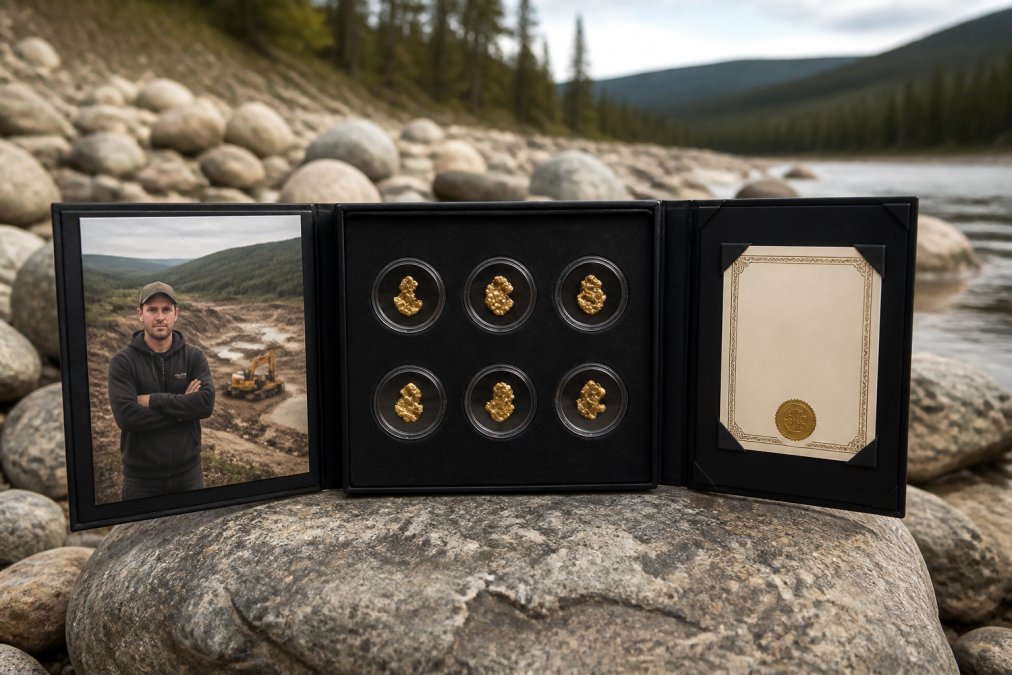
What distinguishes Parker's Gold among Nuggets by Grant alternatives is the connection to an active, recognizable mining operation. Collectors who watch Gold Rush know exactly where this material originates. That transparency carries weight in a market where provenance questions often arise. The Parker Schnabel brand recognition adds value that generic placer gold from unknown sources cannot match.
The Dominion Creek Collector Package at $199.00 positions this option in the mid-to-premium range of raw gold offerings. You're paying for documented sourcing, professional presentation, and the ability to verify authenticity through an official certificate. For collectors who prioritize connection to the show and verified origin, this represents a direct path to ownership.
How to Verify Gold Nuggets: Authentication Standards
Verifying authenticity is where many collectors struggle when evaluating Nuggets by Grant alternatives. The process requires understanding what makes a gold nugget genuine and how to distinguish it from counterfeits or misrepresented material.
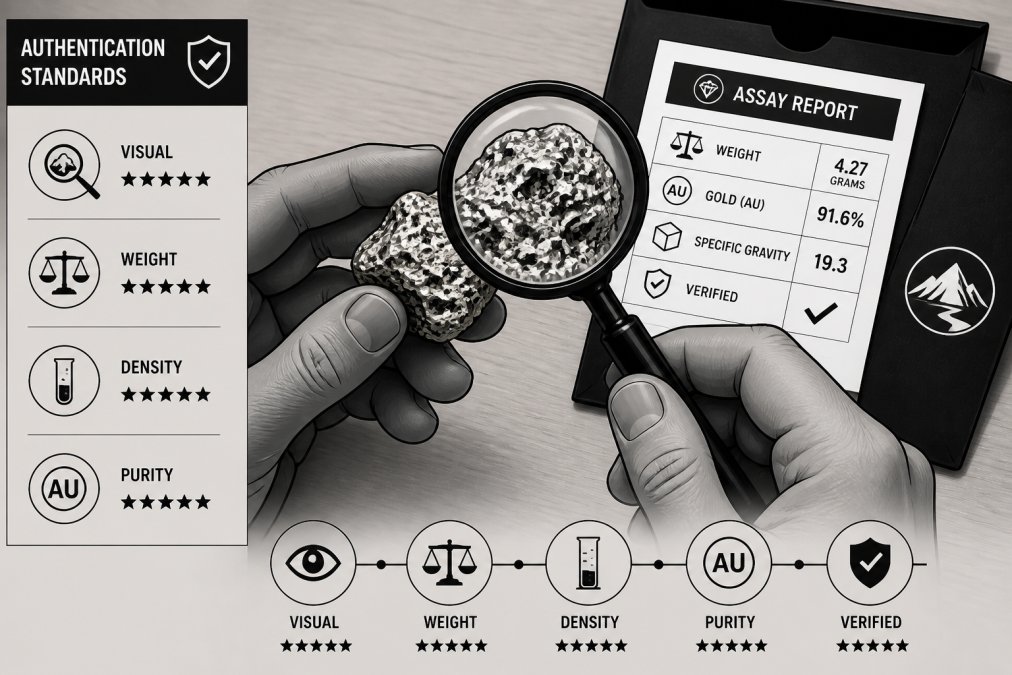
Raw placer gold exhibits specific characteristics that distinguish it from processed bullion or fabricated specimens. Natural gold nuggets show irregular surfaces with visible crystalline structures and natural weathering patterns. The specific gravity of pure gold is 19.3, meaning a genuine nugget feels substantially heavier than a similar-sized piece of most other metals. When you hold authentic placer gold, the weight-to-volume ratio becomes immediately apparent.
A Certificate of Authenticity from a reputable source serves as documentation, but it's not the complete verification process. The certificate should include the weight in troy ounces, the purity assessment, and ideally, details about the geographic origin and mining operation. Parker's Gold provides this documentation with each purchase, which creates a traceable record.
Professional assay testing offers the most rigorous verification method. An assay office can determine exact purity through chemical analysis and provide an official report. Many serious collectors request assay confirmation before making significant purchases, particularly when buying from unfamiliar sources. The cost of assay testing typically ranges from $50 to $150 depending on the sample size and analysis depth.
Visual inspection matters too. Genuine placer gold typically shows natural oxidation patterns and surface irregularities. Counterfeits often appear too uniform or display characteristics inconsistent with natural formation. Examining the nugget under magnification reveals whether the surface texture matches what you'd expect from naturally occurring material versus fabricated alternatives.
Natural Gold vs Gold Bullion: What You're Actually Buying
Understanding the distinction between natural gold and gold bullion clarifies why collectors choose one Nuggets by Grant alternative over another. These represent fundamentally different products with different characteristics, pricing structures, and investment implications.
Natural gold, including raw placer gold and nuggets, exists in the form it took during geological formation and mining recovery. Placer gold consists of small flakes, dust, and occasionally larger nuggets found in alluvial deposits. This material retains its natural appearance and irregular form. Collectors value natural gold partly for its authenticity and visual character, which cannot be replicated in processed bullion.
Gold bullion, by contrast, is refined material cast into standardized bars or coins. Bullion prioritizes purity and weight consistency, making it ideal for investors focused purely on precious metal content and melt value. A gold bullion bar of known weight and purity trades on commodity markets with transparent pricing tied directly to spot gold prices.
The pricing difference reflects these distinctions. Bullion trades at a relatively narrow margin above spot price, typically 3-8% depending on form and quantity. Natural gold and collectible nuggets carry premiums that reflect their rarity, provenance, presentation, and collector demand. A raw placer gold specimen with documented origin from a known mining operation commands a higher price per troy ounce than equivalent bullion because you're paying for the story, authenticity documentation, and collectible status.
For investment purposes, natural gold's liquidity differs from bullion. Bullion can be sold quickly to any precious metals dealer at a predictable price. Natural gold requires finding a buyer who values the specific specimen, its provenance, and its presentation. That market exists, collectors actively seek authenticated material, but the transaction process takes longer and involves more negotiation.
Finding Reputable Gold Nugget Dealers
Selecting a trustworthy source becomes critical when purchasing raw gold, particularly when evaluating different Nuggets by Grant alternatives. The market includes legitimate dealers, but also contains operators who misrepresent material or provide false documentation.
Reputation indicators matter significantly. Dealers with verifiable track records, customer reviews, and established business history provide more confidence than new operators or those without public feedback. Parker's Gold demonstrates credibility through its connection to the Discovery Channel show and its documented sourcing from Parker Schnabel's operation. That association creates accountability and transparency.
Look for dealers who provide detailed documentation with each purchase. Certificates should specify weight in troy ounces, purity assessment, geographic origin, and mining operation details. Vague certificates that lack specifics raise questions about whether the seller actually verified the material. Reputable dealers invest in proper documentation because it protects both the buyer and their reputation.
Transparency about sourcing answers the fundamental question: Where did this gold actually come from? Dealers who can trace material back to specific mining operations, geographic regions, or recovery methods provide verifiable provenance. Generic claims about "placer gold from northern regions" without specific sourcing information warrant skepticism.
Authentication partnerships matter too. Some dealers work with established assay offices or third-party verification services. This creates an additional layer of credibility because independent verification suggests the dealer welcomes scrutiny. Dealers who refuse third-party verification or discourage assay testing raise legitimate concerns.
Shipping and insurance practices reveal professionalism. Reputable dealers offer fully insured, tracked, and signature-required shipping as standard, not as an optional upgrade. This protects your purchase and demonstrates the dealer takes security seriously. Dealers who ship via standard mail or offer uninsured options are cutting corners on something valuable.
Pricing, Investment Potential, and Liquidity
The financial aspects of purchasing raw gold require careful analysis when comparing Nuggets by Grant alternatives. Price alone doesn't determine value, you must consider what you're actually acquiring and whether it aligns with your financial goals.
Parker's Gold's Dominion Creek Collector Package at $199.00 represents a specific pricing point for documented, presented placer gold with authentication. That price includes the handcrafted display case, Certificate of Authenticity, and insured shipping. Breaking down the value proposition: you're paying for raw material, professional presentation, authentication documentation, and the provenance associated with Parker Schnabel's operation.
The melt value, what the gold is worth purely as a commodity, represents only part of the total value. Raw placer gold's commodity value depends on current spot price and the exact weight and purity of the material. As spot prices fluctuate, the baseline commodity value changes. But the collector premium, the additional value from documentation, rarity, and provenance, remains relatively stable because it's driven by collector demand rather than commodity markets.
Investment potential differs between raw gold and bullion. Bullion investments track commodity markets closely. If spot gold rises, your bullion value increases proportionally. If spot gold falls, so does your bullion value. The relationship is direct and predictable.
Raw gold with provenance and authentication follows a different trajectory. Commodity value moves with spot prices, but collector value depends on demand for that specific type of material. Gold from a documented, recognizable source like Parker Schnabel's Dominion Creek operation may appreciate as the collector market values the authenticity and story. Generic placer gold without clear provenance appreciates primarily based on spot price movements.
Liquidity, how quickly you can convert your purchase back to cash, varies significantly. Bullion can be sold to any precious metals dealer within hours or days. Raw gold requires finding a collector or dealer interested in that specific material. The market exists, but the transaction takes longer. Documented, authenticated material from recognizable sources tends to sell more readily than generic specimens because collectors actively seek it.
Tax implications warrant consideration. The IRS classifies precious metals differently depending on form and use. Collectible gold, including rare coins and authenticated specimens, may be subject to different capital gains treatment than bullion. Consulting a tax professional before making significant purchases helps you understand your specific situation.
Which Alternative Is Right for You?
Choosing among Nuggets by Grant alternatives requires matching your priorities to what each option actually delivers. This framework helps clarify the decision.
Choose Parker's Gold if:
- You value documented provenance from a known, televised mining operation
- You want professional presentation in a handcrafted display case
- Authentication and official certification matter to your purchase
- You appreciate the Gold Rush connection and Parker Schnabel brand
- You're willing to pay a premium for verified sourcing and collector appeal
- You want fully insured, tracked shipping with signature confirmation
- You're buying for display, gifting, or as a collectible rather than pure commodity investment
Consider other alternatives if:
- You prioritize pure commodity value and want pricing closest to spot gold
- You're seeking maximum liquidity and fastest conversion to cash
- You want standardized, fungible material that any dealer will accept
- You're building a precious metals investment portfolio based on weight and purity alone
- You prefer lower premiums over provenance documentation
- You're accumulating material over time and want consistent pricing
The fundamental distinction centers on whether you're acquiring raw gold as a commodity or as an authenticated collectible with a documented story. Parker's Gold explicitly targets the collectible market, people who value the connection to Parker Schnabel's operation, the professional presentation, and the verified authenticity. If that resonates with your priorities, it represents the strongest option among available Nuggets by Grant alternatives.
If your focus is purely on precious metal content and investment return tied to spot price movements, you might find better value in standardized bullion from commodity-focused dealers. But if you want to own a tangible piece of Yukon mining history with professional documentation and presentation, Parker's Gold delivers exactly that proposition.
The choice between raw gold options ultimately reflects your priorities as a collector or investor. Parker's Gold distinguishes itself through direct sourcing from Parker Schnabel's Dominion Creek operation, professional presentation in a handcrafted tri-fold display case, and official Certificate of Authenticity that verifies origin and value. The Dominion Creek Collector Package at $199.00 includes fully insured, tracked, and signature-required shipping, ensuring secure delivery. If you value authenticated provenance, verified sourcing, and the connection to Gold Rush history, claim yours today and own a documented piece of Yukon mining heritage.
| Alternative Type | Best For | Key Advantage | Primary Consideration |
|---|---|---|---|
| Parker's Gold (Documented Sourcing) | Collectors & Gold Rush fans | Verified Yukon origin, professional presentation | Premium pricing reflects authenticity |
| Commodity Placer Gold | Precious metals investors | Lowest premium over spot price | Minimal documentation or provenance |
| Certified Bullion | Portfolio diversification | Standardized purity and weight | No collector or story value |
| Raw Nuggets (Generic Source) | Budget-conscious buyers | Lower entry price | Authenticity verification difficult |
Frequently Asked Questions
How can I verify that gold nuggets are authentic and not counterfeit?
Authentic gold nuggets should come with an official Certificate of Authenticity detailing origin, weight in troy ounces, and purity. Verify the dealer's credentials and request assay documentation. Genuine nuggets display specific gravity consistent with 24kt gold (19.3 g/cm³), have natural surface characteristics from placer mining, and can be tested through acid testing or professional assay. Reputable dealers provide detailed provenance and encourage independent verification.
What's the difference between natural gold nuggets and gold bullion?
Natural gold nuggets are raw placer gold specimens recovered through mining, with irregular shapes and unique geological formations. They carry numismatic and collector value beyond melt value. Gold bullion, bars, coins, or standardized forms, is refined to precise purity (typically 99.9%) and weight, priced primarily on troy ounce spot value. Nuggets appeal to collectors seeking authenticity and historical connection; bullion suits investors focused on pure precious metal value and liquidity.
Why should I buy from Parker's Gold instead of other gold nugget dealers?
Parker's Gold offers a direct connection to Parker Schnabel's Dominion Creek operation, featured on Discovery Channel's Gold Rush. Each package includes a handcrafted display case and official Certificate of Authenticity verifying origin and value. The sourcing story, combined with verified provenance and secure, fully insured shipping, provides confidence that you're acquiring genuine Yukon-sourced placer gold with documented authenticity, not generic nuggets resold as premium specimens.
Are gold nuggets a good investment compared to bullion?
Gold nuggets serve dual purposes: investment and collectible. While melt value tracks spot gold prices, authenticated specimens from documented mining operations often command premiums due to rarity, geological interest, and collector demand. Liquidity is lower than standardized bullion but exists within numismatic and collector markets. They work best as portfolio diversification for collectors valuing authenticity and historical narrative alongside precious metal exposure, rather than as pure commodity plays.
This article was written using GrandRanker