

Table of Contents
- Placer Gold vs Gold Coins: Key Differences at a Glance
- Gold Coin Premium vs Spot Price: What You Actually Pay
- How to Verify Placer Gold Authenticity Before You Buy
- Liquidity, Resale Value, and Exit Strategy
- Tax Implications of Owning Physical Gold
- Storage, Security, and Insurance for Placer Gold and Coins
- Environmental and Ethical Sourcing of Placer Gold
- Conclusion
- Frequently Asked Questions
Last Updated: September 19, 2026
Placer Gold vs Gold Coins: Key Differences at a Glance
Investing in placer gold vs gold coins comes down to one trade-off: standardization versus story. Gold coins arrive minted to a guaranteed purity, weight, and legal-tender status, while placer gold is raw material recovered from streams and gravel deposits, its value dependent on how carefully it has been tested and documented. This guide from Parker's Gold breaks down premiums, verification, liquidity, taxes, and storage.
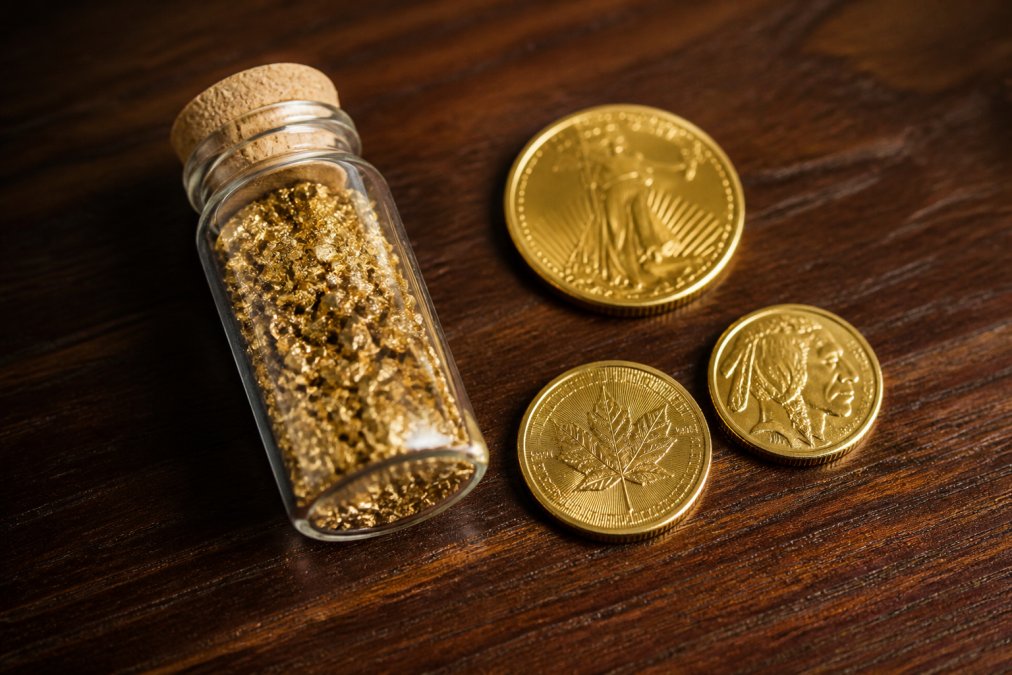
Raw Placer Gold vs Minted Coins: Form and Standardization
Placer gold is naturally occurring gold recovered from alluvial deposits, usually as flakes, small nuggets, or dust, and has not been melted or refined into a standard form. Minted coins are struck by a government mint to a stated weight and purity, often with legal-tender status behind them.
| Feature | Raw Placer Gold | Minted Gold Coins |
|---|---|---|
| Form | Flakes, nuggets, dust | Struck discs |
| Purity | Varies by deposit | Fixed and guaranteed |
| Pricing basis | Weight, purity, provenance | Spot price plus premium |
| Resale market | Narrower, collector-driven | Broad and liquid |
| Documentation | Assay and origin papers | Mint certification |
Gold Coin Premium vs Spot Price: What You Actually Pay
The gold coin premium vs spot price gap is the biggest cost difference between these two options. Spot price is the live market value of one troy ounce of pure gold; a premium is everything above that: fabrication, distribution, and dealer margin. Sovereign coins from major mints carry the lowest premiums because they are widely recognized, while fractional gold carries higher premiums per ounce because minting costs are spread across less metal.
Placer Gold Pricing: Purity, Weight, and Dealer Spread
Placer gold pricing works differently. Raw flakes are rarely pure, so buyers pay on estimated fine-gold content, not total weight. A dealer spread, the gap between what a dealer pays you and what they charge the next buyer, tends to be wider on raw gold because each lot must be tested and graded individually.
How to Verify Placer Gold Authenticity Before You Buy
Verifying placer gold authenticity means confirming three things: that the material is real gold, that its purity matches the seller's claim, and that its stated origin can be documented. No single test proves all three, so serious buyers stack evidence. This is where placer gold diverges most sharply from minted coins, a coin's authenticity is settled by its hallmark and specifications, while raw placer gold requires a verification chain built from scratch.
The Verification Chain, Step by Step
- Visual inspection: Real placer gold has irregular shapes and a warm, consistent color; pyrite and mica look flakier and duller under bright light. This rules out obvious fakes but proves nothing about purity.
- Weight and density check: Gold is dense, so a small vial should feel surprisingly heavy for its size. A density estimate can flag gross contamination but cannot quantify fine-gold content.
- Magnet test: Gold is not magnetic; if material jumps to a magnet, it is contaminated with iron-bearing material. Passing only eliminates one class of impurity.
- Acid or electronic testing: A jeweler or assayer can confirm karat range on a sample. This is a range, not an exact purity figure, and it damages the sample.
- Fire assay: The reference method. A qualified assayer melts a representative sample, separates the gold, and reports fine-gold content to a precise figure, the only method that produces a defensible purity number for resale.
- Documentation review: Match the batch number and Certificate of Authenticity against the seller's records. Documentation lets a future buyer trust the material without re-testing it.
What Assaying and Verification Actually Cost You
Assaying and verification costs are the hidden line item most guides skip. A fire assay is a destructive, lab-grade process, and assayers typically price it per lot with a minimum charge, roughly fixed whether you submit one gram or one ounce. On small quantities, that fixed cost can consume a meaningful share of the metal's value, which is why self-funding an assay on a few grams of placer gold rarely makes economic sense.
Why Provenance Documentation Beats a Lab Report You Paid For
Provenance documentation from the source is worth more than a lab report you commission yourself. It is produced before the sale, so it prices into the deal rather than adding a cost afterward; it is tied to a specific recovery batch, giving a future buyer a verifiable origin rather than an anonymous sample; and it transfers with the material, so each subsequent owner inherits the verification rather than repeating it.
Liquidity, Resale Value, and Exit Strategy
Liquidity favors coins. Sovereign coins trade in a deep, global market, so you can sell quickly at a spread close to spot. Raw placer gold sells into a narrower pool, refiners, jewelers, and collectors. Refiners pay on fine-gold content after testing, usually at a discount; collectors may pay more, but only for material with a compelling story or documented origin.
Tax Implications of Owning Physical Gold
Tax implications of owning physical gold depend on how you sell it and how long you held it. In the United States, the IRS treats physical gold as a collectible, taxed at a higher maximum rate than ordinary long-term capital gains. Sales can also trigger dealer reporting requirements above certain thresholds, and rules differ between bullion coins and raw material.
Storage, Security, and Insurance for Placer Gold and Coins
This is one area where presentation matters. The Dominion Creek Collector Package ships in a handcrafted tri-fold display case with embossed gold detailing, which keeps the gold protected and display-ready instead of loose in a bag. Every shipment is fully insured, tracked end to end, and requires a signature on delivery, so the package is never left unattended.
Parker Schnabel Yukon Gold Flakes →
Environmental and Ethical Sourcing of Placer Gold
Sourcing standards separate serious sellers from the rest. Placer mining disturbs streambeds and can release sediment if poorly managed, which is why responsible operations work within a defined permitting and reclamation framework. Buyers increasingly want to know gold was not tied to conflict financing or unregulated labor, a concern driving demand for documented, traceable material across the precious-metals market.
The Regulatory Backdrop You Should Understand
Placer operations on federal lands in the United States operate under a distinct framework. The General Mining Law of 1872 governs locatable mineral claims on federal land, and the Bureau of Land Management administers those claims, including notice and plan-of-operations requirements that determine how much surface disturbance an operation may cause. The Environmental Protection Agency regulates discharges to waters of the United States under the Clean Water Act, the statute most relevant to sediment and turbidity from placer work.
How Placer Gold and Minted Bullion Compare on Ethical Footprint
Minted bullion and placer gold carry different ethical profiles, and neither is automatically cleaner.
- Recycled and refined bullion often carries a lower environmental footprint per ounce because the metal has already been mined once. Refiners that source recycled material avoid new extraction entirely, and major mints increasingly publish sourcing and responsible-sourcing policies.
- Newly mined placer gold carries the extraction footprint directly. The advantage is traceability: a small, documented placer operation can often tell you exactly where the gold came from, which large-scale supply chains frequently cannot.
- Conflict-financing risk is primarily associated with gold from certain unregulated artisanal and small-scale mining regions. Documented domestic or permitted operations largely sidestep this concern, which is a genuine point in favor of provenance-documented placer material.
Three Questions That Separate Documented Gold From Anonymous Gold
Ask three questions of any seller: Where was the gold recovered? Under what permit or claim? Can you document the chain of custody? A seller who answers all three in writing gives you something a lab report cannot, a verifiable history that travels with the material.
Conclusion
The real challenge with investing in placer gold vs gold coins is matching the form to your purpose. Coins give you liquidity, standardized purity, and an easy exit. Raw placer gold gives you something no mint can produce: a documented piece of mining history you can hold.
Frequently Asked Questions
Is placer gold considered a collectible or a commodity investment?
The IRS treats raw placer gold as a collectible, not a commodity, which means a 28% maximum capital gains rate instead of the lower rates for stocks. Gold coins like American Eagles are also collectibles, but their premium over spot price is usually higher. Placer gold from a documented source like Dominion Creek may carry both collectible and bullion value, so keep your Certificate of Authenticity for tax records.
How is the value of placer gold determined compared to market spot prices?
Placer gold is valued by its weight, purity, and origin, not a fixed spot price. Dealers test purity with an assay, then pay a percentage of the daily spot price minus a dealer spread. Coins trade at a published premium over spot. Because placer gold lacks standardized minting, its resale price depends heavily on documentation and buyer trust, so provenance matters more than with sovereign coins.
Does the IRS have specific reporting requirements for raw gold versus coins?
Yes. Sales of certain gold coins trigger 1099-B reporting by dealers under IRS rules for reportable items, but raw placer gold sales generally do not require the dealer to file a 1099-B. You still owe capital gains tax on any profit. Keep purchase receipts and your Certificate of Authenticity to establish cost basis, especially if you sell placer gold later at a gain.
What is the difference between raw placer gold and minted bullion?
Raw placer gold is natural flakes or nuggets recovered from streams, with no uniform shape, purity, or hallmark. Minted bullion coins are refined to 99.9% purity, stamped with a sovereign mint hallmark, and backed by government guarantee for weight and fineness. Placer gold offers a direct connection to mining history and can be displayed, while bullion coins are easier to price, store, and resell in standard markets.