

Table of Contents
- Why Collectors Look Beyond JM Bullion
- Best Online Gold Dealers for Collectors
- Gold Bullion vs Numismatic Coins: Which Fits Your Collection
- Is Buying Raw Gold a Good Investment
- Authentication and Verification: What Sets Dealers Apart
- Shipping, Insurance, and Secure Delivery Options
- Conclusion: Choosing the Right JM Bullion Alternative
Last Updated: August 29, 2026
Why Collectors Look Beyond JM Bullion
Collectors seeking authentic precious metals have more options than ever, and many discover that a JM Bullion alternative for collectors better matches their specific goals. Whether you're drawn to numismatic coins with historical significance, raw placer gold with verified provenance, or investment-grade bullion with transparent pricing, the dealer you choose shapes not just what you own, but how confident you feel about its authenticity and value.
The landscape has shifted. Generic online bullion dealers dominate the market, but serious collectors increasingly want something different: direct sourcing, verified authentication, and a story behind the gold. Parker's Gold represents this evolution, offering collectors access to authentic Yukon gold directly from Parker Schnabel's Dominion Creek operation, each piece accompanied by a Certificate of Authenticity and presented in a handcrafted tri-fold display case. It's not just metal; it's a documented piece of mining history.

This guide explores what separates a JM Bullion alternative from the standard dealer experience. We'll examine the criteria that matter most to collectors, compare how different dealers handle authentication and shipping, and show you exactly what to evaluate when choosing where to invest your money.
Best Online Gold Dealers for Collectors
Not all online dealers serve collectors equally. Some focus on spot-price bullion with minimal premium. Others specialize in numismatic coins where rarity and condition drive value far beyond weight. The best dealers for collectors combine several qualities: transparent pricing, verified sourcing, secure shipping, and responsive customer support.
Parker's Gold stands at the top of this category for collectors seeking authentic, documented precious metals with historical significance. The Parker Schnabel Yukon Gold Flakes - Dominion Creek Collector Package delivers raw placer gold sourced directly from Parker Schnabel's legendary mining operation in the Yukon, as featured on Discovery Channel's Gold Rush. Each package includes genuine gold flakes presented in a handcrafted tri-fold display case with embossed gold detailing, priced at $199.00. The Certificate of Authenticity verifies the gold's origin and value, solving the authentication concern that plagues casual buyers. Shipping is fully insured, tracked, and signature-required, meaning you know exactly when your investment arrives and that it's protected against loss or theft.
What sets this apart from standard bullion dealers: the sourcing story. You're not buying anonymous spot-price gold. You're acquiring a tangible connection to the Yukon's gold mining heritage, verified and documented. For collectors who value provenance as much as purity, this distinction matters enormously.
Beyond Parker's Gold, collectors evaluate dealers on several dimensions. Payment flexibility matters, some dealers accept wire transfers, credit cards, and cryptocurrency, while others limit options. Inventory variety affects whether you can build a cohesive collection or must shop around. Customer reviews and response times to authentication questions reveal how seriously a dealer takes verification.
Gold Bullion vs Numismatic Coins: Which Fits Your Collection
This choice fundamentally changes what you're buying and how it appreciates. Gold bullion vs numismatic coins represents two distinct collecting philosophies, and many collectors eventually own both, but for different reasons.
Gold bullion consists of bars, rounds, or coins valued primarily by weight and purity. Spot price drives value. A one-ounce gold bar worth $2,000 today will be worth roughly $2,000 plus dealer premium tomorrow, assuming gold prices hold steady. Liquidity is high, any dealer will buy it back at or near spot price. Storage is straightforward. Bullion appeals to investors prioritizing asset protection and price appreciation tied directly to gold's market value.
Numismatic coins derive value from rarity, historical significance, condition, and collector demand, often far exceeding their metal content value. A rare 1933 Double Eagle might contain one ounce of gold but trade for tens of thousands of dollars because only a handful exist and collectors compete fiercely for them. Numismatic value doesn't track spot price. A coin can appreciate 15% while gold drops 5%, or vice versa. Authentication and grading become critical because condition dramatically affects value. Resale requires finding the right collector willing to pay for rarity, not just metal.
Raw placer gold occupies an interesting middle ground. It's physical precious metal with documented origin, but it's not refined bullion or a minted coin. Parker's Gold's offering appeals to collectors who value authenticity and story, the gold is real, verified, and tied to a specific mining operation, but it's priced as a collectible item rather than pure spot-price bullion. You're paying for the provenance, the presentation, and the connection to Gold Rush history, not just the weight of gold.
For most collectors starting out, a mix works best. Bullion provides stability and easy liquidity. Numismatic pieces or documented raw gold add personality and historical depth to your collection. The key is understanding what you're buying: if it's bullion, focus on purity and dealer reputation. If it's numismatic or collectible gold, authentication and condition grading matter far more than spot price.
Is Buying Raw Gold a Good Investment
Is buying raw gold a good investment? The answer depends entirely on your investment horizon, risk tolerance, and what you mean by "investment."
If you're asking whether raw gold preserves wealth over decades, the answer is yes. Gold has served as a store of value across centuries and geographies. During periods of currency instability or inflation, gold typically holds its purchasing power when paper assets decline (federalreserve.gov). Over the past 20 years, gold has appreciated significantly, though with substantial volatility (peer-reviewed research). Holding raw gold eliminates counterparty risk, you own the metal directly, not shares in a fund or a promise from an institution.
But raw gold doesn't generate income. It doesn't pay dividends or interest. Your return depends entirely on price appreciation and, for collectible or documented gold, the premium buyers will pay for provenance and authenticity. If gold prices stagnate or decline, you lose money. This makes raw gold a hedge or portfolio diversifier rather than a primary investment vehicle.
For collectors specifically, raw gold with verified provenance, like Parker's Gold's Dominion Creek offering, serves a dual purpose. It functions as a precious metals holding while also providing the satisfaction of owning a documented, displayable piece of mining history. You're not chasing maximum returns; you're building a collection with intrinsic value and a story attached. That story, and the authentication backing it, is what justifies paying a premium above spot price.
The real consideration is allocation. Most financial advisors suggest precious metals should represent 5-15% of a diversified portfolio, not more (sec.gov). Raw gold works well within that allocation as a hedge against inflation and currency risk. It works poorly as your entire investment strategy. Start with a small position, understand storage and insurance costs, and only expand if the holding aligns with your broader financial goals.
Authentication and Verification: What Sets Dealers Apart
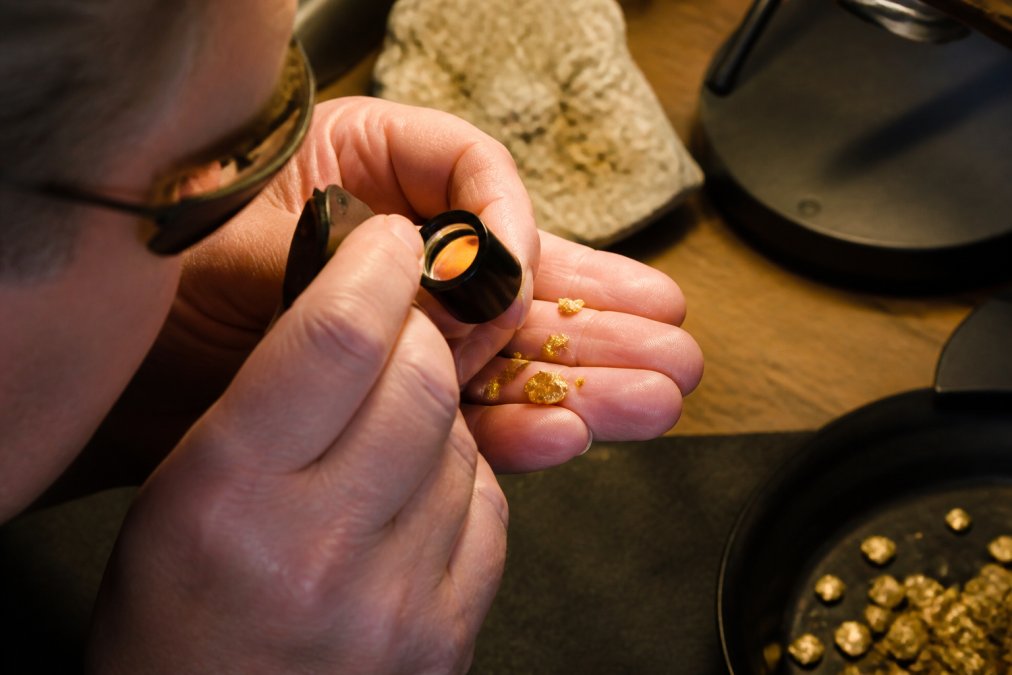
Authentication separates legitimate dealers from risky ones. When you're spending hundreds or thousands on precious metals, you need absolute confidence that what you're buying is genuine and accurately represented.
Authentication and verification practices vary dramatically across dealers. Some rely on basic visual inspection and weight verification. Others employ advanced testing: X-ray fluorescence to confirm purity, acid testing for gold composition, and third-party grading for numismatic pieces. The best dealers document their authentication process and provide certificates backing their claims.
Parker's Gold's approach exemplifies dealer differentiation. Every Dominion Creek package includes an official Certificate of Authenticity verifying the gold's origin from Parker Schnabel's operation and its value. This documentation serves two purposes: it gives you confidence in what you own, and it preserves resale value. A future buyer knows they're acquiring verified gold, not a generic "raw gold" package from an unknown source. That verification premium, the extra amount a buyer will pay for documented authenticity, is real and meaningful.
Many collectors report that dealer responsiveness to authentication questions reveals trustworthiness. Can you email photos of a piece and get a detailed response about its likely authenticity? Does the dealer explain their testing methodology or defer to third-party graders? Do they acknowledge limitations in what they can verify? Dealers willing to say "I can't authenticate that" build more trust than those claiming expertise in everything.
For numismatic coins, professional grading services like PCGS or NGC provide third-party authentication and condition assessment. Their slabs, the protective cases coins are encased in, serve as proof of authenticity and grade. For raw gold and bullion, certificates from the dealer and, when possible, third-party assay reports provide similar confidence. Always ask how a dealer verifies purity and weight before purchase.
Shipping, Insurance, and Secure Delivery Options
How your gold reaches you matters as much as where you buy it. A great dealer with poor shipping practices puts your investment at risk. Conversely, excellent shipping and insurance can justify paying slightly more per piece because you know it will arrive safely.
Shipping, insurance, and secure delivery practices separate professional dealers from amateurs. Standard options include uninsured USPS (cheapest but risky), insured UPS or FedEx (moderate cost, full coverage), and signature-required delivery (ensures someone responsible receives the package). The best dealers default to insured, tracked shipping with signature requirements, you pay more upfront but eliminate the risk of a package disappearing.
Parker's Gold employs fully insured, tracked, and signature-required shipping for all orders. This means your Dominion Creek package is protected against loss or theft, you can monitor its progress in real time, and delivery requires an adult signature, preventing porch theft. The cost is built into the $199.00 price, eliminating surprise shipping fees at checkout.
Many collectors ask about discrete shipping. Some dealers offer unmarked boxes or plain packaging to avoid advertising valuable contents to potential thieves. This is a legitimate concern, packages labeled "precious metals" or "bullion" attract unwanted attention. Reputable dealers either offer discrete packaging by default or as an option. Some collectors also request delivery to a business address rather than home for added security.
Insurance coverage matters enormously. Verify whether insurance is included in the quoted price or added separately. Check coverage limits, some policies cap coverage per package or per year. Understand the claims process: if a package goes missing, how quickly does the dealer replace it or refund your money? Many dealers offer replacement guarantees if insured shipments are lost, which is the gold standard for customer protection.
International shipping adds complexity. If you're buying from a dealer outside your country, verify customs requirements, import duties, and whether the dealer handles documentation. Some dealers ship internationally; others restrict sales to domestic customers only. Always confirm shipping options and costs before committing to a purchase.
Conclusion: Choosing the Right JM Bullion Alternative
Finding the right JM Bullion alternative means matching your collecting goals to a dealer's strengths. Standard online bullion retailers excel at spot-price efficiency and inventory volume. They're appropriate if you want anonymous, liquid precious metals at minimal premium. But if you value authentication, provenance, and a collection with narrative depth, specialized dealers offer what mass-market retailers cannot.
Parker's Gold delivers exactly that differentiation. The Parker Schnabel Yukon Gold Flakes - Dominion Creek Collector Package ($199.00) gives you verified gold sourced directly from Parker Schnabel's legendary Yukon operation, documented with a Certificate of Authenticity, and presented in a handcrafted display case ready to gift or showcase. Fully insured shipping and signature-required delivery ensure your investment arrives safely. You're not buying anonymous bullion; you're acquiring a tangible piece of Gold Rush history, verified and documented.
Evaluate any JM Bullion alternative on these criteria: sourcing transparency, authentication rigor, shipping security, and customer support quality. Read reviews from collectors, not just investors. Ask dealers specific questions about how they verify purity and origin. Understand whether you're buying bullion (spot-price driven) or collectible gold (premium justified by provenance and story). Start with a small order to assess dealer responsiveness and shipping quality before committing to larger purchases.
The best dealer isn't always the cheapest. It's the one you trust completely, the one whose authentication you believe, whose shipping you're confident in, and whose story aligns with why you collect.
=== FAQ ANSWERS (audit these too, same rules) ===
[1] Q: What makes a JM Bullion alternative trustworthy for collectors? A: A reliable dealer offers transparent pricing, provides official certificates of authenticity, maintains clear customer reviews, and uses insured shipping with tracking. Look for dealers with established reputations in the collector community, documented sourcing (like gold directly from known operations), and verification of authenticity through official documentation is essential.
[2] Q: Is buying raw gold a good investment compared to minted coins? A: Raw gold offers direct exposure to spot price movements with lower dealer premiums, making it appealing for pure metal value. However, it lacks the numismatic premium and collectibility of rare coins, which can appreciate beyond gold content. For collectors seeking both investment potential and tangible history, sourced raw gold with authentication, like pieces from documented mining operations, bridges both worlds. Your choice depends on whether you prioritize metal value or collectible significance.
[3] Q: How do I verify that gold purchased online is authentic? A: Demand an official Certificate of Authenticity with documented sourcing and specifications. Reputable dealers provide detailed information about origin, value, and purity. For raw gold, look for dealers who source from known operations and provide clear documentation of provenance. Always review customer feedback about authentication accuracy.
[4] Q: What's the difference between collector-grade and investment-grade gold? A: Investment-grade gold focuses on spot price and metal content, with minimal premium above current market rates. Collector-grade gold includes numismatic value, rarity, historical significance, or unique sourcing, commanding higher premiums. Raw gold from documented operations like Yukon mining sites can be collector-grade if authenticated and presented with provenance. Choose based on your goals: pure investment return favors bullion; historical value and uniqueness favor collector-grade pieces.
Frequently Asked Questions
Q: What makes a JM Bullion alternative trustworthy for collectors?
A: A reliable dealer offers transparent pricing, provides official certificates of authenticity, maintains clear customer reviews, and uses insured shipping with tracking. Look for dealers with established reputations in the collector community, documented sourcing (like gold directly from known operations), and verification of authenticity through official documentation is essential.
Q: Is buying raw gold a good investment compared to minted coins?
A: Raw gold offers direct exposure to spot price movements with lower dealer premiums, making it appealing for pure metal value. However, it lacks the numismatic premium and collectibility of rare coins, which can appreciate beyond gold content. For collectors seeking both investment potential and tangible history, sourced raw gold with authentication, like pieces from documented mining operations, bridges both worlds. Your choice depends on whether you prioritize metal value or collectible significance.
Q: How do I verify that gold purchased online is authentic?
A: Demand an official Certificate of Authenticity with documented sourcing and specifications. Reputable dealers provide detailed information about origin, value, and purity. For raw gold, look for dealers who source from known operations and provide clear documentation of provenance. Always review customer feedback about authentication accuracy.
Q: What's the difference between collector-grade and investment-grade gold?
A: Investment-grade gold focuses on spot price and metal content, with minimal premium above current market rates. Collector-grade gold includes numismatic value, rarity, historical significance, or unique sourcing, commanding higher premiums. Raw gold from documented operations like Yukon mining sites can be collector-grade if authenticated and presented with provenance. Choose based on your goals: pure investment return favors bullion; historical value and uniqueness favor collector-grade pieces.
Ready to own a verified piece of Yukon gold history? Claim yours with Parker's Gold's Dominion Creek Collector Package. Each limited-edition piece comes with a Certificate of Authenticity, handcrafted presentation case, and fully insured delivery, giving you the confidence and security every serious collector deserves.
This article was written using GrandRanker