

Table of Contents
- What Are Raw Gold Flakes and Why Collectors Want Them
- Is Raw Gold a Good Investment for Long-Term Collectors
- How to Value Placer Gold: Understanding Purity, Weight, and Provenance
- How to Verify Authenticity of Raw Gold Flakes
- Best Display Cases for Gold Flakes: Protecting Your Collection
- Parker's Gold Dominion Creek Collector Package: Authenticity and Exclusivity
- What to Know Before Buying Raw Gold Flakes
- Conclusion
Last Updated: August 21, 2026
What Are Raw Gold Flakes and Why Collectors Want Them
Raw gold flakes represent a tangible way to own mining history and geological authenticity. Unlike refined bullion or coins, they retain their natural character, rough edges, irregular shapes, dust particles, exactly as recovered from riverbeds and alluvial deposits through panning, sluicing, or small-scale mining.
Collectors are drawn to raw gold flakes for reasons beyond intrinsic metal value. There's authenticity in the unrefined form, a direct connection to the landscape where it was found, and a narrative: knowing the origin story transforms a commodity into a collectible. Gold Rush enthusiasts seek specimens tied to legendary operations. Precious metals investors appreciate purity and weight without jewelry markups. Gift givers seek something unique and meaningful.
What separates serious collectors from casual buyers is understanding value determinants. Raw gold flakes aren't priced like commodity gold alone. Worth depends on karat purity, weight in troy ounces, visual appeal, flake size, source rarity, and critically, provenance credibility. A vial of gold dust from an unknown location has minimal collector value. The same weight from Parker Schnabel's Dominion Creek operation in the Yukon, documented with a Certificate of Authenticity, becomes actively sought and preserved.

Is Raw Gold a Good Investment for Long-Term Collectors
The investment case for raw gold flakes differs fundamentally from bullion investing. If you're buying based purely on gold's spot price, you're speculating on metal prices and should buy bars or coins instead.
Collectors acquiring raw gold flakes with provenance aren't chasing spot prices. They're building collections where value compounds through multiple dimensions: gold content, specimen rarity and quality, documented origin story strength, and collector market appetite for authenticated pieces from specific operations.
Consider two scenarios. In scenario one, you buy generic placer gold dust from an unverified source. Its value ties entirely to daily gold price. If gold drops from $2,100 to $1,800 per troy ounce, your holding loses roughly 14%. In scenario two, you acquire authenticated raw gold flakes from a documented mining operation with historical significance, say, Parker's Gold's Dominion Creek Collector Package with official certification. The gold content still matters, but the specimen also holds numismatic value: collector demand, historical association, proof of authenticity, and presentation quality all factor into resale value.
For serious collectors, the investment thesis isn't beating gold prices but building a portfolio of authenticated specimens that appreciate through collector demand, rarity, and historical significance.
How to Value Placer Gold: Understanding Purity, Weight, and Provenance
Valuing raw gold flakes requires understanding three independent variables: karat purity (how much material is actually gold), weight in troy ounces (the standard precious metals measurement), and provenance (documented origin and authenticity). Together, they define what a collector should pay.
Karat Purity and Fineness Standards
Karat purity measures the proportion of pure gold in a sample, ranging from 24K (pure gold, 99.9% fineness) to 10K (41.7% fineness, the U.S. minimum legal standard) (the FTC). Placer gold typically ranges between 22K and 24K because it hasn't been mixed with alloys during refining.
Fineness expresses the same concept as a decimal or percentage. 24K gold equals .999 fineness (99.9% pure). 22K gold equals .916 fineness (91.6% pure). Raw placer gold from most North American sources runs between 22K and 24K fineness, depending on the geological formation where it was deposited.
To determine fineness, professional assay is required. An assay melts a small portion of your specimen, runs chemical analysis, and provides a report stating exact fineness and pure gold content weight. For authenticated collector packages like Parker's Gold's Dominion Creek offering, the Certificate of Authenticity includes assay results, eliminating the need for independent testing.
Troy Ounce Weight and Market Pricing
Gold is weighed in troy ounces, not standard ounces. One troy ounce equals 31.1035 grams (nist.gov). Gold prices are always quoted per troy ounce. If gold trades at $2,100 per troy ounce and your specimen weighs 0.5 troy ounces at 22K fineness, the intrinsic gold value is roughly $960 (0.5 oz × $2,100 × 0.916 fineness).
Spot price is only one component of what collectors pay. The collector premium, the amount above spot price, accounts for authenticity, rarity, provenance, and presentation. Authenticated raw gold flakes from legendary mining operations might sell for 20% to 50% above spot price, while generic unverified placer gold might trade at spot price or below.
Provenance and Certificate of Authenticity
Provenance is the documented history of an object's origin and ownership. For raw gold flakes, it answers: Where did this gold come from, and how do I know you're telling the truth?
A Certificate of Authenticity is the collector's proof. It should include source location, weight in troy ounces, fineness, recovery date, and ideally, assay results from an independent laboratory. The certificate's credibility depends on the issuing organization. A certificate from a reputable operation like Parker's Gold's Dominion Creek Collector Package, sourced directly from Parker Schnabel's mining operation as featured on Discovery Channel's Gold Rush, carries significant weight because the issuer's reputation is on the line.
Collectors should verify that certificates include specific details, not vague claims. "Authentic gold from the Yukon" is worthless. "0.5 troy ounces of 23K placer gold recovered from Dominion Creek on June 2026, assayed by [certified lab name]" is credible.
How to Verify Authenticity of Raw Gold Flakes
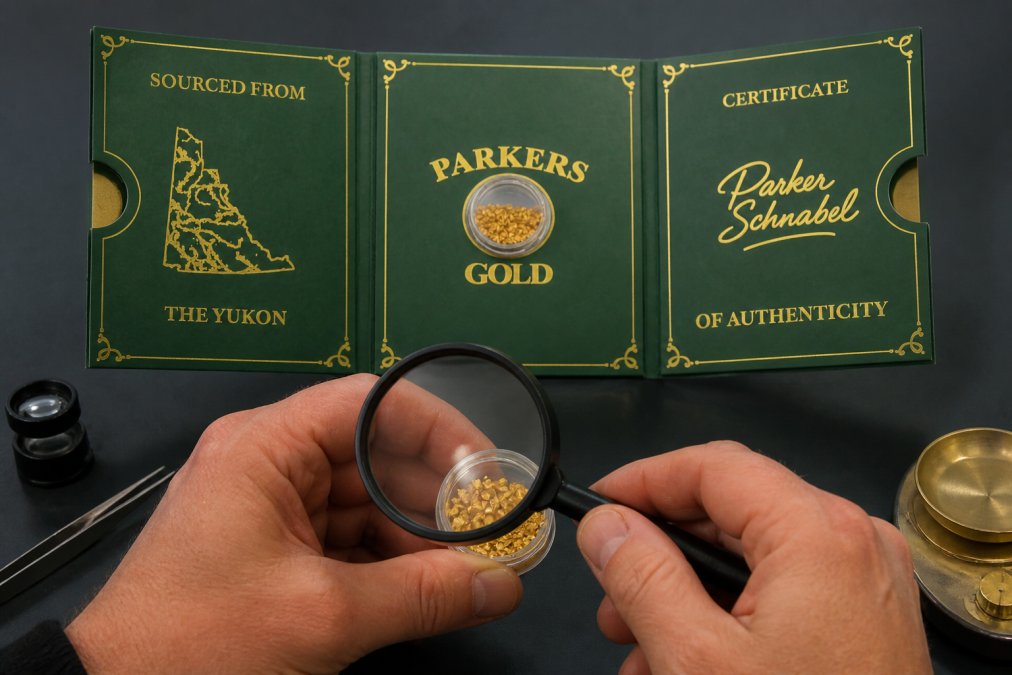
Authenticating raw gold flakes requires visual inspection, density testing, and professional assay. No single test proves authenticity, but together, these methods provide confidence that what you're holding is genuine gold at the claimed fineness.
Density Testing and Specific Gravity
Gold has a specific gravity of 19.3, meaning it's 19.3 times denser than water (usgs.gov). This density is one of gold's most reliable identifying characteristics. Fake gold made from lead, tungsten, or other base metals has different densities and won't pass a density test.
The simplest density test uses water displacement. A genuine gold specimen should displace a volume of water equal to its weight divided by 19.3. For example, a specimen weighing 10 grams should displace approximately 0.52 milliliters of water. You can perform this test at home using a precise digital scale and a graduated cylinder. If the calculated density yields 11 or 15 instead of 19.2, the specimen isn't pure gold.
Density testing works well for nuggets and larger flakes but becomes unreliable for gold dust or very small specimens. For small flakes, professional assay is more trustworthy.
Acid Testing and Professional Assay
Acid testing is an older method still used by some collectors. The test involves scratching the specimen to expose fresh metal, then applying nitric acid. Genuine gold doesn't react to nitric acid, while most base metals dissolve or discolor. The test is quick but damages the specimen and requires handling corrosive materials.
Professional assay is the gold standard for authentication. A certified assay laboratory uses fire assay, a destructive method that melts a sample and separates gold from other metals, providing exact fineness and weight. The lab issues a report with assay results and certification number. For authenticated collector packages, the assay is performed before the specimen reaches you, and results are documented in the Certificate of Authenticity.
When buying raw gold flakes, ask whether an independent assay has been performed. Reputable sellers expect this question and provide assay results or offer to have the specimen tested.
Best Display Cases for Gold Flakes: Protecting Your Collection
Raw gold flakes are durable, gold doesn't corrode or tarnish, but they're vulnerable to loss, theft, and damage from mishandling. A proper display case protects specimens, presents them beautifully, and documents ownership.
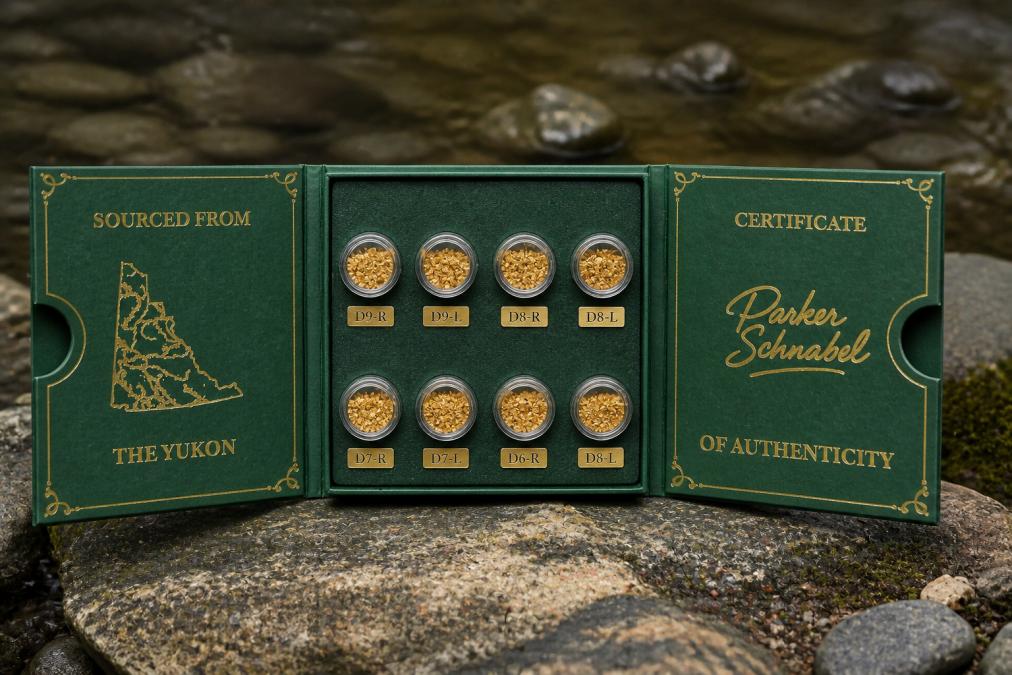
The ideal display case combines archival-quality materials that don't off-gas chemicals or corrode gold (acrylic, glass, acid-free paper), isolated compartments for each specimen preventing shifting or mixing, and security sufficient to deter casual theft while remaining accessible for viewing.
Handcrafted tri-fold display cases, like those included with Parker's Gold's Dominion Creek Collector Package, are designed specifically for this purpose. Each compartment holds a specimen securely while allowing light to illuminate the gold's natural color and luster. For larger collections, museum-quality specimen boxes with velvet-lined compartments offer superior protection. For casual collectors, a simple glass vial with a secure cap is adequate for storage.
Store your collection in a cool, dry place away from direct sunlight. Extreme temperature swings can cause expansion and contraction, potentially damaging delicate specimens. A climate-controlled closet or safe is ideal.
Parker's Gold Dominion Creek Collector Package: Authenticity and Exclusivity
Parker's Gold's Dominion Creek Collector Package represents the intersection of authentication, exclusivity, and storytelling that serious collectors seek. The package includes genuine raw placer gold flakes recovered directly from Parker Schnabel's legendary Dominion Creek operation in the Yukon, presented in a handcrafted tri-fold display case, and accompanied by an official Certificate of Authenticity.
The provenance is unambiguous. The gold comes from a documented mining operation featured on Discovery Channel's Gold Rush, where Parker Schnabel and his team have developed a reputation for finding significant quantities of high-quality placer gold. The operation's visibility and credibility transfer directly to the specimens.
The Certificate of Authenticity includes weight in troy ounces, fineness (karat purity), and assay results from a certified laboratory. This documentation eliminates uncertainty that plagues generic placer gold sold online.
The handcrafted tri-fold display case transforms raw flakes into a displayable collectible, built to archival standards while allowing viewing and appreciation. For gift givers, this presentation elevates the package from a commodity purchase to a curated, memorable gift.
Shipping is fully insured, tracked, and signature-required. The price of the Dominion Creek Collector Package is $199.00. This reflects both gold content and the collector premium for authenticity, provenance, and presentation.
What to Know Before Buying Raw Gold Flakes
Before committing to a purchase, collectors should understand the practical and legal dimensions of gold ownership and trading.
Ethical Sourcing and Conflict-Free Certification
Gold sourcing carries ethical weight. Some gold is mined in regions with poor environmental practices, labor violations, or connections to conflict financing. Responsible collectors increasingly ask where their gold came from and whether it was extracted responsibly.
Placer gold from established North American operations like Dominion Creek carries a natural advantage: the source is transparent, the operation is documented, and mining practices are subject to regulatory oversight. When you buy raw gold flakes from Parker's Gold, sourced from a visible, regulated operation in the Yukon, you're buying gold with documented ethical provenance.
For collectors concerned about ethical sourcing, ask the seller about the origin of their specimens. Reputable dealers are transparent about sourcing and can explain the environmental and labor practices of the operation where the gold was recovered.
Tax Implications for Private Collectors
Gold ownership has tax implications that vary depending on how you acquire and hold the gold, and whether you eventually sell it.
If you buy raw gold flakes as a collectible and hold them for personal enjoyment, there are no immediate tax consequences. However, if you later sell the gold, the IRS treats the sale as a capital gain. The gain is the difference between your sale price and your original purchase price, adjusted for any costs.
Capital gains on precious metals are taxed as long-term gains if you've held the gold for more than one year, or short-term gains if held for less. Long-term capital gains rates are generally lower, so holding your collection for at least a year before selling improves the tax outcome.
Collectors should consult a tax professional before making large purchases or sales.
Raw gold flakes for collectors offer something that commodity gold cannot: a story, a connection to place and operation, and the satisfaction of owning something authenticated and preserved. The real value lies not in the spot price of gold, but in the certainty of provenance and the exclusivity of the source.
If you're serious about building a collection, start with specimens that have documented origins and professional authentication. Parker's Gold's Dominion Creek Collector Package delivers both, along with the presentation and security that serious collectors expect. Claim Yours and add a verified piece of Yukon mining history to your collection.
Frequently Asked Questions
Q: Are raw gold flakes worth any money?
A: Yes. Raw gold flakes have intrinsic value based on their gold content (measured in troy ounces) and current spot market prices. Collector-grade specimens with verified provenance, like those sourced from Parker Schnabel's Dominion Creek operation, often command a premium above spot price because of authenticity, rarity, and historical significance.
Q: Is raw gold a good investment for long-term collectors?
A: Raw gold flakes can be a sound investment if you focus on authenticity and provenance. Unlike speculative bullion trading, collector-grade raw gold benefits from dual value: intrinsic gold content plus numismatic and historical appeal. Gold from verified sources like Dominion Creek holds its value better because buyers trust its origin. Store it securely, maintain your Certificate of Authenticity, and avoid exposure to moisture to preserve both the specimen's condition and resale potential.
Q: How do I verify that raw gold flakes are actually authentic?
A: Authentic raw gold flakes pass three key tests: density testing (real gold has a specific gravity of 19.3), acid testing (real gold does not react to nitric acid), and professional assay. A Certificate of Authenticity from a reputable source like Parker's Gold provides documented provenance. Always request documentation of origin, weight in troy ounces, and purity fineness. Avoid sellers who cannot provide verifiable certificates or assay reports.
Q: How much does raw gold cost compared to bullion?
A: Raw placer gold flakes typically cost more than spot bullion price, a vial of collector-grade raw gold from a verified source like Parker's Gold retails at $199, which reflects both the gold content and the exclusivity of provenance. Standard bullion dealers may offer lower per-ounce rates, but they lack the historical narrative and authenticity documentation. The premium you pay for raw gold from a known operation (like Dominion Creek) covers the Certificate of Authenticity, handcrafted display case, and verified sourcing.
Q: What is the best way to store and display raw gold flakes long-term?
A: Store raw gold flakes in a handcrafted display case designed to minimize air exposure and prevent oxidation, gold does not tarnish, but dust and moisture can degrade the specimen's appearance. Keep the case in a cool, dry location away from direct sunlight. Use archival-quality vials with airtight seals if storing loose flakes. Maintain your Certificate of Authenticity in a separate secure location. For high-value collections, consider a home safe or safety deposit box. Display cases like Parker's Gold tri-fold design protect specimen quality while allowing safe viewing.
This article was written using GrandRanker