

Table of Contents
- Understanding Placer Gold Flakes and Their Market Value
- Factors That Influence Placer Gold Flakes Value
- How to Verify Raw Gold Authenticity
- Where to Buy Raw Placer Gold Online
- Selling Raw Gold Flakes: Valuation and Buyer Options
- Placer Gold vs. Refined Bullion: What's the Difference?
- Conclusion
- Frequently Asked Questions
Last Updated: September 3, 2026
Understanding Placer Gold Flakes and Their Market Value
Placer gold flakes are small fragments of naturally occurring gold found in alluvial deposits, recovered through panning, sluicing, or small-scale mining operations. Understanding their value requires knowledge of purity, weight measurement standards, current market pricing, and the distinction between raw material and refined bullion.

At Parker's Gold, we've analyzed what drives collector interest in authentic placer gold sourced directly from legendary mining operations. A Certificate of Authenticity, verified provenance, and proper presentation significantly influence resale value. This guide walks you through the complete valuation process, from assessing raw gold authenticity to understanding buyback pricing and market liquidity.
Placer gold flakes value depends on multiple variables: the spot price of gold, purity, weight in troy ounces or grams, and current market conditions. Raw, unrefined material typically commands lower prices than refined bullion because buyers must factor in refining costs and mineral composition analysis.
Factors That Influence Placer Gold Flakes Value
Several interconnected variables determine the actual market value of placer gold flakes, interacting to create a complete valuation picture that buyers and sellers use to negotiate fair prices.
Gold Purity and Karat Content
The purity of your placer gold directly impacts its value. Raw placer gold is rarely pure elemental gold; it typically contains other minerals, trace metals, and impurities. Gold purity is expressed in karats or fineness, pure gold is 24 karats or .999 fine. Placer gold from most sources ranges between 10 and 22 karats, depending on the deposit's geology. Higher karat content means less refining work required, which translates to higher buyback offers.
Assay testing provides the definitive measure of gold content, breaking down the exact percentage of gold, silver, copper, and other elements present. This documentation becomes critical when selling, as serious buyers demand proof of composition.
Weight Measurement: Troy Ounce and Gram Standards
The precious metals industry uses troy ounces and grams as standard weight measurements. One troy ounce equals approximately 31.1 grams (nist.gov). Placer gold flakes are typically measured in grams or fractions of a troy ounce. Accurate weighing requires a precision scale calibrated for precious metals work, accurate to 0.01 grams.
Mesh size classification also influences how placer gold is valued. Larger flakes and nuggets command premium prices compared to fine dust or flour gold, because larger material is easier to refine and requires less processing.
Current Spot Price and Market Fluctuations
The spot price of gold, the current market price for immediate delivery of refined bullion, serves as the foundation for all placer gold flakes value calculations. This price fluctuates continuously based on global supply and demand, currency movements, geopolitical events, and macroeconomic conditions.
The relationship between spot price and your actual selling price is not one-to-one. Buyers discount raw placer gold because they must refine it, test it, and handle processing logistics. A typical discount ranges from 10 to 30 percent below spot price, depending on purity, quantity, and buyer type. Larger quantities and higher purity materials receive smaller discounts because refining economics improve at scale.
U.S. Geological Survey precious metals pricing data
How to Verify Raw Gold Authenticity
Authenticating raw placer gold requires both scientific testing and verification of provenance.
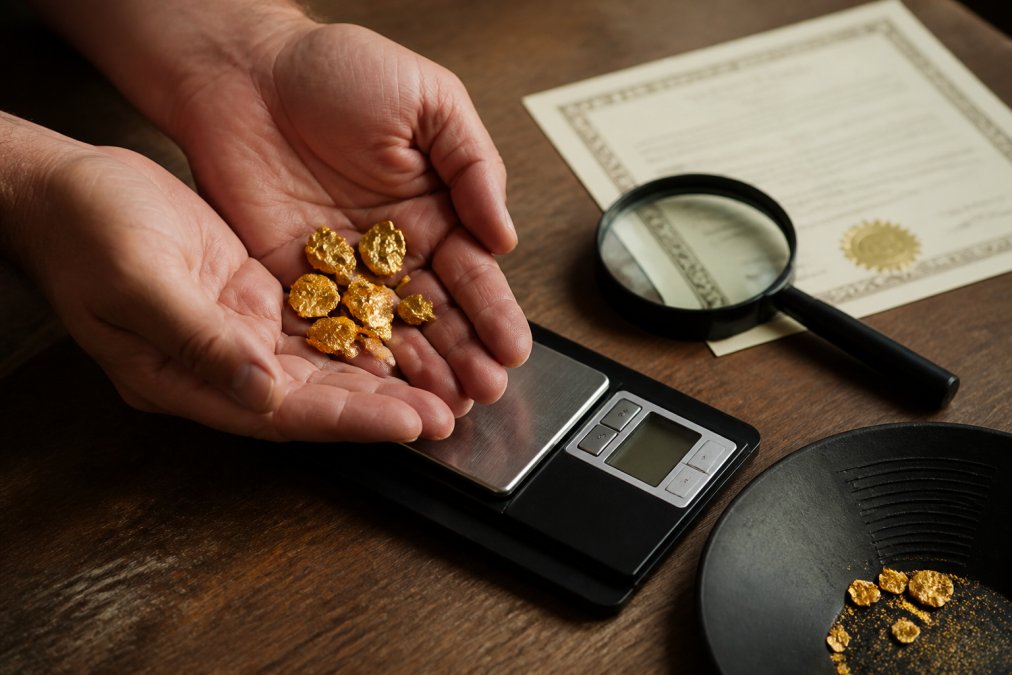
Raw gold authentication starts with basic visual inspection. True gold is dense, soft enough to scratch with a fingernail, and maintains a warm yellow color under magnification. Fool's gold (pyrite) is brittle, reflects light differently, and tarnishes. If you can dent a flake with moderate pressure from a coin, that's a good sign you're handling actual gold.
Density testing provides a quick preliminary check. Gold has a specific gravity of approximately 19.3. Placing a known weight of your sample in water and measuring displacement gives you a density estimate. Results close to 19.3 suggest authentic gold; results far below indicate contamination or misidentification.
Professional assay testing is the only definitive verification method. An assay laboratory uses fire assay, atomic absorption spectroscopy, or X-ray fluorescence to determine exact gold content and identify other elements present. The resulting assay report becomes your proof of authenticity and composition, essential documentation for selling or insuring your collection.
Certificates of Authenticity from reputable sources add significant value beyond the raw material itself. At Parker's Gold, each Collector Package includes an official Certificate of Authenticity verifying the gold's origin from Parker Schnabel's Dominion Creek operation and documenting the verified weight and purity.
Where to Buy Raw Placer Gold Online
Purchasing raw placer gold online requires careful vendor selection. The market includes legitimate dealers, hobbyist sellers, and unfortunately, some fraudulent operations.
Reputable online sources include established precious metals dealers, verified marketplace sellers with extensive transaction histories, and specialty retailers focused on mining memorabilia. Look for vendors who provide detailed product descriptions, clear photography, assay documentation, and transparent return policies.
Parker's Gold stands apart by offering authenticated placer gold directly sourced from Parker Schnabel's legendary Dominion Creek operation in the Yukon, as featured on Discovery Channel's Gold Rush. The Parker Schnabel Yukon Gold Flakes Dominion Creek Collector Package at https://buyparkersgold.com/products/dominion-creek-gold-flakes includes genuine raw placer gold presented in a handcrafted tri-fold display case with embossed gold detailing, accompanied by an official Certificate of Authenticity. This approach eliminates the uncertainty of sourcing from unknown sellers and provides the provenance and presentation that serious collectors value.
When evaluating any online purchase, examine seller ratings, read customer reviews specifically mentioning authenticity and packaging, and verify return policies. Reputable vendors guarantee their products or offer money-back guarantees. Avoid sellers who refuse to provide assay documentation or whose product photos lack detail.
Selling Raw Gold Flakes: Valuation and Buyer Options
Converting your placer gold flakes to cash requires understanding the different buyer types, their pricing structures, and what documentation they require.
Assay Reports and Documentation
Professional assay reports are non-negotiable for serious sales. These documents provide the scientific foundation for pricing negotiations and give buyers confidence in your material's composition. An assay report specifies gold content percentage, identifies other precious metals present, and notes any base metals or impurities.
The assay process is straightforward. You ship your material to a certified laboratory, they perform testing, and you receive a detailed report within one to two weeks. The report becomes part of your material's permanent record and significantly increases its marketability.
Buyback Prices vs. Spot Price
Understanding the relationship between spot price and actual buyback offers prevents disappointment when you're ready to sell. Buyers discount raw placer gold because they must refine it, process it, and manage logistics.
Typical buyback pricing works like this: a buyer calculates the gold content based on your assay report, applies the current spot price, then subtracts a refining fee (typically 10-30 percent depending on purity and quantity). A sample with 0.5 troy ounces of gold at a spot price of $2,000 per troy ounce would have a theoretical value of $1,000. With a 20 percent refining discount, your actual offer would be approximately $800.
The discount percentage varies based on purity, quantity, and provenance. Higher purity material receives smaller discounts. Larger quantities receive better terms because processing costs spread across more gold. Serious buyers provide written offers valid for a specified period, allowing you to compare terms.
American Numismatic Association precious metals valuation guide
Placer Gold vs. Refined Bullion: What's the Difference?
Raw placer gold and refined bullion represent opposite ends of the processing spectrum. Refined bullion is processed gold that has been melted, purified, and cast into standardized bars or coins. Refinement removes all impurities, bringing gold to 99.9 percent purity or higher. A one-ounce gold bar from a recognized refinery is fungible; any buyer accepts it at spot price with minimal discount.
Placer gold flakes are unrefined natural gold in its raw state, containing whatever composition the geological deposit provided: gold mixed with silver, copper, quartz, and other minerals. Raw material requires processing before it reaches refined purity. This processing step, refining, is what creates the price discount between raw placer gold and spot price.
The collector value proposition differs significantly. Refined bullion appeals to investors seeking pure precious metal exposure and liquidity. Placer gold appeals to collectors valuing authenticity, provenance, and historical connection. A flake from Parker Schnabel's Dominion Creek operation carries narrative value beyond its gold content. Documentation, presentation, and story drive the premium.
Conclusion
Valuing placer gold flakes requires understanding purity and karat content, weight measurement standards, current spot prices, and the distinction between raw material and refined bullion. Authenticity verification through professional assay and proper documentation transforms raw material into a marketable asset. When you're ready to sell, understanding buyback pricing structures and negotiating with multiple buyers ensures fair compensation.
For collectors seeking authentic placer gold with verified provenance, the Parker Schnabel Yukon Gold Flakes Dominion Creek Collector Package offers a unique opportunity to own a tangible piece of Yukon history. Each package includes genuine placer gold recovered from Parker Schnabel's legendary operation, presented in a handcrafted tri-fold display case, and accompanied by an official Certificate of Authenticity. Claim yours at Parker's Gold and connect directly with the adventurous spirit of the Gold Rush.
Frequently Asked Questions
Q: How much is placer gold flakes worth?
A: Placer gold flakes value depends on weight, purity, and the current spot price. Collectors purchasing for authenticity and provenance, like Parker's Gold's Dominion Creek packages, pay a premium beyond raw gold value for certification and historical significance.
Q: Can you sell placer gold flakes, and who buys them?
A: Yes, you can sell placer gold flakes to precious metals dealers, bullion buyers, refining companies, and collectors. Dealers evaluate raw gold by weight, purity, and mesh size. Collectors and enthusiasts may pay above spot price if the gold has documented provenance, like gold sourced from a famous mining operation.
Q: What makes raw gold authenticity verification important?
A: Verification protects you from counterfeit or misrepresented gold and ensures you're paying fair value. Authentic raw placer gold should include an assay report detailing weight, purity, and composition. A Certificate of Authenticity from a reputable source, like Parker's Gold's official documentation from Dominion Creek operations, confirms origin and gold content. Without verification, you risk overpaying for low-quality material or purchasing gold that isn't what the seller claims. Documented authenticity also increases resale value if you ever decide to sell.
Q: Why is buying raw placer gold online from a trusted source worth the premium?
A: Buying from established sellers like Parker's Gold offers several advantages over generic bullion dealers. You receive verified sourcing (gold directly from Dominion Creek operations featured on Discovery Channel's Gold Rush), official certification, secure insured shipping, and a tangible connection to mining history. While raw placer gold spot value may be similar across sellers, the premium you pay reflects authenticity documentation, collector appeal, and the story behind the gold. Generic placer gold from unknown sources carries higher risk of misrepresentation.
This article was written using GrandRanker